Last updated: 1 October 2026 · By Team Tilesminds
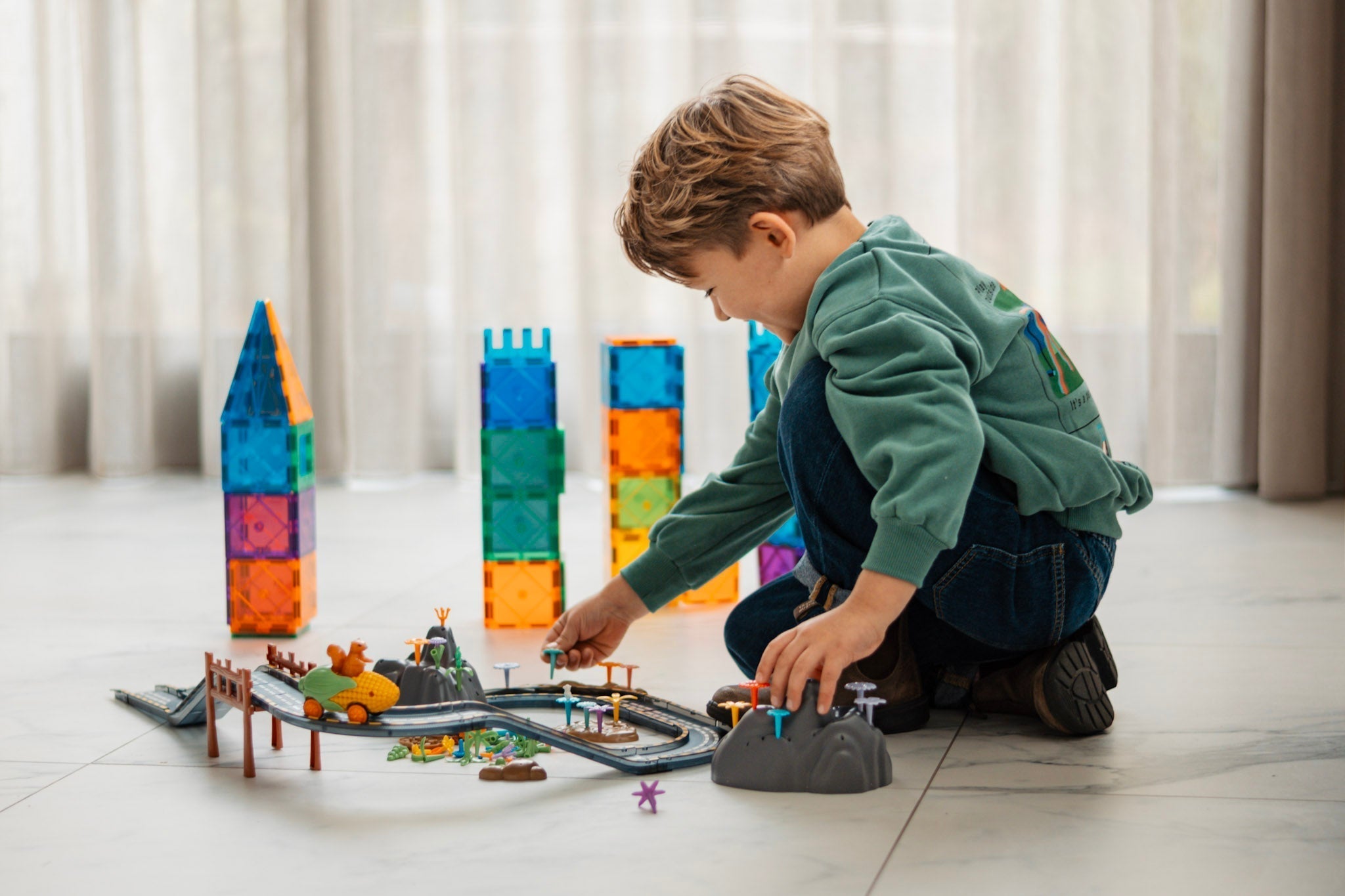
Magnetic building means building with tiles or blocks that click together by themselves thanks to built-in magnets. It is open-ended play: children from age 3 decide for themselves what to make, while practising creativity, spatial awareness, fine motor skills and perseverance.
Give a child a few magnetic tiles and they will come up with something to do with them: a house, a bridge, or something that doesn't look like anything yet. In this guide you will learn what magnetic tiles are, what your child learns from them, what types of magnetic toys there are and how to get the most out of magnetic building at home.
In short
- Magnetic tiles are flat shapes with magnets in the edges that click together in any direction.
- What your child learns: creativity, spatial awareness (from 2D to 3D), fine motor skills, shapes and counting, and dealing with setbacks.
- Types: tiles, blocks, vehicles and race tracks, themed sets and figures. They can often be combined with each other.
- Age: suitable from 3 years; older children use them for complex builds.
Contents
- What are magnetic tiles?
- What makes magnetic building so special?
- What does your child learn from magnetic building?
- Types of magnetic toys
- Magnetic building by age
- Examples: what can you build with magnets?
- Building together
- Tips for at home
What are magnetic tiles?
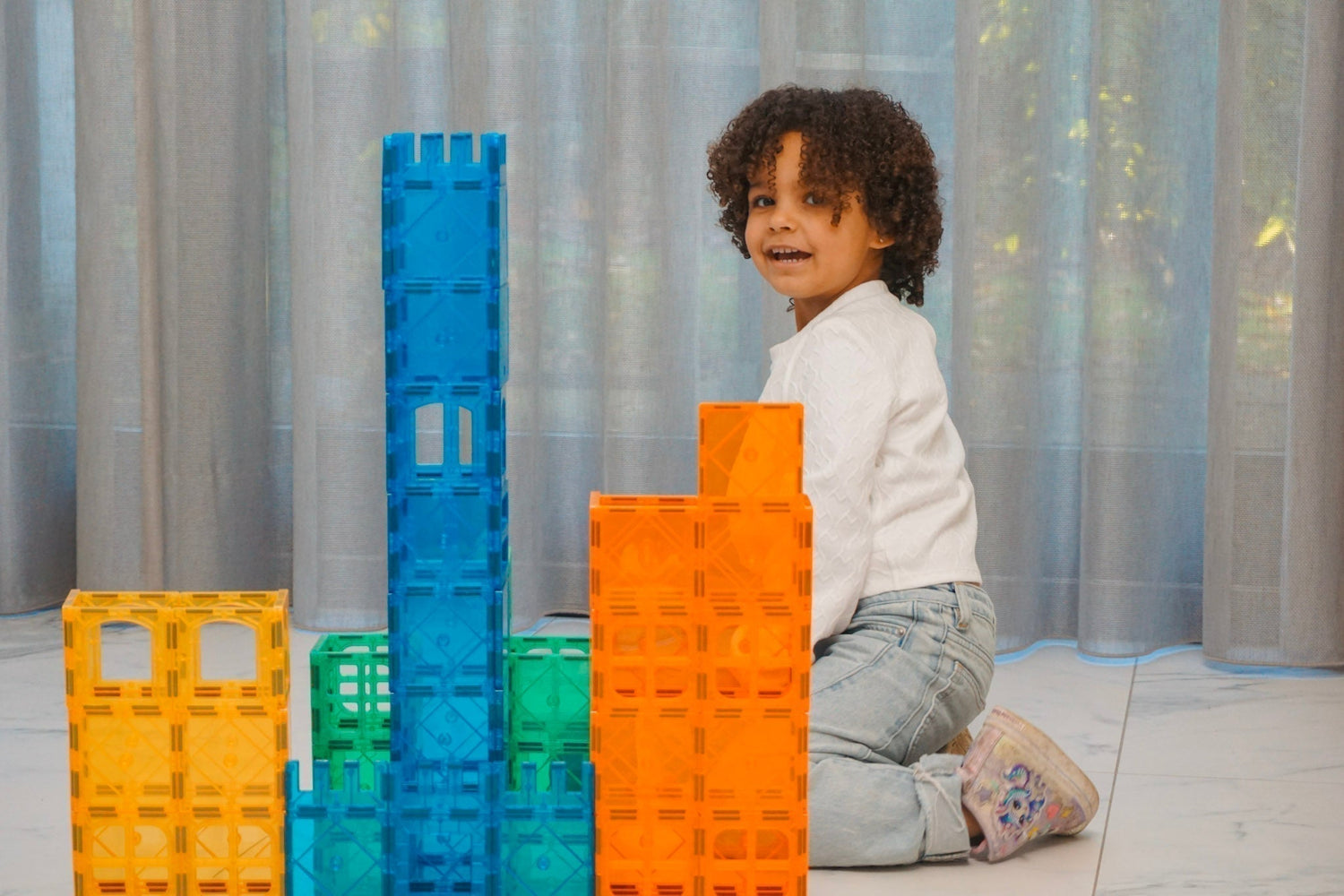
Magnetic tiles, in Dutch magnetische tegels, are flat building shapes (squares, triangles and other shapes) with small magnets in the edges. The magnets are positioned so that two tiles always click together, however you hold them against each other. The tiles are often transparent and coloured, so beautiful colours appear when light shines through them.
With the same tiles, your child builds flat on the floor (a mosaic, a path) or upwards (a cube, a tower, a castle). That step from 2D to 3D is what sets magnetic tiles apart from ordinary blocks.
What makes magnetic building so special?
In magnetic building there are no rules and no right or wrong. Today your child builds a rocket, tomorrow an animal enclosure. The magnets click into place easily, so even young children quickly find that things work. And that feeling of pride makes them want to keep going.
On top of that:
- Little frustration: no need to line things up precisely or press hard.
- Grows with your child: the same set is fun for a 3-year-old and an 8-year-old.
- Combinable: tiles, blocks and vehicles work together.
- Screen-free: children are actively busy with their hands and their minds.
What does your child learn from magnetic building?
While your child builds, a lot is going on. They use their hands, eyes and mind at the same time:
- Creativity and imagination: deciding what to make and making up a story to go with it.
- Spatial awareness: discovering that six squares make a cube and what a build looks like from the side.
- Fine motor skills: picking up tiles, turning them until they "click" and placing them precisely.
- Shapes, colours and counting: how many triangles do I need for a roof?
- Problem-solving: why does my tower fall over, and how do I make it sturdier?
- Perseverance: sometimes a build collapses. Then they have a laugh and start again.
Many parents notice that their child becomes calmer and concentrates better after a while of building. Want to know more about the different types of building toys and STEM? Then read What are building toys?
Types of magnetic toys
| Type | What it is | Great for |
|---|---|---|
| Magnetic tiles | Flat shapes that you combine into 3D builds | Castles, houses, learning shapes |
| Magnetic blocks | Small cubes that you stack into figures and worlds | Building in pixel style, like in Minecraft |
| Vehicles and race tracks | Cars and track pieces that fit on tiles | Garages, roads and race tracks |
| Themed sets | Sets with their own theme and colours | Role play and stories |
A few examples from our range:
- Magnetic Tiles 64 Pieces (€29.99): a complete first set.
- Magnetic Tiles 125 Pieces (€42.00): for big builds or several children.
- Magnetic Tiles Princess Set 50 Pieces (€22.99): pink, purple and pastel tiles for building a castle.
- Magnetic Cars 2 Pieces (€14.99): to turn the tiles into a moving creation.
Prefer building with blocks? Read everything about magnetic blocks. Want to compare brands? See Comparing magnetic tiles 2026.
Magnetic building by age
- 3–4 years: laying flat shapes on the floor, sorting colours, simple towers and cubes. Above all, let them explore.
- 4–6 years: building houses, garages and animals; naming shapes and counting; making up a story together.
- 6 years and older: large builds with several storeys, bridges and race tracks; building from an example or their own design.
Magnetic toys with small parts are not suitable for children under 3. Always follow the age label on the packaging. Read all about safety in Are magnetic tiles safe?
Examples: what can you build with magnets?
Is your child stuck for what to build? A few ideas to get started:
- Cube: six squares. The basis for almost everything.
- Pyramid: a square as the base and four triangles.
- House: a cube with a pyramid as the roof.
- Castle: a few towers made of cubes, connected by walls.
- Garage or tunnel: a long row of arches that a car can drive through.
- Race track: a path of tiles with bends and a bridge.
You will find more projects, explained step by step, in our guide to building projects.
Building together
Building is fun, but building together is better. Parents, brothers, sisters or friends: everyone can join in. One stacks, the other decides what it should become. Jokes, plans and little moments of pride come about. So not just impressive builds, but real conversations too. Meanwhile, children practise discussing, taking turns and giving each other's ideas a chance.
Tips for at home
- Just start. Let your child work out what works, without too much explanation.
- Use a theme as a starting point: animals, vehicles or a fairy-tale castle always go down well.
- Turn it into a story. Who lives in the house? Where is the car going?
- Ask open questions, such as "How could you make this taller?", instead of showing them how.
- Give it its own storage box. Then tidying up simply becomes part of it, just like building.
- Build by the window. In sunlight, transparent tiles cast beautiful coloured shadows.
Our tiles are made of non-toxic, recycled plastic, have strong magnets and are suitable from age 3. Read how to keep them clean and intact in Magnetic toy maintenance.
Frequently Asked Questions
What are magnetic tiles?
Magnetic tiles are flat building shapes with magnets in the edges that click together in any direction. Children use them to build flat patterns and 3D structures, such as cubes, houses and castles.
What does a child learn from magnetic building?
Magnetic building encourages creativity, spatial awareness, fine motor skills, shape recognition and counting. Because builds sometimes collapse, children also learn to persevere and try again.
From what age are magnetic tiles suitable?
Magnetic tiles are usually suitable from 3 years. Young children lay flat shapes and build simple towers; older children create complex builds with several storeys.
Which toys encourage creativity in children?
Open-ended toys with no fixed outcome encourage creativity the most, such as magnetic tiles, building blocks, craft materials and role-play toys. The child then decides for themselves what to make.
Can you combine different sets of magnetic tiles?
Sets from the same brand can usually be combined well. At Tilesminds, the tiles, blocks and cars all work together, so you can start small and expand later.
Read more
- What are building toys? Types and STEM explained
- Magnetic blocks: everything you need to know
- 7 popular toy trends for 2026
Read more:
Read more:
Read more:
Read more:
Read more:
Read more:
Read more:
Read more:
Read more:
Read more: