Last updated: 1 October 2026 · By Team Tilesminds
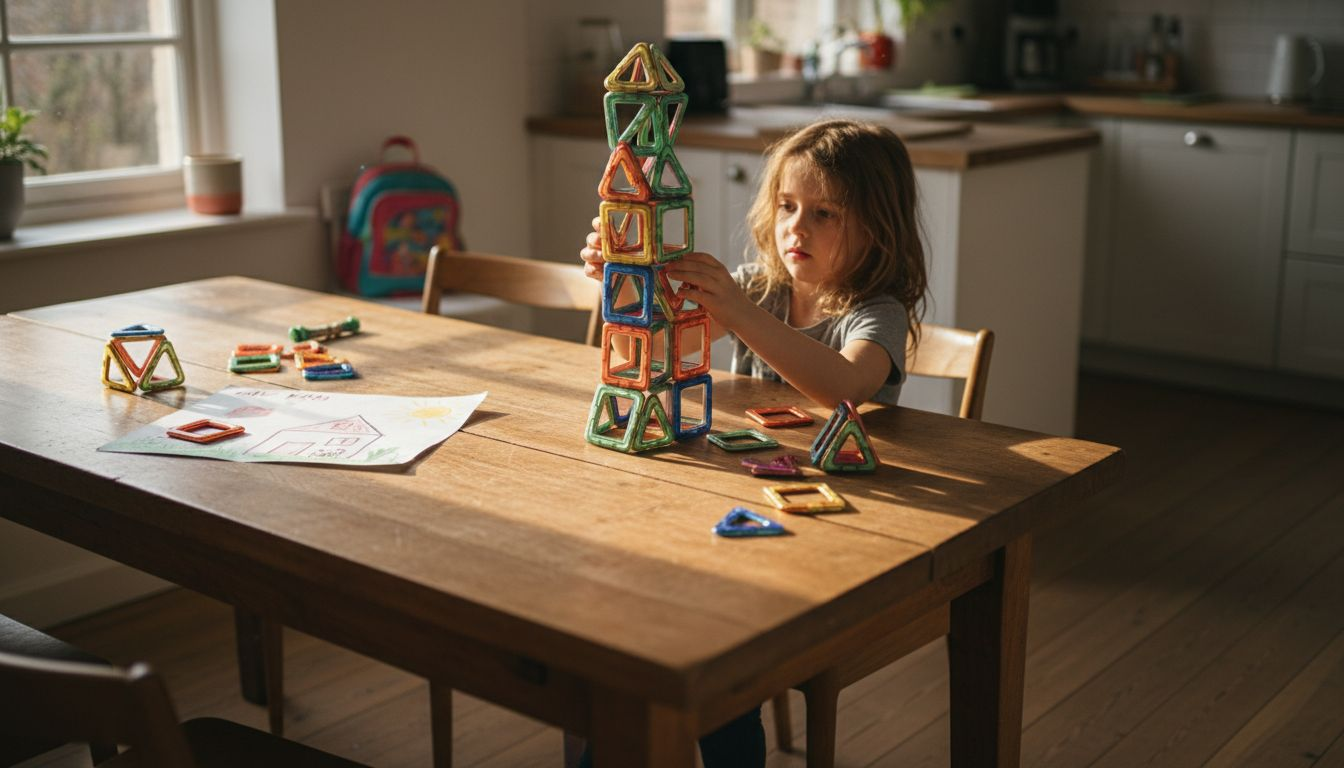
Magnetic blocks are small building blocks (cubes) with built-in magnets, so they stay together with a magnetic click. Children from age 3 use them to build figures, houses and entire worlds, and pixel-style sets are especially popular.
In this article you will learn how magnetic blocks work, how they differ from ordinary blocks, what your child learns from them and what to look for when choosing a set.
In short
- Magnetic blocks (also called magnetic cubes) click together with magnets; there is no need to press anything together.
- Pixel style: blocks with a pixel print (grass, wood, stone, water, ice) let children build their own world with real blocks.
- Difference from ordinary blocks: builds hold together better and you depend less on balance.
- Choose based on: age (from 3 years), strong magnets, sturdy material and a theme that appeals to your child.
Contents
- What are magnetic blocks and how do they work?
- Magnetic blocks in pixel style
- Difference between magnetic blocks and ordinary blocks
- What does your child learn from magnetic blocks?
- Which set of magnetic blocks should you choose?
- Safety and quality
- Building ideas with magnetic blocks
What are magnetic blocks and how do they work?
Magnetic blocks are cube-shaped building blocks with small built-in magnets. Your child puts one block against another and it clicks into place. That way, walls, towers and figures stay together.
This means you can build things with magnetic blocks that are tricky with ordinary blocks, such as a treetop, a bridge or a figure you can pick up. They are also known as magnetic building blocks, magnetic cubes or magnet blocks.
Magnetic blocks in pixel style
Many children love blocky building worlds. Pixel-style magnetic blocks, with a print of grass, wood, stone or water, let them recreate that world with real blocks. This works well for children who otherwise mostly build on a screen: they recognise the style straight away and get started naturally.
At Tilesminds we have two sets in this style:
- Magnetic Blocks 104 Pieces (Jungle) (€29.99, about €0.29 per block): blocks with grass, trees, bricks and water. Ideal for a forest, a little house or a waterfall.
- Magnetic Blocks ICE 118 Pieces (€29.99, about €0.25 per block): blocks with an ice and snow look for building an ice world, igloo or ice castle.
The two sets can be combined, so your child can build a jungle next to an ice world. Combining them with magnetic tiles creates new builds too: the tiles form the floor or the roof, the blocks the details.
Pro tip: Let your child recreate a familiar place from the game, then ask them to add something new to it.
Difference between magnetic blocks and ordinary blocks
| Magnetic blocks | Ordinary (wooden or click) blocks | |
|---|---|---|
| Connecting | Click together with magnets | Stacking or pressing together |
| Stability | Build stays together, even when lifted | Falls over more easily |
| Building direction | Sideways too, not just stacking | Mainly from the bottom up |
| Difficulty | Quick results, little frustration | Requires more balance and precision |
| Age | Usually from 3 years | Large wooden blocks from approx. 1 year |
Ordinary blocks are great for practising balance. Magnetic blocks give more freedom and quicker successes, so children build for longer and more ambitiously. Many families have both.
What does your child learn from magnetic blocks?
- Spatial awareness: what does my build look like from above or from the side?
- Fine motor skills: picking up, turning and precisely placing small blocks.
- Planning: first thinking about what you want to build and which blocks you need.
- Counting and patterns: "grass, grass, stone, grass…"
- Creativity and stories: who lives in the house, what is happening in the jungle?
Read more about development through magnetic building in our guide to magnetic building.

Which set of magnetic blocks should you choose?
- Theme: choose a theme that appeals to your child, such as a jungle or an ice world.
- Number of blocks: with 100 blocks or more, your child can already make complete builds. More blocks means building bigger or building together.
- Price per block: handy for comparing sets. Divide the price by the number of blocks.
- Expandable: sets that work together can be added to later.
Safety and quality
With magnetic blocks, there are two main things to look out for: the magnets must be securely enclosed, and the blocks must suit your child's age. Loose magnets should never be within reach of young children. That is why you should check the blocks now and then for cracks or damage. Read why this matters so much in Are magnetic tiles safe?
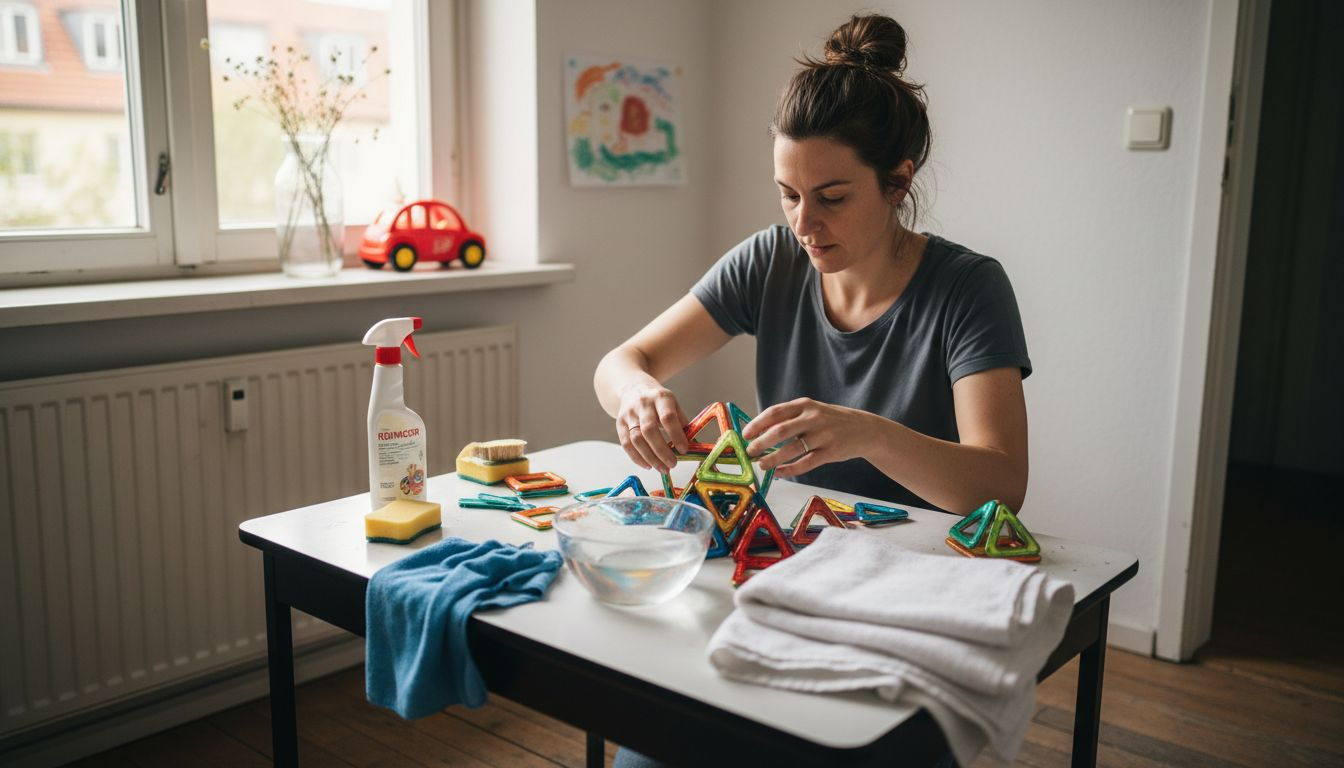
Our magnetic blocks are made of non-toxic, recycled plastic, have strong magnets and are suitable from age 3. Read how to keep them clean and safe in Magnetic toy maintenance.
Building ideas with magnetic blocks
- Tree: a trunk of wood blocks with a treetop of grass blocks.
- Little house: four brick walls, leave a gap for the door and put a roof on top.
- Waterfall: a staircase of stone blocks with water blocks "flowing" down.
- Igloo: a dome of ice blocks with a small entrance.
- Figure: a little person or animal you can hold in your hand.
You will find more projects, step by step, in our guide to building projects.
Frequently Asked Questions
What are magnetic blocks?
Magnetic blocks are cube-shaped building blocks with built-in magnets, so they stay together with a click. Children use them to build figures, houses and entire worlds.
What are pixel-style magnetic blocks?
These are magnetic blocks with a pixel-style print, such as grass, wood, stone or water, that children use to build their own block world with real blocks.
What is the difference between magnetic blocks and ordinary blocks?
Magnetic blocks click together with magnets and stay together, even when you lift them. Ordinary blocks can only be stacked, so they fall over more easily. Magnetic blocks give more building freedom; ordinary blocks practise balance more.
From what age are magnetic blocks suitable?
Magnetic blocks are usually suitable from 3 years. Always follow the age label on the packaging and check the blocks regularly for damage.
Can you combine magnetic blocks with magnetic tiles?
Yes. At Tilesminds, the blocks and tiles work together: the tiles can form the floor or the roof, for example, and the blocks the details.
Read more
- Magnetic building: what magnetic tiles do for your child
- Building projects with magnetic blocks, step by step
- 7 popular toy trends for 2026
Read more: