For young parents in Central Europe, choosing the right toys can be quite challenging when development and safety are paramount. Good educational toys are not only educational but also encourage active play, collaboration, and creativity, according to scientific research . This guide reveals what you really need to consider when selecting toys that support your child's growth and challenges misconceptions about educational toys.
Table of contents
- Educational toys explained and misconceptions
- Main types and categories of toys
- How magnetic toys stimulate development
- Core features: safety and quality standards
- Most common risks and alternatives
Key Points
| Point | Details |
|---|---|
| Educational toys stimulate development | The right educational toys contribute to the cognitive, motor and social development of children. |
| Selection criteria are crucial | Pay attention to age suitability, safety and the encouragement of active involvement when choosing toys. |
| Magnetic toys offer unique benefits | This type of toys promotes creativity and problem-solving skills through open-ended play opportunities. |
| Safety and quality are essential | Choose toys that meet safety standards to minimize risks and support development. |
Educational toys explained and misconceptions
Educational toys are much more than just a learning tool—they're a dynamic way to stimulate children's development. Scientific research shows that the right toy selection is crucial for cognitive growth.
The main goal of educational toys is to teach children skills in a fun way. These toys are specifically designed to support various areas of development:
- Cognitive development: stimulates critical thinking and problem-solving skills
- Motor development: improves fine and gross motor skills
- Social skills: promotes cooperation and communication
- Emotional intelligence: helps to recognize and understand feelings
A common misconception is that educational toys are boring or too academic. Nothing could be further from the truth. Research shows that well-designed educational toys can actually significantly stimulate children's creativity and imagination.
When selecting educational toys, it's important to consider several key aspects. Open-ended toys that offer multiple construction options score significantly higher on developmental value than toys with too many predefined functions.
Important selection criteria for educational toys:
- Encourages active play and exploration
- Has multiple uses
- Appropriate to the child's age and stage of development
- Encourages teamwork
- Is safe and sustainable
Educational toys are not meant to force children, but to nourish their natural curiosity.
Pro tip: Choose toys that offer more possibilities than rules, so kids can explore their own creative solutions.
Main types and categories of toys
Educational toys are a broad category with different types, each making a unique contribution to children's development. Research on educational toys shows that the right selection is crucial for targeted growth.
The main categories of educational toys can be divided into:
- Cognitive toys : puzzles, brain games, logical constructions
- Motor toys : building sets, construction toys
- Language-oriented toys : picture books, letter blocks
- Creative toys : drawing materials, craft sets
- Social toys : role-play materials, board games
Scientific research emphasizes that each type of toy stimulates specific skills. Cognitive toys, for example, help develop logical thinking, while motor toys improve fine motor skills.
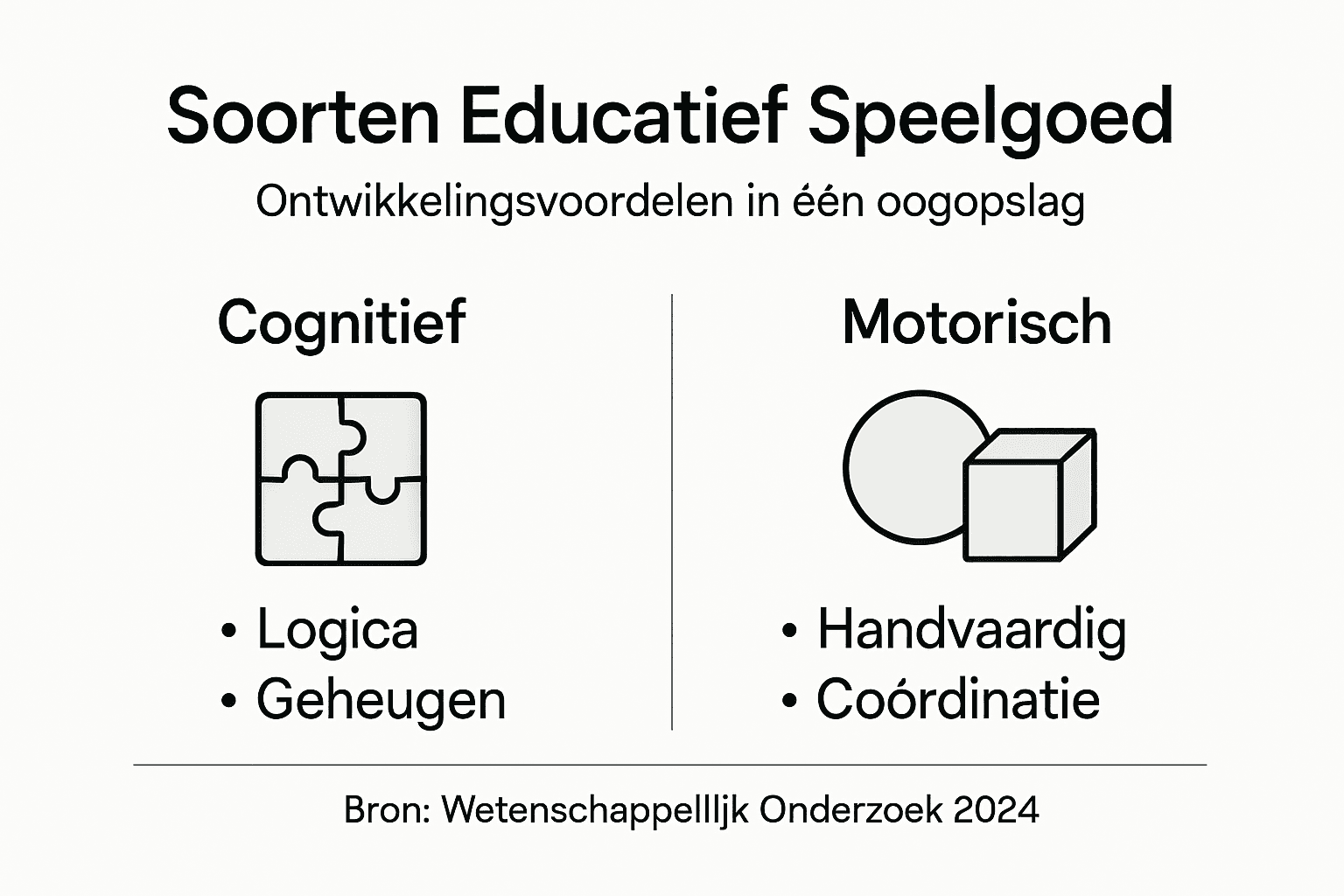
Below you'll find an overview of the major toy categories and their unique contributions to children's development:
| Category | Unique contribution | Sample products |
|---|---|---|
| Cognitive toys | Stimulates logic and thinking | Puzzles, brain games |
| Motor toys | Promotes fine motor skills | Building sets, construction toys |
| Language-oriented toys | Supports language development | Picture books, letter blocks |
| Creative toys | Stimulates imagination and expression | Drawing materials, craft sets |
| Social toys | Increase collaboration | Role-playing, board games |
When selecting educational toys, it's essential to consider the child's age and individual developmental stage. Not every type of toy is suitable for every age group.
Selection criteria for educational toys:
- In accordance with development level
- Challenging but not too complex
- Safe and sustainable
- Multiple play options
- Encourages active involvement
Educational toys are not only educational, but should above all focus on fun and discovery.
Pro tip: Rotate different types of educational toys to create a broad developmental stimulus.
How magnetic toys stimulate development
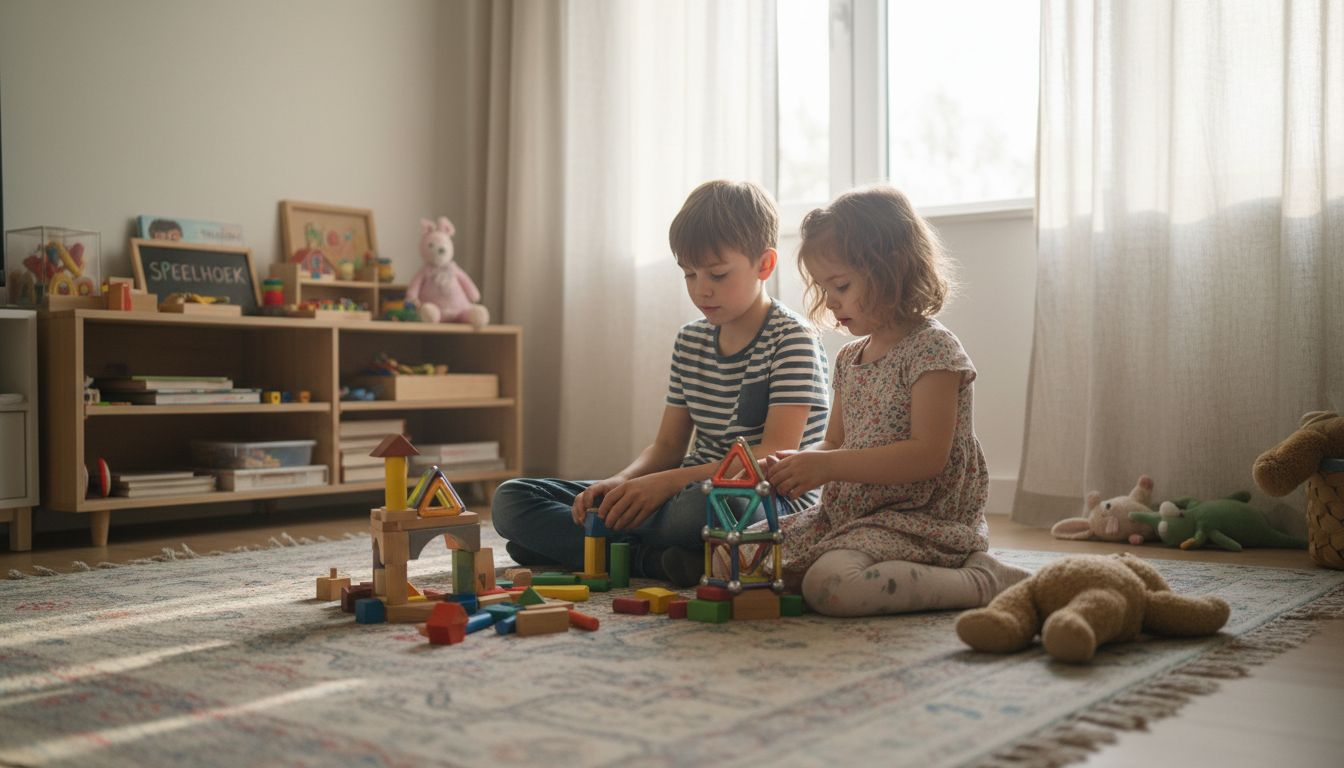
Scientific research into magnetic toys reveals the unique properties that make them so effective for children's development. Magnetic construction toys go far beyond simple play—they are a powerful learning tool that stimulates multiple skills simultaneously.
The key developmental areas that magnetic toys support are:
- Fine motor skills : precise actions and hand-eye coordination
- Spatial insight : building complex structures
- Cognitive skills : logical and creative thinking
- Technical concept : experimenting with physical principles
- Problem-solving skills : challenging construction challenges
Research on educational toys emphasizes the importance of open-ended toys that give children the freedom to experiment. Magnetic blocks are particularly suitable because they encourage children to push boundaries and invent new constructions.
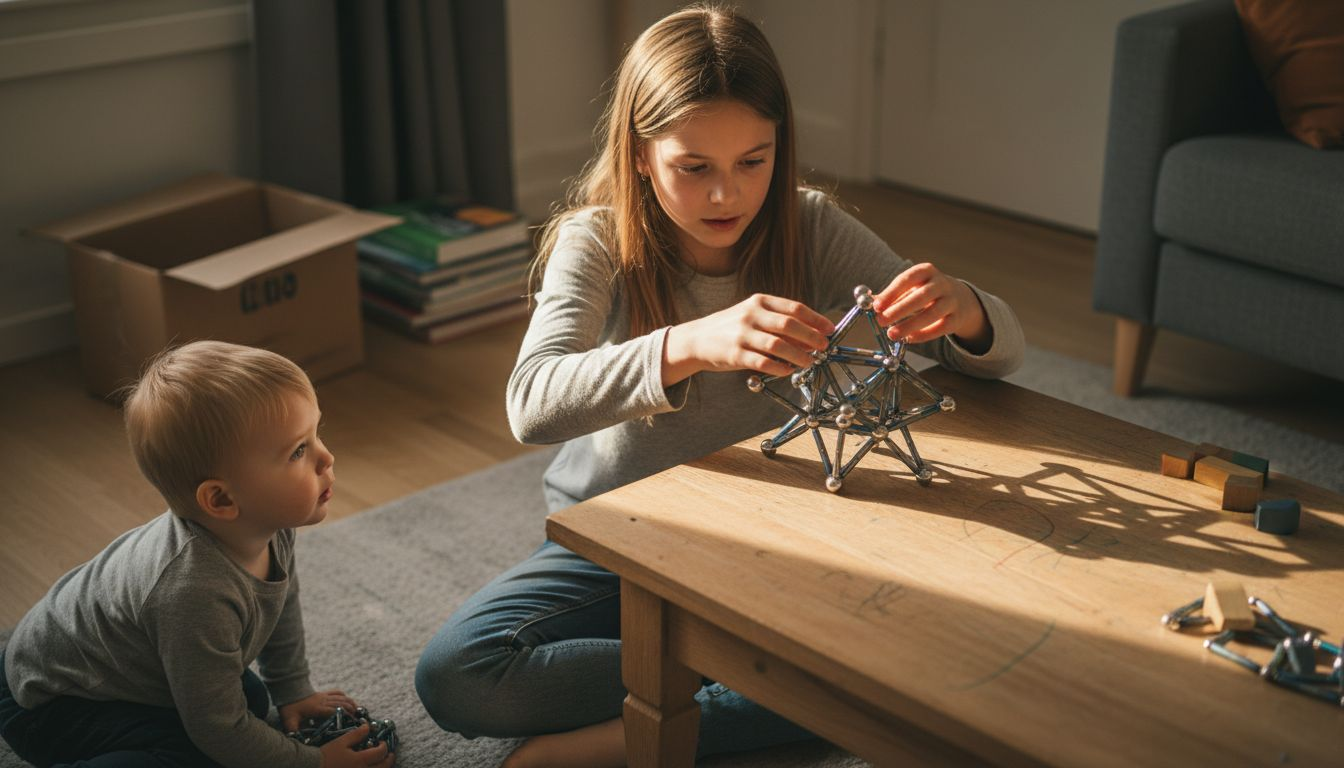
The unique thing about magnetic toys is the combination of playful learning and natural curiosity. Children unknowingly discover principles of physics, balance, and geometry while having fun.
This chart provides a quick overview of the differences between traditional and magnetic construction toys:
| Feature | Traditional building blocks | Magnetic toys |
|---|---|---|
| Connection type | Stacking | Magnets |
| Levels of complexity | Basic towers or figures | 3D constructions and shapes |
| Stimulate creativity | Limited by balance | Many shapes possible |
| Learn physical principles | Less clear | Gravity, magnetism |
Benefits of magnetic toys:
- Stimulates independent thinking
- Increases technical insight
- Improves spatial visualization
- Encourages creativity
- Develops problem-solving skills
Magnetic toys are more than just a toy – they are a tool for discovery and growth.
Pro tip: Let children experiment freely and provide minimal guidance to encourage their natural sense of discovery.
Core features: safety and quality standards
Safety and quality standards are crucial when selecting educational toys for children. It's not just about a fun product; it's about safe and responsible play that supports development.
The following safety criteria are essential for educational toys:
- Age appropriateness : material and complexity should be appropriate for the developmental stage
- Material quality : free from toxins and harmful chemicals
- Construction safety : no sharp edges or small parts
- European standards : comply with EN71 safety standards
- Durability : sturdy and resistant to intensive use
Research into educational toys emphasizes the importance of quality standards that ensure children's safety. A good product not only protects but also stimulates development without unnecessary risks.
Parents should always look for official quality marks and safety certificates. These indicate that the toy has been thoroughly tested for various safety aspects.
Toy Safety Checklist:
- Check age recommendation
- Inspect material for defects
- Please note small parts
- Check strength of connections
- Consult official safety information
Safety is non-negotiable – every toy must meet the highest standards.
Pro tip: Replace toys immediately at the first signs of wear or damage.
Most common risks and alternatives
Risks in educational toys require careful consideration from parents and caregivers. Recognizing and preventing potential hazards is essential for safe and responsible play.
The main risks associated with educational toys include:
- Choking hazard : small loose parts
- Chemical hazards : toxic materials
- Safety hazards : sharp edges or points
- Electronic overstimulation : too many technological functions
- Developmental barrier : toys that are too complex or too structured
Scientific research shows that simple, open-ended toy alternatives often offer the best solution. Wooden construction toys, for example, stimulate creativity without unnecessary risks.
Parents can minimize risks by consciously choosing toys that:
- Minimum number of loose parts has
- Made from natural, non-toxic materials
- Suitable for the specific age group
- Simple, open construction options offer
- Meets the latest safety standards
Safe alternatives to risky toys:
- Wooden building blocks
- Magnetic construction materials
- Large, safe puzzles
- Natural craft materials
- Simple role-playing sets
Safety starts with conscious choices and active supervision.
Pro tip: Check toys regularly for wear and tear and replace parts that could pose a risk.
Discover how educational magnetic toys can boost your child's development.
The article emphasizes the importance of toys that stimulate creativity, fine motor skills, and problem-solving without limiting children. Do you recognize the challenge of finding toys that are not only fun but also durable, safe, and cater to children's natural curiosity? At Magnetic Toys, you'll find a wide range of magnetic toys that perfectly meet these needs. These toys offer endless building possibilities with strong magnets and BPA-free materials, so your child can play and learn carefree.
Don't wait any longer and give your child the opportunity to grow through play with the durable and versatile educational sets from TilesMinds . Don't forget to check out our accessories to further enrich their playtime. Order today and experience the positive impact of educational toys that truly make a difference!
Frequently Asked Questions
What is educational toys?
Educational toys are specially designed toys that help children develop skills such as cognitive, motor, social and emotional skills in a fun way.
How do educational toys contribute to children's development?
Educational toys encourage various areas of development, including critical thinking, problem-solving, fine motor skills, and social skills, by promoting active play and exploration.
What are the main types of educational toys?
The main types of educational toys are cognitive toys, motor toys, language toys, creative toys, and social toys, each with unique contributions to children's development.
How do I choose safe and high-quality educational toys?
Choose educational toys that meet age recommendations, are made of safe materials, do not contain small parts, and comply with European safety standards to ensure children's safety.