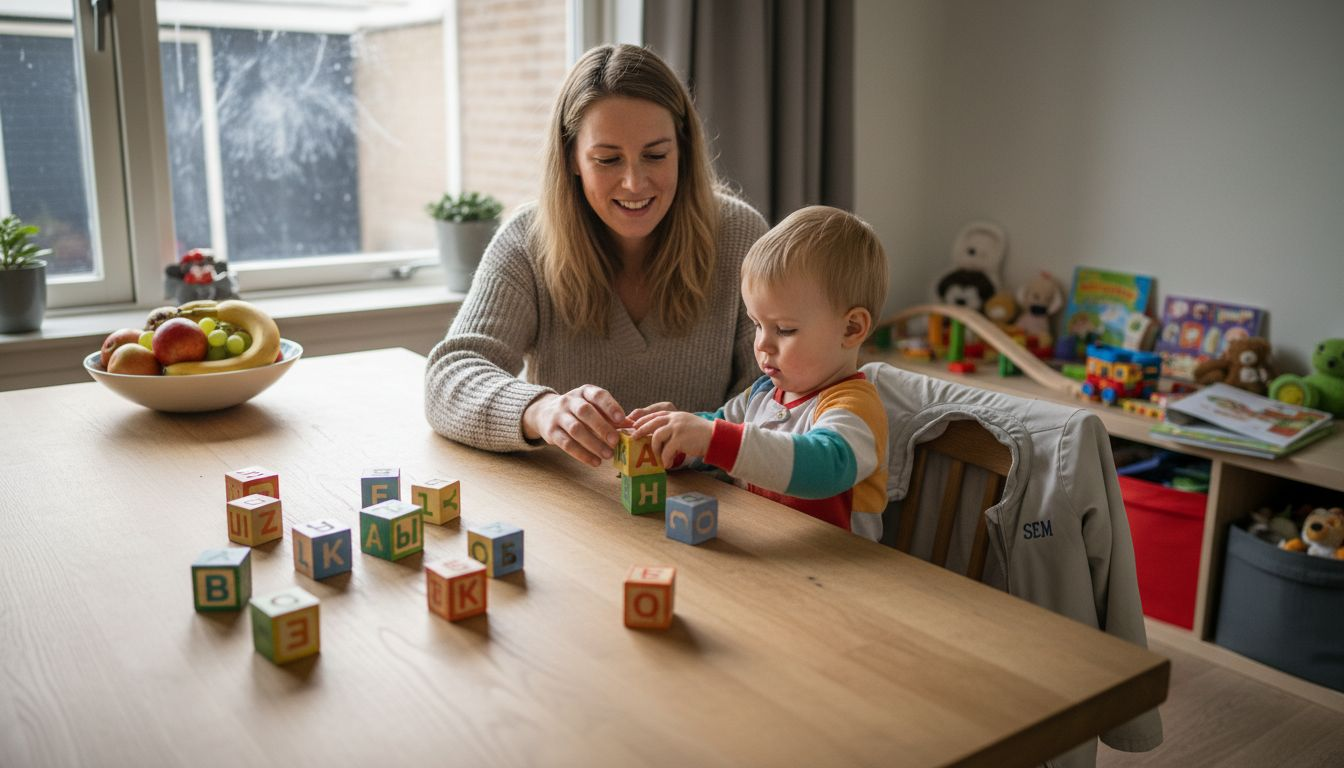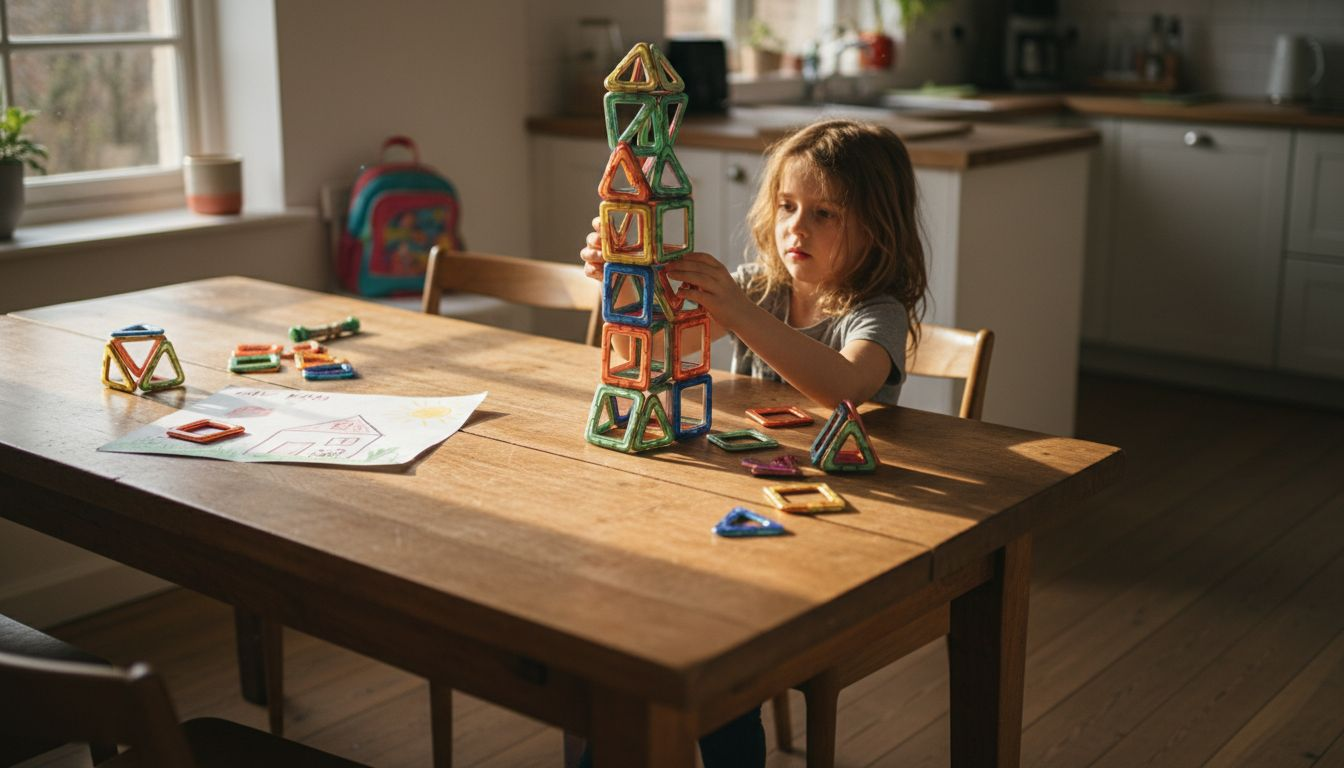
Every parent wants their child to play safely, creatively, and independently, but choosing the right toys remains a challenge. Magnetic blocks offer a unique play experience where children learn to explore shape and structure without complicated fasteners. Thanks to the physical phenomenon of magnetism , the blocks connect effortlessly and stimulate both fine motor skills and spatial awareness. This article explains how magnetic blocks work and why they are so valuable for the development of young children.
Table of contents
- What are magnetic blocks and how do they work?
- Main types and uses explained
- Benefits for cognitive and motor development
- Safety, sustainability and quality requirements
- Magnetic blocks versus alternative toys
Key Points
| Point | Details |
|---|---|
| Magnetic blocks stimulate creativity | Children can build complex structures without complicated connections due to the unique properties of magnetism. |
| Development of cognitive and motor skills | Playing with magnetic blocks promotes critical thinking, problem solving and improves fine motor skills. |
| Safety and quality are crucial | Cheap, unsafe blocks can pose risks; always check for quality standards and safety requirements. |
| Educational value compared to other toys | Magnetic blocks offer more opportunities for active and creative engagement compared to traditional toys. |
What Are Magnetic Blocks and How Do They Work
Magnetic blocks are innovative toys that utilize a remarkable physical phenomenon: magnetism. They are designed to encourage children to build, create shapes, and develop their spatial awareness in a playful and educational way. Magnetic force works by influencing special materials through magnetic fields, allowing these blocks to stick together without any external aids.
Magnetic blocks work based on the forces of attraction and repulsion between magnets. Each block contains permanent magnets with two poles: a north pole and a south pole. When opposite poles meet—such as a north pole and a south pole—they attract each other. Similar poles, on the other hand, repel each other. This principle allows children to connect and separate the blocks in countless ways, which greatly stimulates their creativity.
What's unique about magnetic blocks is that they allow children to build three-dimensional structures without complex fasteners. They're made of safe, durable materials like specialty plastics with molded-in magnets, making them strong, lightweight, and suitable for young hands. The inherent properties of magnetism allow children to quickly discover how shapes fit together, naturally developing their spatial awareness and motor skills.
Pro tip: Introduce magnetic blocks gradually and let children experiment freely at first without directing them, so they can discover the magnetic properties for themselves.
Main Types and Uses Explained
Magnetic blocks are available in various types, each with unique properties and applications. The most common types are based on magnetic material properties , including ferromagnetic blocks, which offer the strongest and most stable connections. These blocks are made of materials such as iron, nickel, and cobalt, which are particularly suitable for building sturdy structures.
There are also advanced magnetic block systems with different shapes and properties. Some sets include rectangular blocks, triangular elements, special car or animal shapes, and even themed sets like spaceships or farm animals. This variety stimulates creativity and makes building extra challenging and engaging for children. Electromagnetic blocks are a special category where the magnetic field is produced by electric currents, offering additional opportunities for interactive play.
The applications of magnetic blocks extend far beyond just toys. They are used in educational settings to help children develop spatial thinking, improve motor skills, and playfully teach basic physics and construction concepts. Electromagnets in toys also add extra dimensions to the learning process, allowing children to discover and understand the fundamental principles of magnetism.

Below you will find an overview of common types of magnetic blocks and their characteristics:
| Block type | Important material | Characteristic | Suitable for |
|---|---|---|---|
| Ferromagnetic | Iron or cobalt | Very strong connections | Sturdy structures |
| Shaped blocks | Plastic with magnet | Various shapes possible | Creative play |
| Electromagnetic | Wire spool and current | Dynamic and interactive game | Technical application |
Pro tip: Choose magnetic block sets with different shapes and sizes to challenge children to build more complex and varied constructions.
Benefits for Cognitive and Motor Development
Magnetic blocks are more than just toys; they are powerful tools for children's development. Scientific activities for children show that these playful building blocks are essential for cognitive growth. They stimulate critical thinking, problem-solving skills, and spatial awareness in a way that feels natural and enjoyable for children.
Magnetic blocks offer numerous advantages in motor skills. They help develop fine motor skills by requiring children to manipulate, rotate, and precisely align the blocks. Science and physical principles are explored in a playful way, while simultaneously improving their hand-eye coordination. Building structures requires precision, patience, and spatial awareness, allowing children to develop important skills without even realizing it.
The cognitive benefits are just as impressive as the motoric ones. By experimenting with magnetic blocks, children learn fundamental principles of physics, such as attraction and repulsion. They develop an intuitive understanding of balance, symmetry, and construction. Moreover, their imagination and creativity are stimulated, as each building project presents a unique challenge that can be tackled again and again.
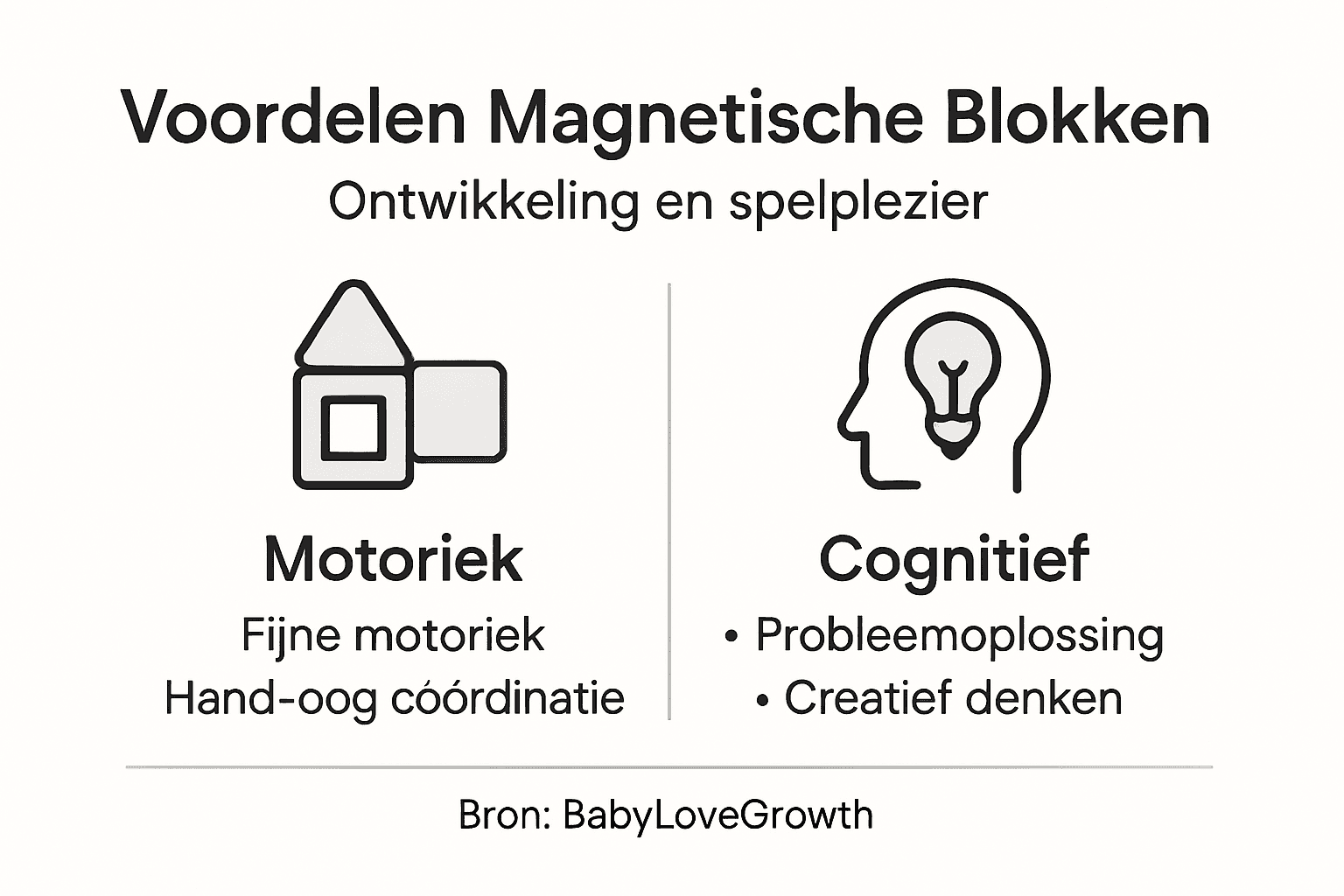
Pro tip: Observe your child playing with magnetic blocks and ask open-ended questions to stimulate their thinking without intervening directly.
Safety, Sustainability and Quality Requirements
When it comes to magnetic blocks for children, safety and quality are absolutely essential. High-quality magnetic building blocks must meet strict standards to give parents peace of mind. Key safety requirements include robust construction, secure magnetic attachment, and non-toxic materials that can withstand intensive use by children.
The most important quality criteria for magnetic blocks encompass several aspects. First, the magnets must be securely encapsulated to prevent small children from detaching or swallowing them. The materials must be BPA-free, have smooth, rounded edges, and be made of durable plastics that can withstand bumps and falls. Furthermore, the blocks must be colorfast and not discolor or break with frequent use.
Parents should also pay attention to additional safety features such as age recommendations, the strength of the magnetic connections, and the overall construction quality. Reputable brands often conduct additional testing to ensure their products meet international safety standards for children's toys. A good magnetic block set will last for years and can withstand multiple children without any loss of quality.
Pro tip: Regularly check the magnetic blocks for cracks or loose parts and replace them immediately if there are any safety risks.
Magnetic Blocks vs. Alternative Toys
Magnetic blocks fundamentally differ from traditional toys through their unique properties and educational value. Building activities for children demonstrate that these blocks offer much more than ordinary construction toys. While traditional blocks are often limited to simple stacking, magnetic blocks encourage more complex spatial concepts and dynamic play.
Magnetic blocks offer numerous advantages over other toys. Puzzles and Lego bricks are static and follow fixed connection patterns, while magnetic blocks offer children the freedom to create unexpected and innovative constructions. They force children to think about balance, stability, and design in a way that other toys can't. Moreover, they are less fragmented than digital games, promoting real, tactile interaction.
The educational value of magnetic blocks is enormous. Unlike electronic toys that often offer passive entertainment, these blocks stimulate active learning. They simultaneously develop problem-solving skills, spatial awareness, and motor coordination. While many alternative toys only superficially engage children, magnetic blocks challenge them to experiment, explore, and think creatively.
This chart shows the difference in educational effect between magnetic blocks and other construction toys:
| Toy type | Motor development | Spatial insight | Creative freedom |
|---|---|---|---|
| Magnetic blocks | Fine motor skills are strongly stimulated | Understanding and building 3D shapes | Unlimited variation possible |
| Traditional wooden blocks | Basic motor development | Stacking and balancing | Simple shapes |
| Lego/click system | Precise actions required | Following and building patterns | Following examples |
Pro tip: Alternate magnetic blocks with other play elements to maximize your child's developmental potential.
Discover Why Magnetic Blocks Are Essential For Your Child's Growth
Magnetic blocks offer a unique opportunity to playfully stimulate children's cognitive development and motor skills. The article emphasizes the importance of introducing children to physical principles like magnetism in a safe and educational way. By choosing high-quality sets with different shapes and materials, children learn crucial skills like spatial awareness, problem-solving, and fine motor skills while relaxing and having fun.
Do you also want the best for your child and ensure an educational and safe play environment? Then explore our extensive range of Magnetic Blocks , where sustainability and creativity are key. Our toys are BPA-free and designed to last for years. Visit Tilesminds.com for inspiring sets including themes like Minecraft and mobile creations. Start enriching your child's playtime and development today.
Frequently Asked Questions
What are magnetic blocks?
Magnetic blocks are toy elements that use magnetism to stimulate children's creativity and spatial awareness. They are made of safe materials and are designed to stick together easily without additional fasteners.
How do magnetic blocks promote children's motor development?
Magnetic blocks help develop fine motor skills. Children manipulate, rotate, and precisely align the blocks, which improves their hand-eye coordination and precision.
What are the main benefits of magnetic blocks for cognitive development?
Magnetic blocks encourage critical thinking and problem-solving skills, and help children understand fundamental physics principles like attraction and repulsion. They also foster creativity and imagination during construction.
How do magnetic blocks differ from traditional toys?
Unlike traditional toys like wooden blocks or puzzles, magnetic blocks give children the freedom to create complex, three-dimensional structures. They stimulate dynamic play and learning, while also offering the opportunity to explore spatial concepts.