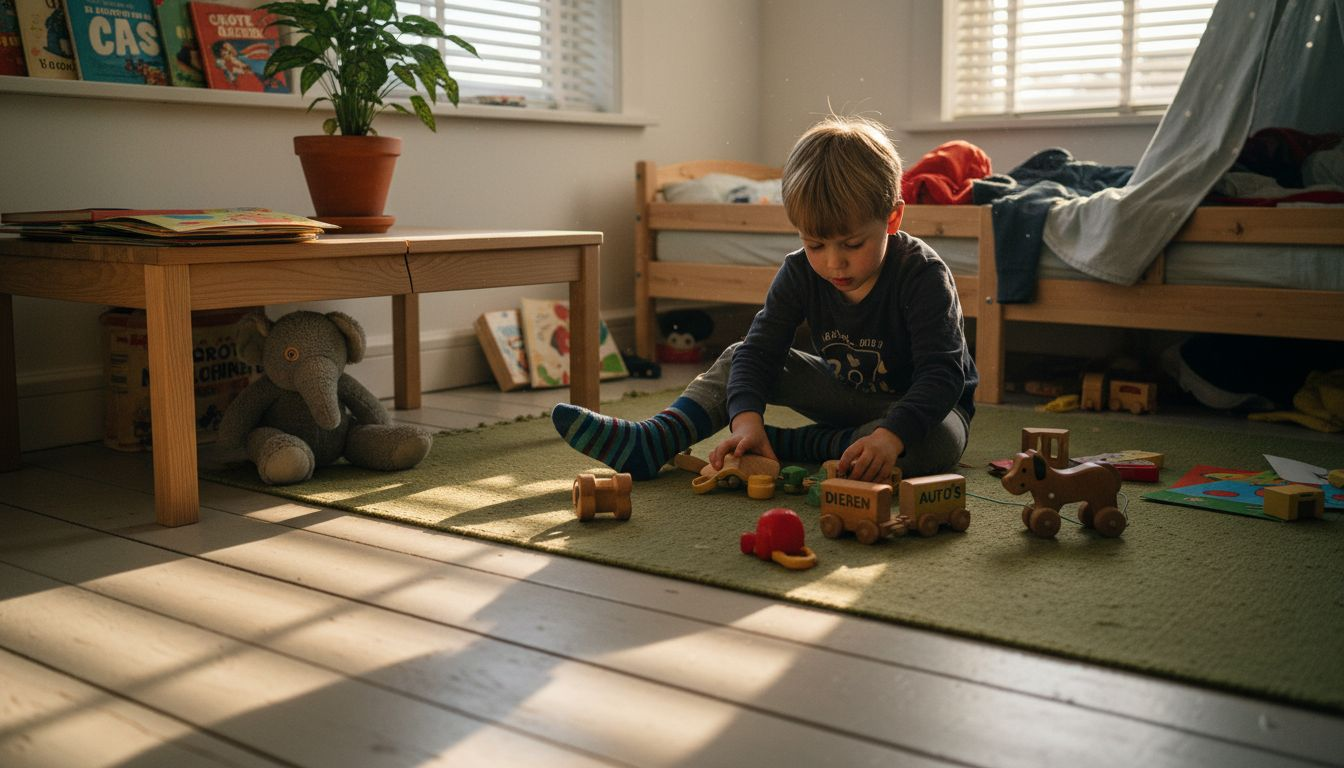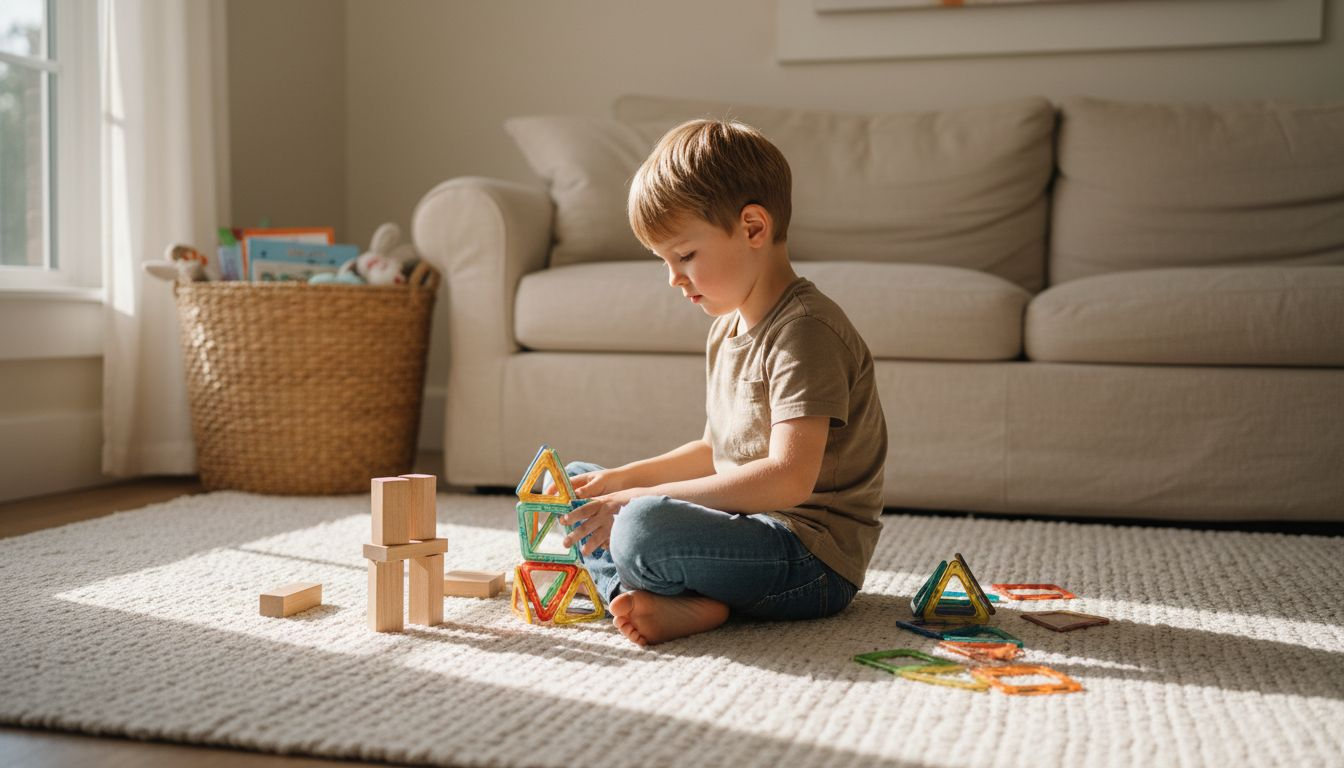
Every parent recognizes the search for toys that are both safe and educational for young children. In the play corner, not all blocks are created equal: magnetic toys offer unique opportunities for creative play and stimulate motor development because the parts attract and repel each other through an invisible magnetic field. This dynamic stimulates curiosity and allows children to playfully explore the principles of physics while letting their imaginations run wild.
Table of contents
- What are magnets and regular blocks?
- Various types of magnetic and traditional toys
- How do magnets in toys work?
- Safety and materials for children's blocks
- Influence on creativity and motor skills
Key insights
| Point | Details |
|---|---|
| Magnetic properties | Magnets attract metals and have a north and south pole, which gives them a unique dynamic compared to regular blocks. |
| Educational value | Magnetic toys stimulate creativity and problem-solving, and offer opportunities for spatial insight and collaboration. |
| Safety criteria | Children's blocks must meet strict safety standards, such as excluding small parts and harmful substances. |
| Motor development | Playing with magnetic toys promotes fine motor skills and hand-eye coordination through interactive play. |
What are magnets and regular blocks?
Magnets are fascinating objects with unique properties that set them apart from ordinary blocks. They have an unusual ability to attract metals through an invisible magnetic field, making them different from standard construction materials. These magnetic properties operate through unique physical principles where tiny magnetic domains align.
The main features of magnets are:
- Can attract metals such as iron, nickel and cobalt
- Have a north and south pole
- Generate an invisible magnetic field
- Have directional attraction
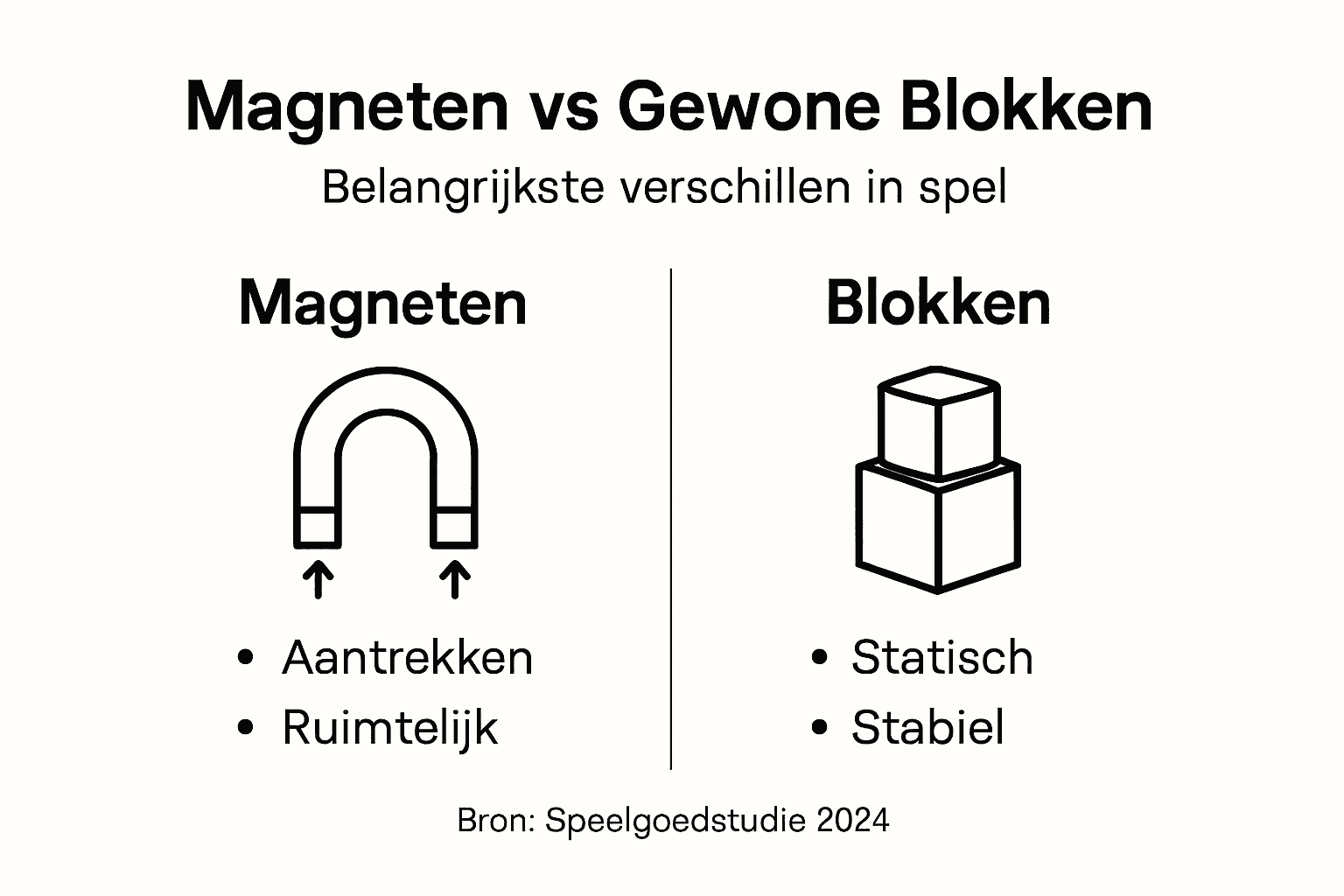
Ordinary blocks, on the other hand, are static objects without these dynamic properties. They are typically made of materials like wood, plastic, or stone that cannot interact magnetically. Magnetic materials are distinguished by the fact that their small magnetic regions are organized in such a way that they can produce a consistent magnetic effect.
The difference between magnets and regular blocks lies not only in their composition, but also in their fundamental physical behavior. While regular blocks remain static, magnets have a dynamic property that makes them uniquely suited for educational and creative play.
Pro tip: When choosing toys, always look for magnetic properties for added fun and learning opportunities.
Various types of magnetic and traditional toys
Magnetic toys come in a variety of shapes and sizes, fundamentally different from traditional toys. Magnetic toy sets encompass several categories that encourage children to engage in creative and experimental play.
The main types of magnetic toys are:
- Magnetic building tiles
- Magnetic rods
- Magnetic balls
- Magnetic vehicle sets
- Magnetic construction figures
Traditional toy forms are more limited and usually consist of:
- Wooden blocks
- Plastic construction sets
- Standard building blocks without magnetic properties
- Loose toy elements without any connection to each other
The key difference lies in the dynamics: magnetic toys stimulate spatial awareness and creativity through the unique attraction between components, while traditional toys are more static. Magnetic materials in the classroom also offer children the opportunity to experiment with physical principles.
Below you will find an overview of the main differences between magnetic toys and traditional toys:
| Aspect | Magnetic toys | Traditional toys |
|---|---|---|
| Way of connecting | Automatic attraction and rotation | Manual stacking or linking |
| Educational value | Promotes understanding of physics and collaboration | Stimulates basic construction and imagination |
| Flexibility | Combine parts in different shapes | Limited combination options |
| Interactivity | Parts move, pull and repel each other | Parts remain static after placement |
Pro tip: Combine different types of toys to enrich children's play experience and stimulate their curiosity.
How do magnets in toys work?
Magnets in toys are a fascinating mechanism that completely changes the way children play. Magnetic fields around toys create a unique interactive experience where different parts can spontaneously attract or repel each other.
The mechanism of action of magnets in toys involves some fundamental principles:
- Magnets have a north pole and a south pole
- Like poles repel each other
- Different poles attract each other
- Magnetic force works through invisible fields
The dynamics of magnetic attraction make toys much more interactive than traditional construction materials. This allows children to build more complex, dynamic structures that can move, rotate, and transform. The natural properties of magnets allow toy parts to be combined in ways that would be impossible with ordinary blocks.

These unique properties make magnetic toys not only more fun but also educationally valuable. Children unconsciously learn fundamental physics principles as they play, experiment, and unleash their creativity.
Pro tip: Encourage kids to experiment with magnetic toy parts by asking them open-ended questions about what happens.
Safety and materials for children's blocks
Children's building blocks must meet strict safety standards to ensure the protection of young children. European toy safety requirements are complex and detailed, especially for toys for children under three years old.
Important safety criteria for child blocks include:
- No small parts that can cause a choking hazard
- Free from harmful chemicals such as phthalates
- Mechanically resistant to breakage
- No sharp edges or protruding points
- Strong and durable material
Magnetic blocks have additional safety considerations. Magnets must be securely enclosed to prevent swallowing and must not be easily removed from the toy. Certifications such as CE offer parents assurance about the toy's safety.
The choice of materials plays a crucial role in the safety and durability of playsets. High-quality, non-toxic materials like BPA-free plastic or natural wood are preferred by conscious parents.
Below are some material options and their impact on the safety and durability of children's blocks:
| Material | Security level | Sustainability |
|---|---|---|
| BPA-free plastic | High, no harmful substances | Highly wear-resistant and break-resistant |
| Natural wood | Safe if smooth and untreated | Long lasting strength, ecologically responsible |
| Magnet with cover | Safe as well enclosed | Good if sturdy housing is used |
| Recycled plastic | Depending on processing | Variable, depending on composition |
Pro tip: Check the condition of toys regularly and replace parts that show signs of wear or damage.
Influence on creativity and motor skills
Magnetic toys are a powerful tool for children's development, combining creativity and motor skills. Motor development is stimulated by the unique interactive properties of magnetic building blocks.
Important developmental aspects of magnetic toys:
- Improving fine motor skills
- Stimulation of hand-eye coordination
- Development of spatial insight
- Promotion of problem-solving thinking
- Stimulation of creative construction
Open-ended play with magnetic blocks encourages children to experiment, build, and discover. Cognitive skills develop as children devise their own solutions and push their boundaries.
By playing together with magnetic construction toys, children develop not only technical skills but also social competence. They learn to collaborate, communicate, and appreciate each other's ideas, which contributes to broad and integrated personal development.
Pro tip: Encourage children to play together with magnetic blocks and provide minimal guidance to allow their own creativity to grow.
Discover the Difference with Magnetic Toys from Tilesminds
Children deserve toys that aren't just fun, but also stimulate their creativity , motor skills , and understanding of physics . While ordinary blocks are static, our Magnetic Blocks from Tilesminds offer a magical play experience centered around the pull of magnets. This makes building with our sets intuitive, dynamic, and endlessly challenging.
Don't wait any longer and give your child the opportunity to discover the unique benefits of magnetic toys. Visit https://tilesminds.com and choose from a variety of safe, sustainable, and educational playsets. For example, combine magnetic building blocks with an exciting Magnetic Race Track | Orbit for even more fun. Start today and stimulate your child's development through play with the best magnetic toys.
Frequently Asked Questions
What are the main properties of magnets?
Magnets can attract metals such as iron, nickel and cobalt, have a north and south pole and generate an invisible magnetic field.
How do magnetic toys compare to traditional toys?
Magnetic toys offer dynamic connections through automatic attraction, while traditional toys are often limited to manual stacking or linking.
What are the safety requirements for magnetic toys?
Magnetic toys must meet safety standards such as the absence of small parts that could cause choking hazards and must be free of harmful chemicals.
How do magnetic toys stimulate children's development?
Magnetic toys improve fine motor skills, stimulate hand-eye coordination and promote creative thinking and problem-solving in children.