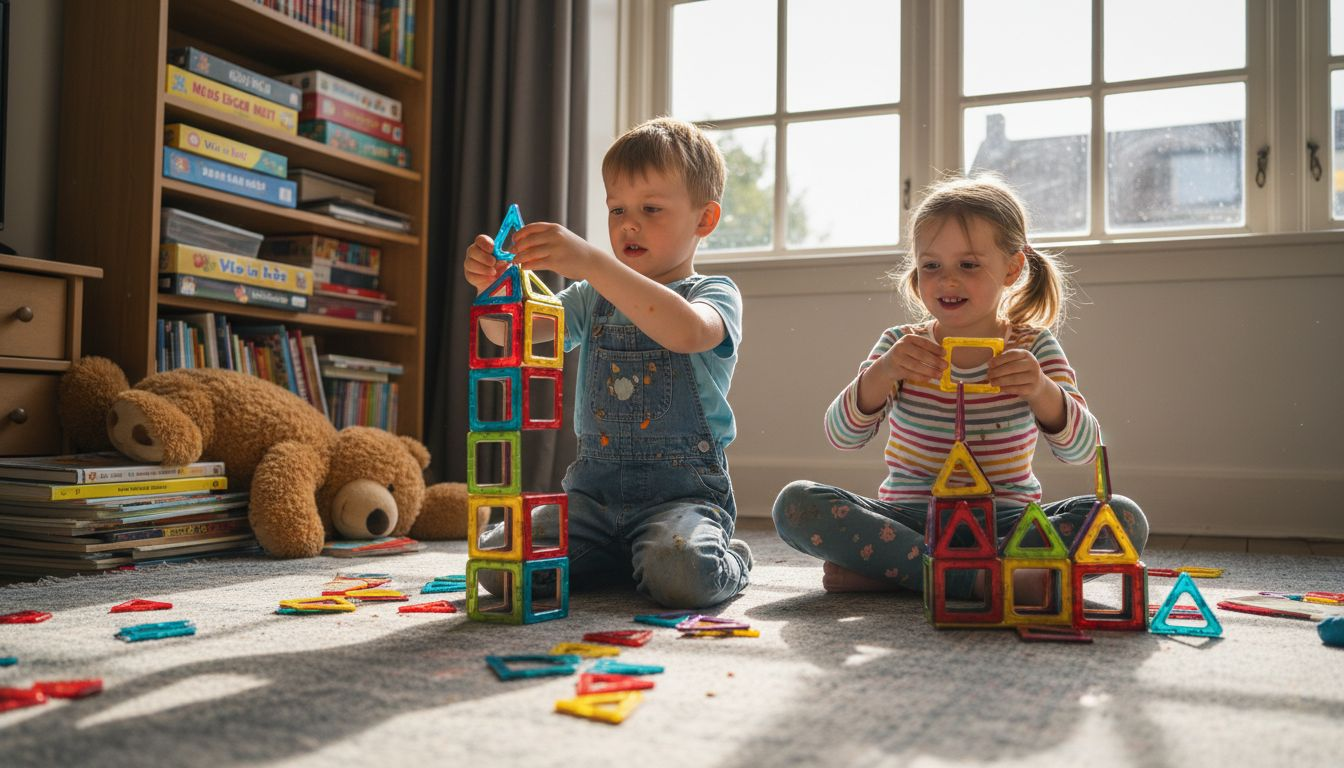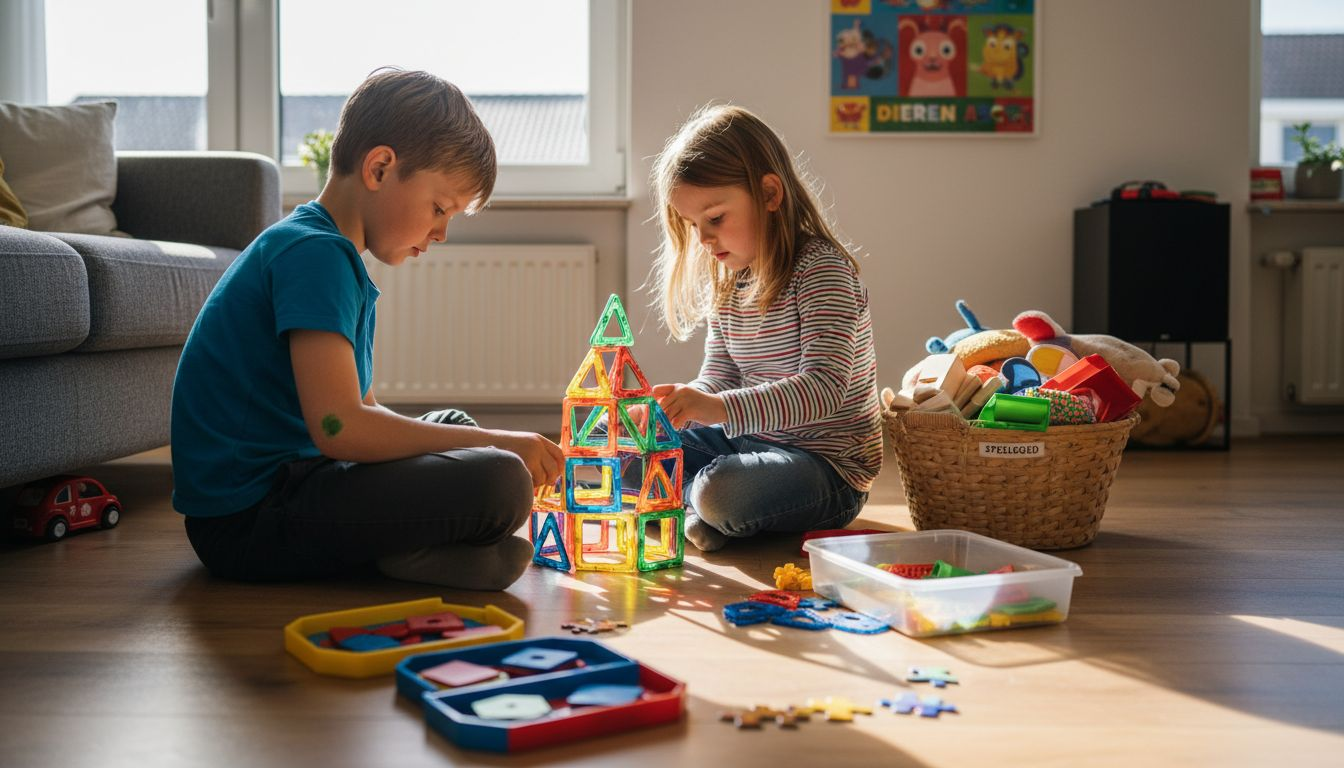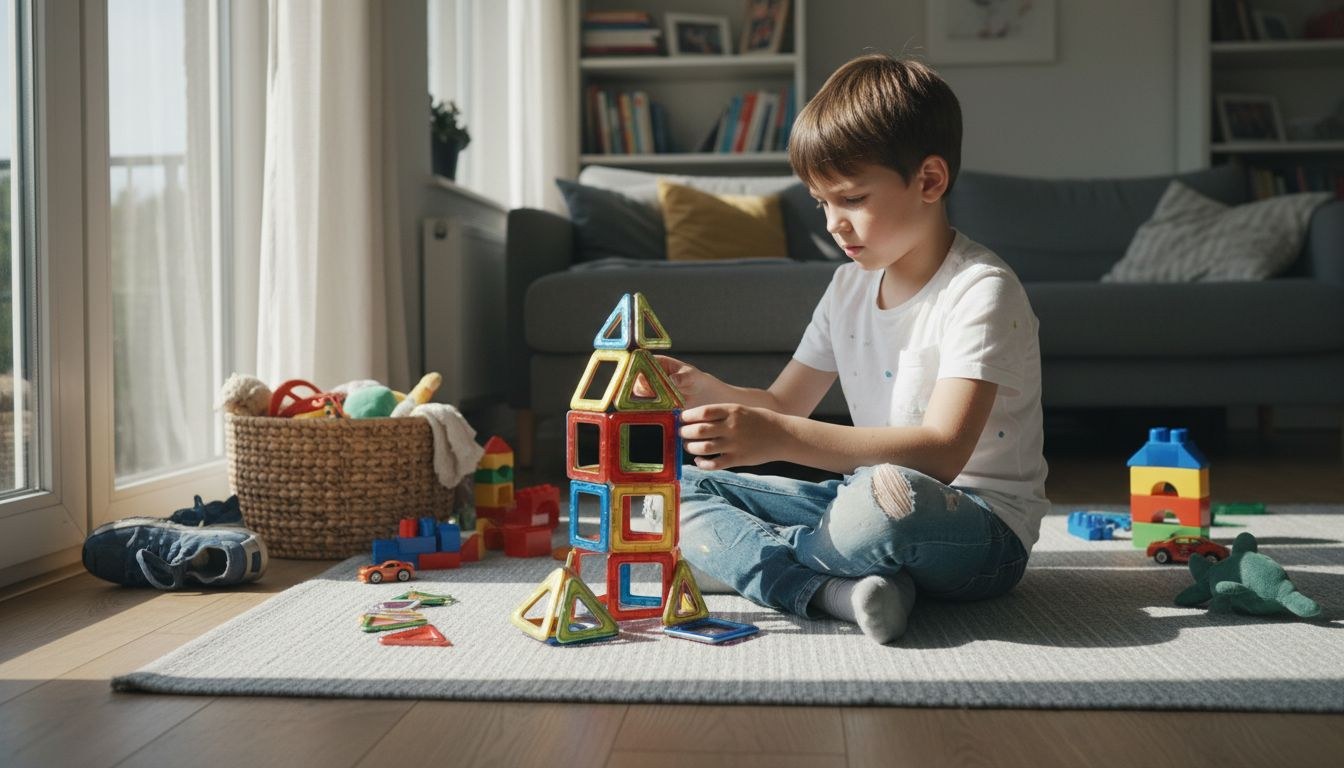
Many parents in Central Europe notice how quickly children transform when they discover creative toys. The daily challenge of choosing safe and educational materials isn't just about fun but also about stimulating their fine motor skills and creativity. Creative toys encourage active thinking and help young children develop their imaginations, resulting in play that opens up new possibilities every day and supports skill growth.
Table of contents
- What makes creative toys unique for kids
- Types of creative toys: construction, role-play, and more
- This is how toys stimulate imagination and skills
- Safety, sustainability and material choices
- Common mistakes when choosing creative toys
Key Lessons Learned
| Point | Details |
|---|---|
| Creative toys stimulate development | It challenges children to use their imagination and thinking skills simultaneously, leading to active involvement. |
| Different types of toys are complementary | Construction toys and role play together support different aspects of a child's growth. |
| Quality over quantity | Too many toys overwhelm children; fewer toys promote deep play and creativity. |
| Essence of safety and sustainability | Choose toys that are safe and sustainably produced to protect children's health and the planet. |
What makes creative toys unique for kids
Creative toys stand out from regular toys because they encourage children to think and act actively. Instead of passive entertainment, these toys offer children the space to create their own stories and solve problems. This, in effect, makes it playtime.
The distinguishing feature is that creative toys challenge children to use both their imagination and their thinking skills simultaneously. With conventional toys, the end result is usually predetermined. With magnetic tiles, blocks, and building sets, your child can create a rocket today, a farm tomorrow. This flexible play follows their thoughts, not the other way around.
What's particularly special is the focus on precision and patience. When childrencreate complex structures , they practice perseverance and sustained concentration. They learn that making mistakes is part of the process, and that adapting and trying again leads to success. These kinds of skills can't be forced; they develop naturally through play.
The social aspect is also unique. Creative toys often require children to collaborate, exchange ideas, and listen to each other. How magnetic building brings your child's imagination to life demonstrates how this convergence of play and learning works in practice.
On another level, it's also about tranquility. While screens constantly stimulate children with fast-paced images and sounds, creative play offers the opportunity to delve deeper. You see children absorbed, focused, in their own world. That kind of tranquility is rare in the toy market and incredibly valuable for their development.
Practical tip : Always leave creative toys accessible where your child can grab them without having to pack and unpack them. This encourages impulsive, free play that sparks exactly the kind of creative thinking children thrive on.
Types of creative toys: construction, role-play, and more
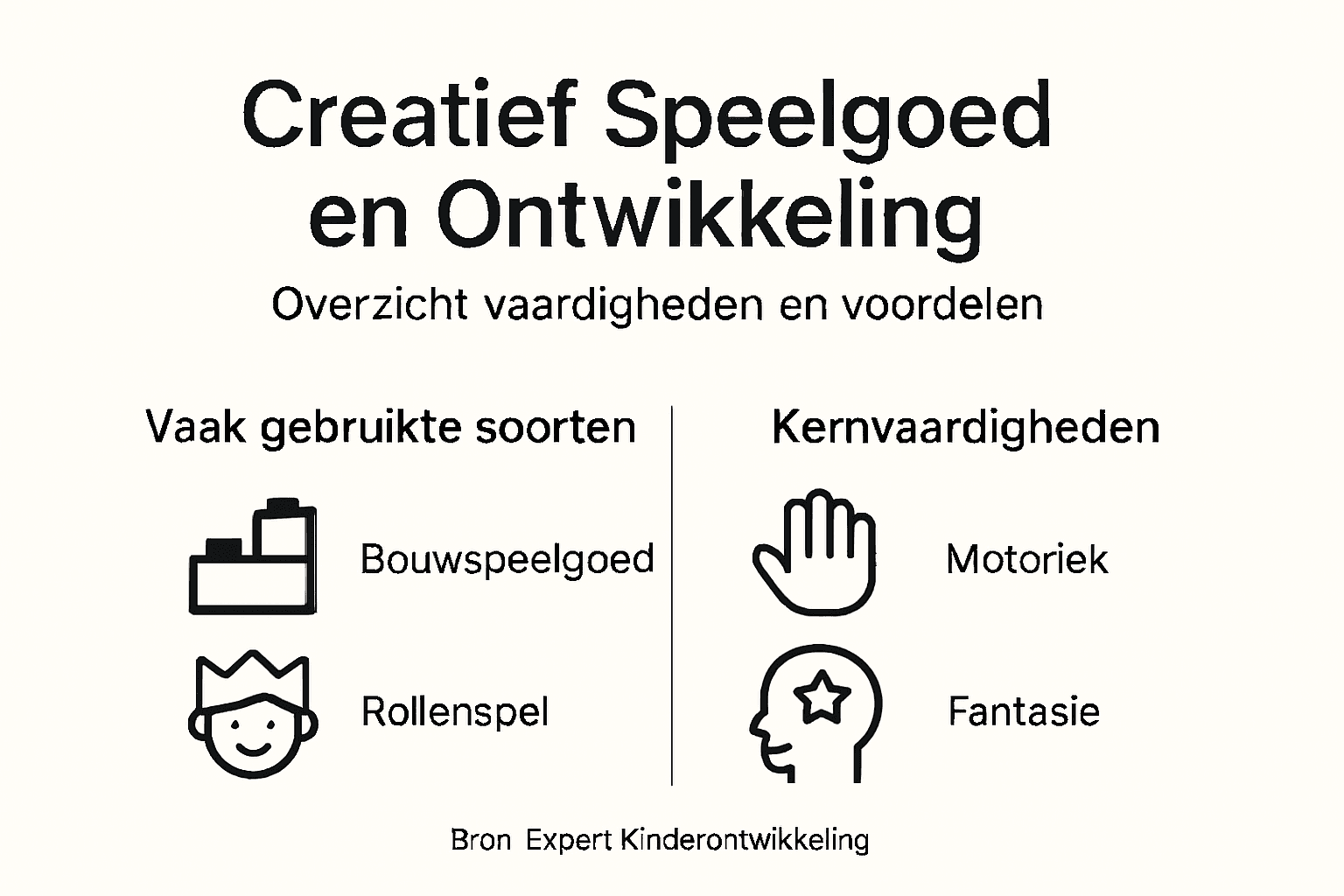
Creative toys come in many forms, and each type offers something different for your child. It's not that one type is better than another. In fact, they work together to support different aspects of growth.
Construction toys are probably the most obvious. Magnetic tiles, blocks, and building sets help children practice their logical thinking as they build structures. They practice fine motor skills, patience, and the ability to build something more complex step by step. Magnetic tiles stimulate creativity and logical thinking in a way that absolutely captivates children.
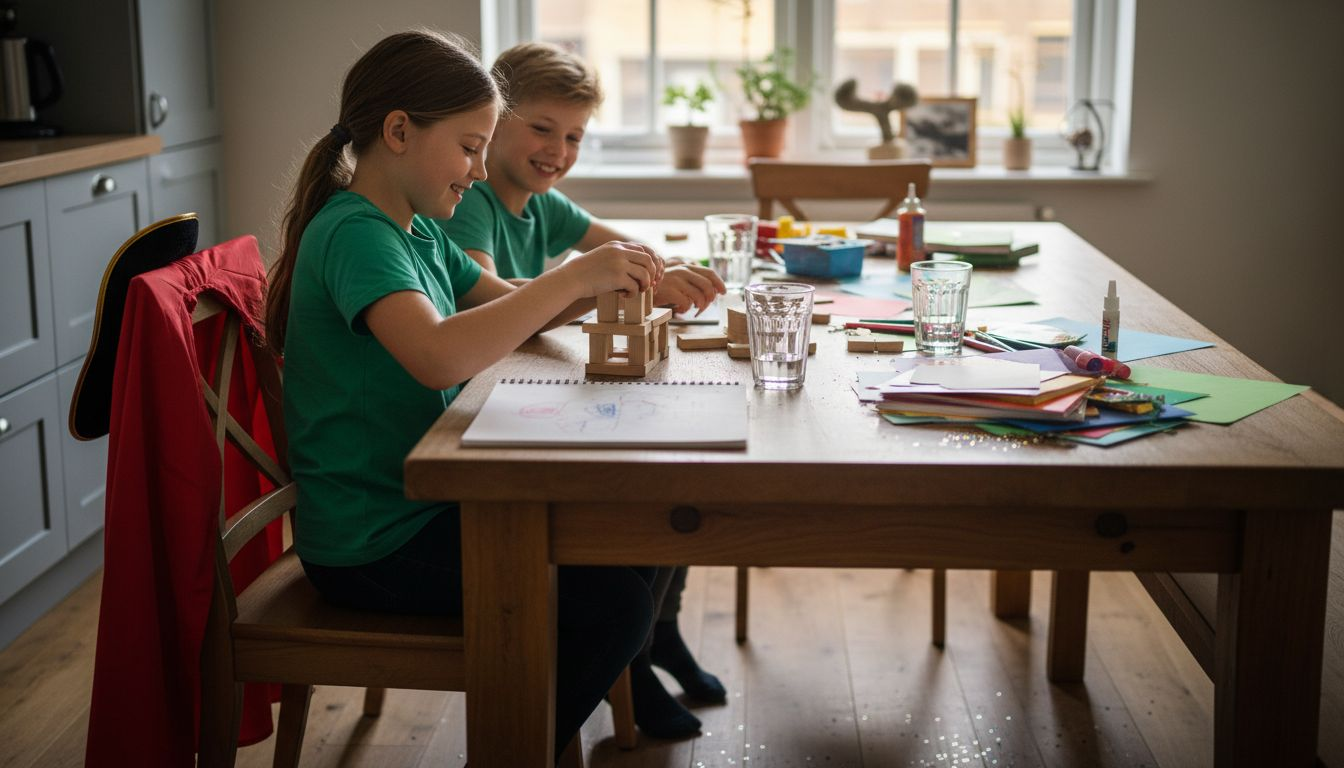
Role-playing is very different, but equally important. When children dress up, use dollhouses, or act out scenarios, they practice social and emotional skills. They learn what it feels like to be someone else, which develops empathy. Role-playing helps children develop social and emotional skills by acting out realistic situations.
There are also craft and art sets, musical instruments, and combinations. These give children the freedom to express themselves in their own way. Some children love building, others enjoy making and decorating. It's all about having a variety of options.
What's interesting is that magnetic tiles and building sets perfectly complement role play . Your child builds a house, and then the dolls play in it. They build a racetrack, and at the same time, they tell the story of the cars. The toys work together in their imagination.
The beauty is that you don't have to have everything at once. See what appeals to your child and start there. Most children find their own way to the types of play they need for their development.
Below you'll find an overview of creative toys and what they teach children:
| Type of creative toys | Developed skills | Unique aspect when using |
|---|---|---|
| Construction toys | Logical thinking, fine motor skills | Always new creations possible |
| Role play & fancy dress | Social, emotional skills | Empathy and understanding |
| Craft and art sets | Self-expression, eye-hand coordination | Free design without fixed rules |
| Musical instruments | Sense of rhythm, listening, collaboration | Musical expression and discovery |
| Combinations of the above | Multidisciplinary, creative problem solving | Game formats merge into one experience |
Practical tip: Don't have all sorts of toys available at once. Rotate them every few weeks so each toy feels new and exciting to your child.
This is how toys stimulate imagination and skills
Imagination isn't something children have or don't have. It's something you develop through doing, playing, and trying things out. Toys are actually the tools through which this happens.
When your child starts playing with building sets, something special happens in their minds. They don't just see bricks or tiles. They see a castle, a bridge, a secret hideout. Toys spark the imagination by encouraging children to create stories and find creative solutions. This is where real growth happens.
Their skills grow as they play. Fine motor skills develop as their fingers become more precise. Problem-solving skills develop as they discover something doesn't work, and they have to figure out how to do it differently. They learn patience, because some things just take time.
Social skills also develop naturally. When children play and build together, they have to communicate, compromise, and listen to each other. They share ideas and help each other. All of this happens without even talking about it.
The interesting thing is that magnetic building playfully engages all these skills simultaneously . They build, they imagine, they practice patience, and they do all of this out of intrinsic motivation. They want to do it because it's fun, not because someone told them to.
That distinction is crucial. When children play because they want to play, they learn more deeply, and what they learn sticks better.
Practical tip: Don't sit nearby while your child plays, but stay nearby where you can observe. This gives them the freedom to find their own way, while you can see how their skills develop.
Safety, sustainability and material choices
When choosing toys for your child, two factors play a role that are not obvious but very important: safety and the impact the toy has on our planet. These aren't luxury considerations. They are basic requirements.
Safety starts with the choice of materials. Many toys contain harmful substances that children should not inhale or absorb through their skin. Safe toy design avoids harmful additives like plasticizers and flame retardants that can pose unnecessary health risks. Look for toys that are BPA-free and free of toxic dyes.
Sustainability goes beyond just the toys themselves. It's about how they're made, how long they last, and what happens to them when your child grows out of them. Good toys last. They don't break after two weeks of play. This means less waste, fewer new purchases, and less junk in our waste streams.
A key aspect is reusability. Toys that children can pass on to younger siblings or friends last longer and do more good. Magnetic blocks and tiles are perfect for this. They don't break easily, they don't age, and they can last for decades.
Material choices also influence what happens after the toy is used. Can it be recycled? Or does it simply end up in a landfill? Plastic is cheap, but it doesn't disappear. Research into toys designed with reuse in mind.
As a parent, you have power through what you buy. When you make conscious choices about safety and sustainability, you encourage manufacturers to do better.
Practical tip: Always check the product label for certifications and avoid toys without clear information about materials. Choose brands that are transparent about their production process and materials.
Here's a summary comparison of material choices in creative toys:
| Material | Safety | Sustainability | Possibility of recycling |
|---|---|---|---|
| Wood | Usually safe with non-toxic paint | Very durable, wear-resistant | Easily recyclable/degradable |
| BPA-free plastic | No harmful substances | Can last a long time | Variable, sometimes recyclable |
| Recycled plastic | Avoid new plastic production | Depending on quality | Recyclable with the right systems |
| Metal parts | Strong and safe with the right coating | Very sturdy | Easily recyclable |
| Fabrics/textiles | Safe with natural materials | Durable as long as the weave is sturdy | Compostable with cotton/linen |
Common mistakes when choosing creative toys
When choosing toys, parents often make the same mistakes without even realizing it. These aren't stupid mistakes. They just feel logical at the time. But if you're aware of them, you can avoid them.
The first mistake is believing that expensive toys are better. This is incorrect. An expensive toy can be just as boring as a cheap one. What matters is what your child can do with it, not how much it cost. Many of the best toys for creative play are actually quite simple and affordable.
Another common misconception is that toys with many automatic functions are more stimulating than simple toys . Buttons that beep, lights that flash, sounds that play. This seems educational, but it's actually the opposite. Automatic toys do the thinking for your child. Magnetic blocks and open-ended toys give children control and room for their own ideas.
Parents also feel pressured to choose toys with a clear learning objective. But free play without a specific goal actually fosters creativity and problem-solving skills much more effectively. If your child wants to build something on their own, they'll learn more than if you force them to.
The biggest mistake of all is having too many toys at once. This seems illogical, because more must be better, right? But no. Too many toys overwhelm children and diminish the quality of their play. They don't know where to begin. They play like birds with everything instead of diving deep into one thing.
Quality trumps quantity. Always.
Practical tip: Choose open-ended toys that allow your child to create their own meaning, not toys that already have a specific purpose. Less is more when it comes to creative play.
Stimulate your child's creativity and development with magnetic toys
The article emphasizes the importance of creative toys for stimulating children's thinking, fine motor skills, and problem-solving abilities. Many parents are looking for safe and durable toys that not only entertain but also stimulate the imagination without being overwhelming. Magnetic toys offer precisely this unique combination by allowing children to create and experiment with endless possibilities.
Magnetic Orbit is a perfect example of how your child learns to build, concentrate, and collaborate through play. With a wide range of themes and combinations, including handy accessories , you can tailor the toy to your child's interests. This toy is also BPA-free and built to last, so your child will enjoy it for years to come.
Don't wait any longer to choose creative toys that truly support and inspire your child's development. Discover the extensive selection at tilesminds.com and give your child the opportunity to grow through play. Start stimulating imagination and fine motor skills with magnetic building today.
Frequently Asked Questions
How do creative toys stimulate my child's development?
Creative toys stimulate children's development by encouraging active thinking and problem-solving. They engage their imagination, social skills, and fine motor skills.
What are the different types of creative toys and their benefits?
There are different types of creative toys, such as building toys, role-playing, craft sets, and musical instruments. Each type offers unique benefits, such as developing logical thinking, social skills, self-expression, and collaboration.
Why is free play without a specific goal important for children?
Free play without a specific goal promotes creativity and problem-solving skills. When children decide for themselves what they want to build or play, they learn more than when there's a fixed goal.
How can I choose safe and sustainable creative toys?
Choose creative toys that are free of harmful substances and made from sustainable materials. Look for certifications and companies that are transparent about their production processes.