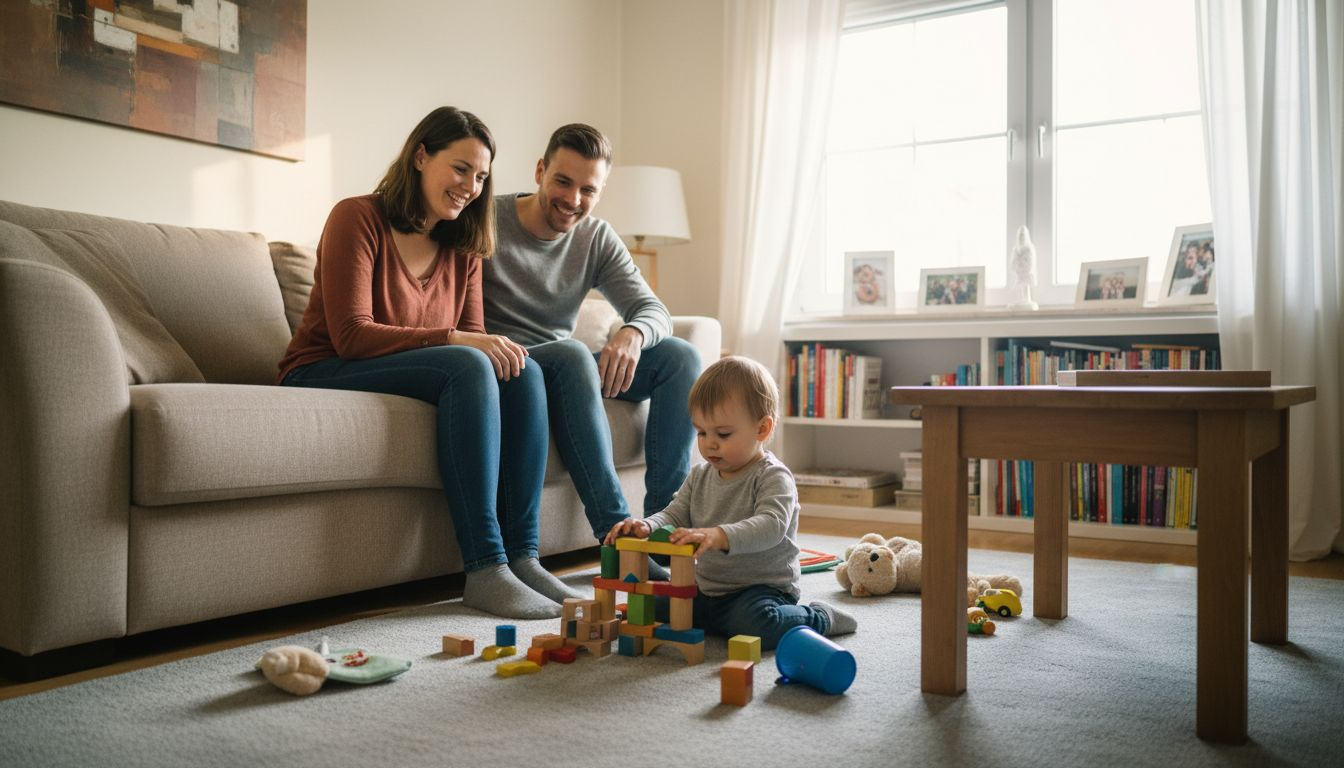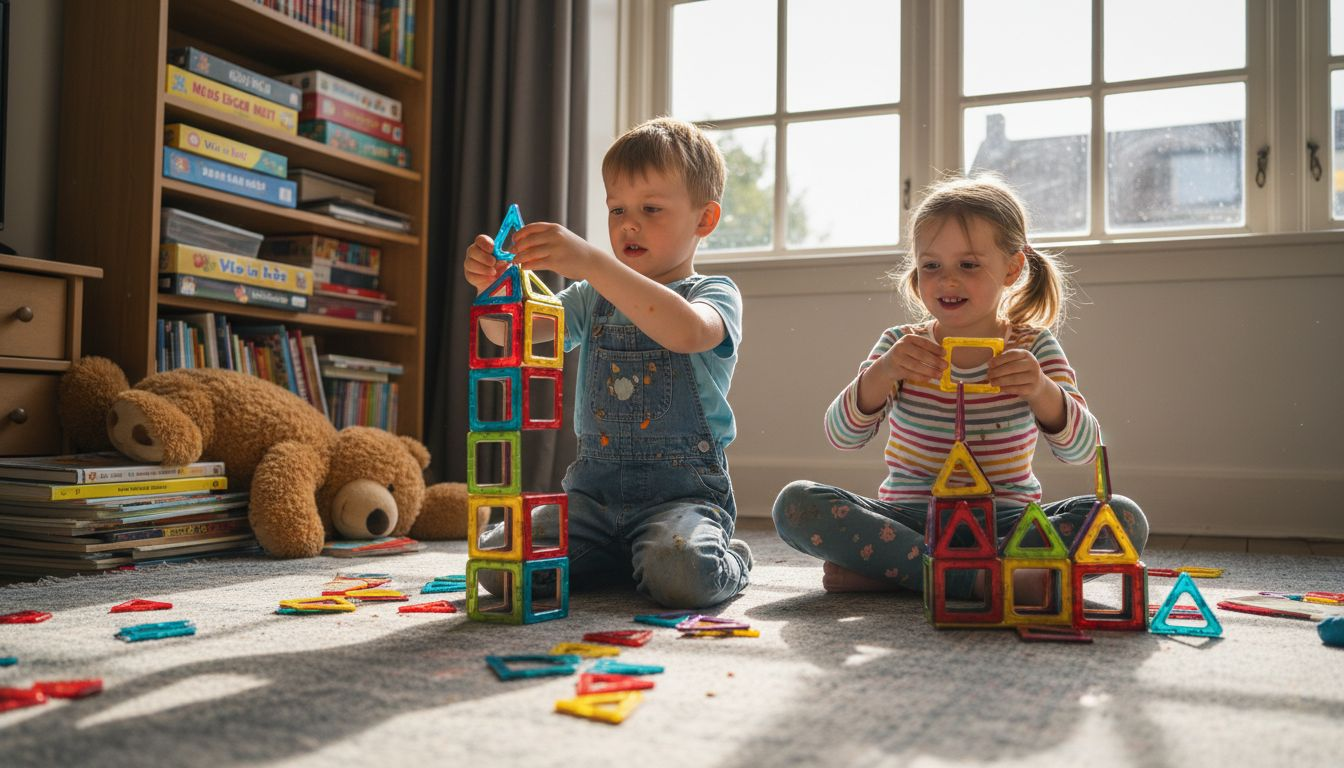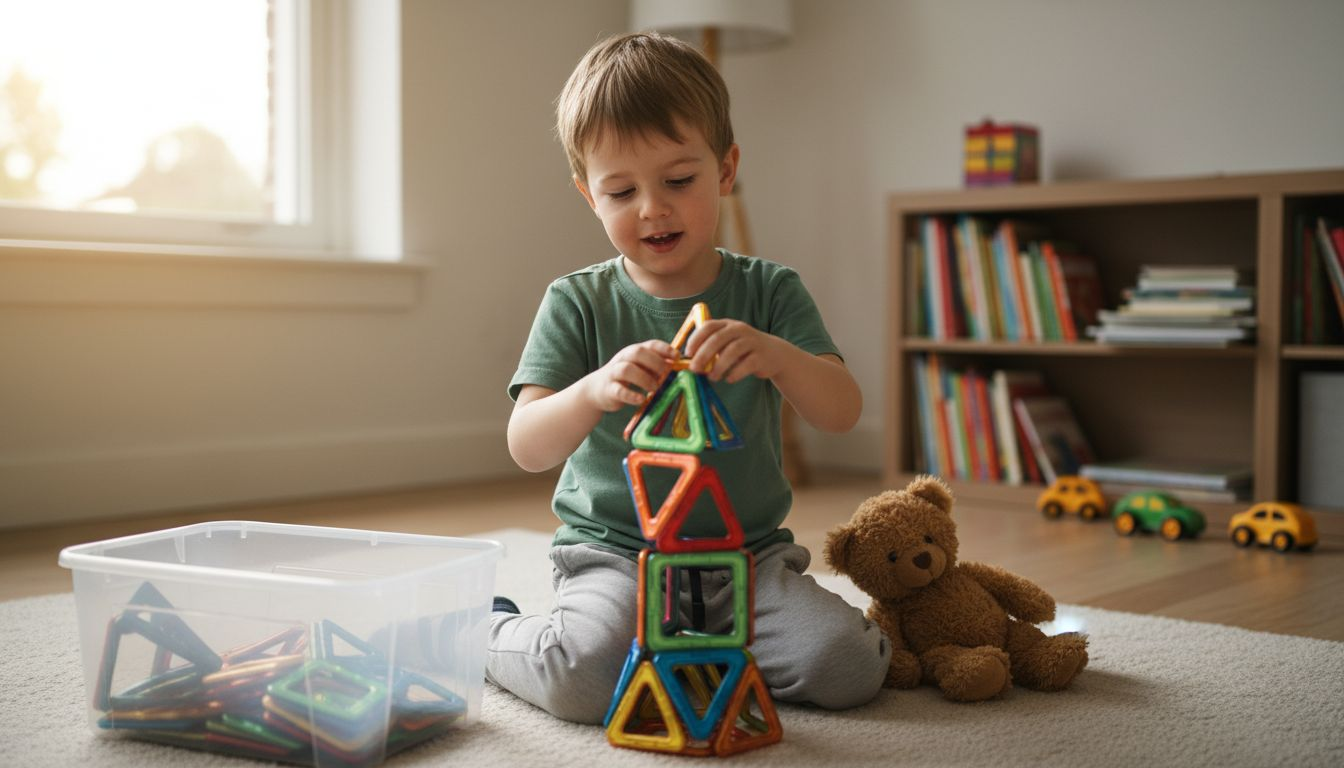
Every parent knows the dilemma of choosing fun and safe toys for young children. Magnetic toys are popular because of their countless creative possibilities, but they also require extra attention to safety and age-appropriateness . By paying attention to the right shapes and strengths, as recommended by European guidelines, play not only becomes fun but also teaches your child motor skills and the basic principles of magnetism. Discover what to look for for carefree playtime.
Table of contents
- Step 1: Select suitable magnetic toys
- Step 2: Prepare a safe play space
- Step 3: Introduce the basic principles to your child
- Step 4: Encourage creative building and combining
- Step 5: Check safety and cleanup together
Short Summary
| Key point | Explanation |
|---|---|
| 1. Choose suitable magnetic toys | Select toys that suit your child's age and motor skills for safe and fun play. |
| 2. Create a safe play space | Ensure an area is free of sharp objects and has sufficient storage space to prevent accidents. |
| 3. Introduce basic principles of magnetism | Simply explain how magnets work so children understand how to use the toy. |
| 4. Encourage creative building | Encourage your child to experiment freely with shapes and structures without specific goals. |
| 5. Check safety and cleanup | Make tidying up a routine and regularly check toys for damage to ensure safe play areas. |
Step 1: Select suitable magnetic toys
Choosing the right magnetic toys for your child is more than just buying something that looks nice. You want toys that match your child's current abilities, that they can grow with, and, above all, that are safe. Good magnetic toys open doors to creative play, but only if you know what to look for.
The first question you should ask yourself is: how old is my child and what motor skills are they already capable of? A two-year-old toddler has different needs than a five-year-old. Larger tiles are better for younger children because they're less prone to accidents and easier to hold. As your child gets older, smaller pieces and more detailed building projects are possible. Consider your child's fine motor skills. Can they grasp well and make fine movements, or should you choose something significantly simpler? The importance of choosing safe magnets with the appropriate strength and shape that are suitable for your child cannot be overstated.
Next, consider quality and safety. Good-quality magnetic toys feel sturdy, have no loose parts, and the magnets are truly secure. Always check that the toy is free of toxic substances and meets European safety standards. Many parents overlook this, but it really matters. Good magnets retain their strength for a long time, so your investment lasts longer. Also, pay attention to the shape of the tiles. Are they flat or do they have rounded edges? Rounded edges are safer, especially for small children who still like to put everything in their mouths.
Finally, consider how much you want to start with. You don't have to buy everything at once. A basic set can do a lot. Your child can build a rocket, a farm, or anything else they can imagine. You can always add more sets later as their desires grow. Many parents find they want to inspire their children with a variety of building options , so think about what your child enjoys and choose accordingly.
Here you will find a handy overview of magnetic toys and their suitability per age group:
| Age group | Type of magnetic toy | Advantages | Points of interest |
|---|---|---|---|
| 1-3 years | Large magnetic tiles | Easy to grip | Prevent the risk of swallowing |
| 4-6 years | Smaller tiles, complex shapes | Fine motor skills challenge | Magnets well attached |
| 7+ years | Detailed building sets | Stimulates technical insight | Check set for damage |
Expert Advice: Always check the age recommendations on the packaging and test your child's readiness for smaller toys. Some children are ready for smaller toys faster than others, so follow your child's instructions, not just the guidelines.
Step 2: Prepare a safe play space
A safe play space is the foundation on which everything changes. When you create a space where your child can play with magnetic toys, it's not just about convenience. It's about allowing your child to play in peace, knowing they're doing so safely.
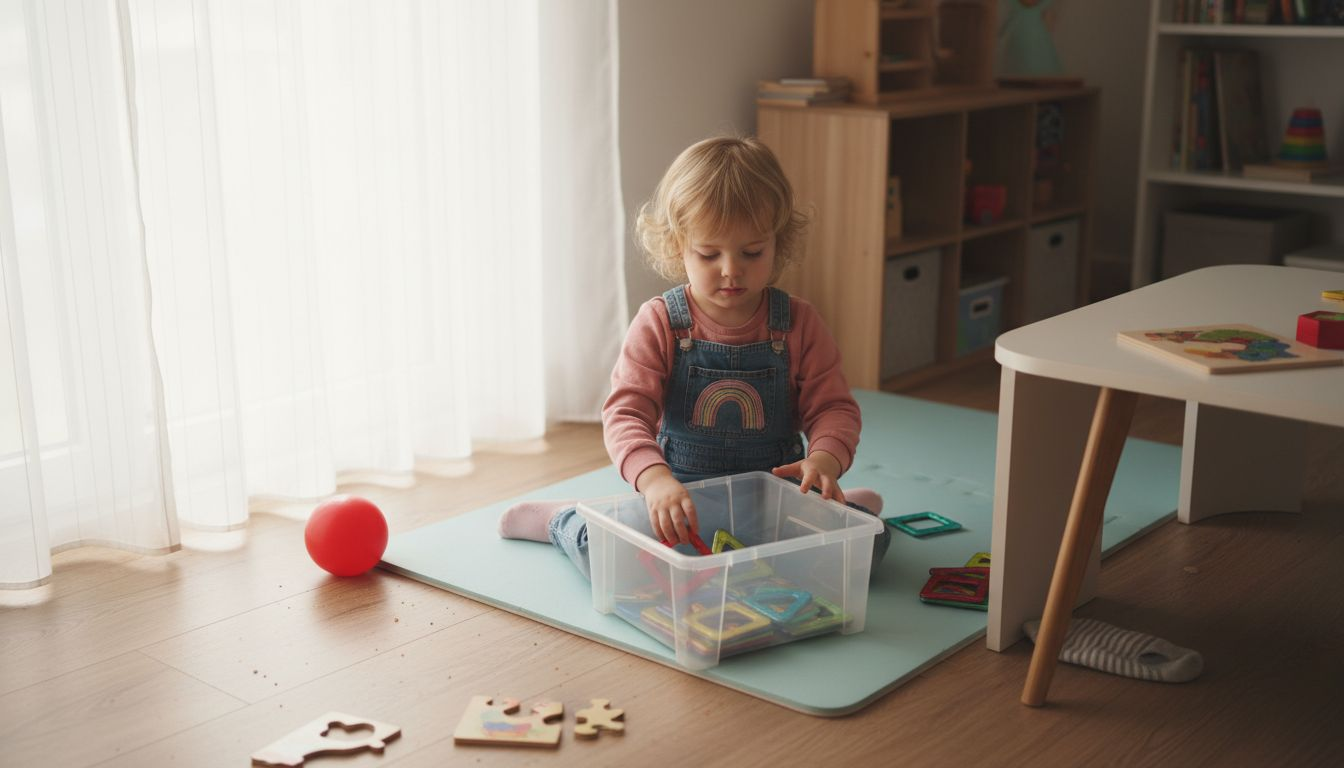
Start by clearing the play area of things that shouldn't be there. Remove small objects, loose magnets, or anything small enough to swallow. This sounds obvious, but many parents forget that magnetic toys can be dangerous when mixed with other small toys. Make sure the floor is clean and free of sharp edges or things your child could trip over. A soft surface like a play mat or carpet provides extra protection and muffles noise. Also, check the table or surface where your child will be building. Is it stable? Can it tip over? A sturdy surface prevents frustration and danger. Make sure loose magnets don't pose a risk by always storing them away from their toys.
Next, pay attention to the surrounding area. Sharp corners, hot surfaces, windows, or things that can easily break should be out of reach. A well-organized play area helps your child concentrate better and play more safely. Provide good lighting so you can see everything clearly and your child knows exactly where all the parts are. If your child is still young, regular supervision is essential. You don't have to sit right next to your child all the time, but be nearby and keep an eye on them. A play area without the distraction of television or other noise helps your child become more engaged in play.
Think about storage, too. Magnetic toys need to be stored properly so that loose parts don't get scattered around. A box with compartments or a storage basket works well. This not only prevents accidents but also helps your child learn that tidying up is part of play. An organized space feels calmer and makes it easier to start with a clean slate every time.
Practical advice: Create a single, designated play area where magnetic toys are always allowed, so your child knows where they can play and you can supervise more easily. This creates a sense of calm and routine for everyone.
Here you can see the most important aspects for setting up a play area safely:
| Aspect | Why important | Practical Tip |
|---|---|---|
| Tidy floor | Prevents tripping and falling | Use a play mat or carpet |
| Good lighting | Better visibility while playing | Choose natural light or lamp |
| Clear storage | Prevents lost parts | Use baskets or sorted boxes |
| Supervision | Quick intervention in case of an accident | Stay close by, not directly next to |
Step 3: Introduce the basic principles to your child
Children understand magnetic toys much better when they know how they actually work. You don't have to be a physics teacher to explain the basics to your child. With simple examples and playful learning, magnetism becomes something magical that they truly grasp.
Start small and concrete. Let your child feel how two magnets attract and repel each other. "Look, these magnets want to be together, but these don't want to touch." Many children find this fascinating and want to try it again and again. This is exactly what you want. By experimenting with how magnets work, children learn more than you can explain with words alone. Let them feel that magnets can be stronger or weaker, and that this affects how well the tiles stick together. Practice with different combinations. Can two tiles stick together? Three tiles? What happens if you stick many together? These questions help your child think actively about how magnetic toys work.
Next, connect this with safety and care. Explain that magnets are powerful and therefore must be handled with care. Not because it's dangerous, but because the toy needs to continue to function properly. "If we take good care of magnets, they'll stay strong and we can play with them for a long time." This helps your child understand that care is part of the fun, not something that hinders it. When children understand why rules exist, they're happy to follow them. Also, show them how they can build things using magnetic force. Stacking a tower, building a house, something that changes shape. With each success, their understanding and confidence grow. Your child will then understand not only how magnets work, but also what they can create with them.
Helpful tip: Play along a few times yourself and show them how much fun experimenting can be. When your child feels your enthusiasm, learning naturally becomes an adventure instead of a lesson.
Step 4: Encourage creative building and combining
Creativity flourishes when children feel they can experiment freely. With magnetic toys, you give your child a tool with which almost anything is possible. The key is to give them space and gently nudge them in a direction every now and then.
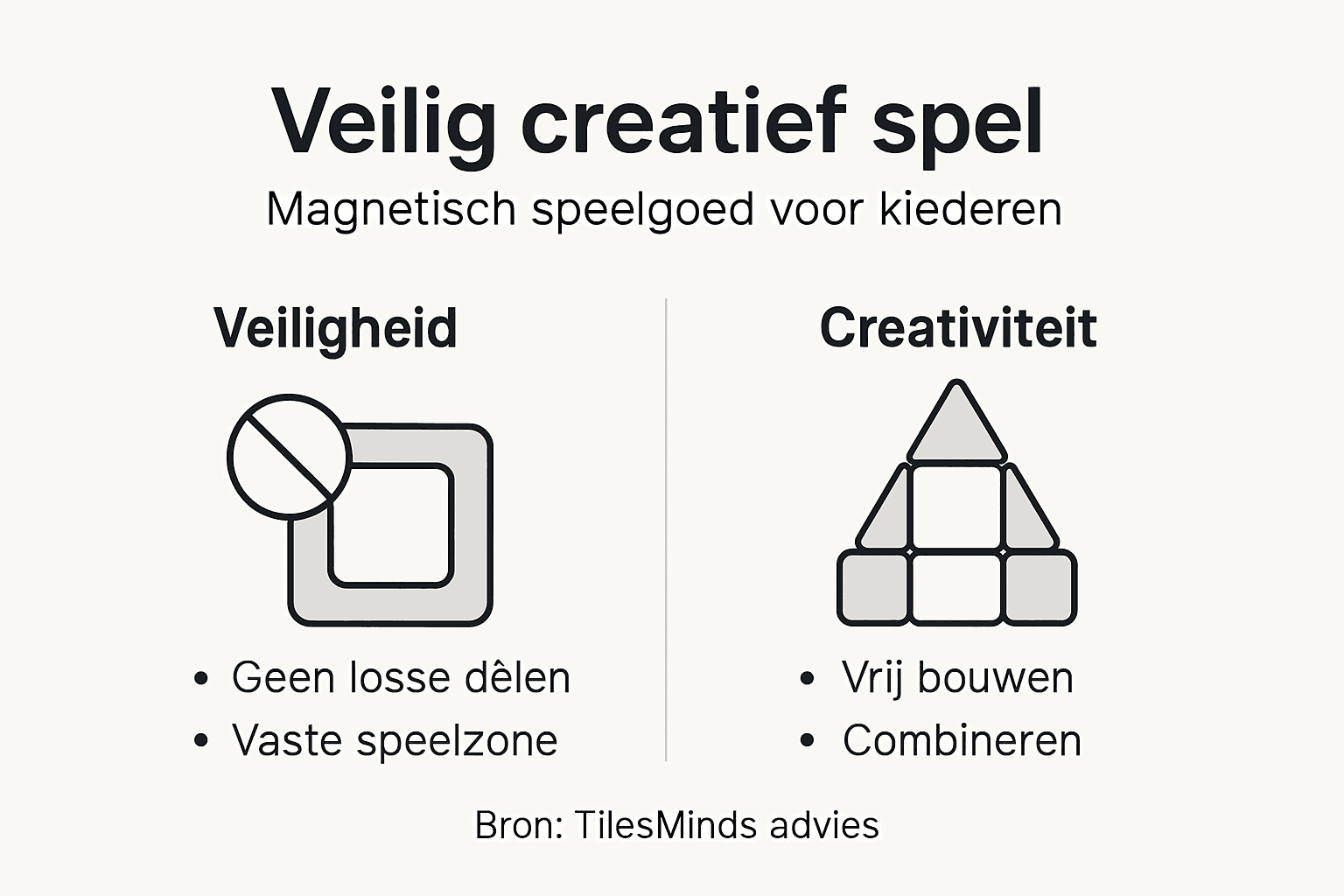
Start by not having a goal in mind. This is important. Many parents want to steer their child toward a specific creation, but magnetic toys work best when your child is free to explore. Don't say "build a house," but rather "what do you want to build today?" Let your child experiment freely with shapes, sizes, and combinations. Some things will work, others won't. That's precisely the point. By experimenting with combining and constructing magnetic pieces, children learn how things fit together and what's possible. Also, show your child that there's no such thing as a "wrong" construction. A crooked building can be a work of art. An odd shape can signify something new. This helps your child build self-confidence and the courage to take risks.
Then add inspiration in subtle ways. Instead of giving instructions, ask questions. "What would happen if you tilt this tile?" or "Can you make something that moves?" These questions help your child generate ideas themselves instead of imitating them. Also, encourage combining. What happens when you mix different colors? Can you connect two separate structures? By mixing different materials or connecting structures, children develop an understanding of how things work together. Praise the process, not just the result. "You were really patient with that tall tower" works better than just "nicely built." This teaches your child that effort is valuable, not just the end result.
Practical advice: Regularly set aside some creations instead of tidying everything away, so your child can see how their creations grow and build on them. This provides peace and a sense of progress.
Step 5: Check safety and cleanup together
Tidying up isn't just housework. It's a time to teach your child about care and responsibility. Moreover, checking them regularly helps ensure magnetic toys remain safe for years of play.
Make tidying up part of the play routine. Tell your child that all toys should be put away together after use, just like after eating. This sounds simple, but it works. Children feel involved and learn that fun and tidying up go hand in hand. While tidying up, also check if everything is still intact. Are there cracks in the tiles? Are all the magnets still securely in place? Are any small parts missing? Checking this is crucial. Regularly checking the condition of magnetic toys prevents damaged pieces from posing a risk. Damaged tiles can develop sharp edges. Loose magnets can fall out of their holders. These are things you'd rather avoid. Tell your child what you're doing as you check. "Look, this tile is still intact and sturdy. We can use it safely." This helps your child understand the importance of caring for toys.
Keep everything in a safe place. A box with compartments, a storage basket, or a toy chest works well. It's important that loose parts aren't left lying around. Store materials in a place your child can easily access, so they can help. By putting away toys together with children as part of the routine, they learn not only to maintain order but also to use toys and their surroundings responsibly. Don't make it difficult. A few minutes of tidying up at the end is all you need. Many parents find that their children actually enjoy this when it's a shared time instead of a punishment.
Helpful tip: Make a checklist with simple drawings and hang it near the storage area. Are the tiles colored? Are the magnets sturdy? This will make it clear to your child what needs to be checked.
Discover safe and creative magnetic toys for every child
The article emphasizes the importance of choosing magnetic toys that not only stimulate creativity but are also safe for your child. Parents are looking for toys that are appropriate for their child's age and motor skills, while also being sturdy and BPA-free. Finding quality products that remain safe while still offering enough space for experimenting and building is a challenge. Therefore, it's crucial to invest in sets that grow with your child and vary in shape and complexity.
At TilesMinds, you'll find a wide range of magnetic toys designed with these needs in mind. From large magnetic tiles for the youngest children to detailed Magnetic Orbit sets for older kids who want to develop their engineering skills. Everything is made of durable materials with strong yet safe magnetic fields, so your child can play worry-free.
Choose magnetic toys that combine creativity and safety today. Visit our Magnetic Toys page - Ordered before 5 p.m., delivered tomorrow - and start building a safe play world full of inspiration today. Discover how easy responsible play can be at TilesMinds and order your favorite set now.
Frequently Asked Questions
How do I choose the right magnetic toys for my child?
Start with your child's age and motor skills in mind. Choose larger tiles for younger children and smaller, more complex shapes for older ones. Also, test the safety aspects and quality of the toys to prevent accidents.
What do I need to do to create a safe play space for magnetic toys?
Make sure the play area is free of small objects and sharp edges. Use a soft surface and ensure it's stable enough to prevent tipping. Also, keep dangerous or fragile items out of reach.
How do I introduce magnetism to my child during play?
Explain how magnets work using simple examples of attraction and repulsion. Let your child experiment with different combinations of magnets and toys. This hands-on learning makes magnetism fun and understandable.
What can I do to stimulate my child's creativity with magnetic toys?
Encourage your child to experiment freely without specific goals. Ask open-ended questions like, "What do you want to build today?" to foster creative thinking. This helps encourage your child to explore new shapes and structures.
How do I check the safety of magnetic toys?
Make sure you regularly check for damage or loose parts. Check that the magnets are securely attached and that there are no sharp edges. Perform these checks after every play session to ensure safety.
How do I make tidying up fun for my child?
Make tidying up a shared activity and integrate it into playtime routines. This can be done by putting toys away together and checking for damage. This way, your child learns that tidying up offers an opportunity to care for the toys.