Every parent wants toys that are not only safe but also have a positive impact on the world their children grow up in. Choosing sustainable toys goes beyond avoiding harmful substances and choosing eco-friendly materials. It offers children the opportunity to develop environmental awareness through play and stimulates creative thinking. This guide will help you discover how smart material choices, recognized certifications, and circular initiatives contribute to a healthier future for families in Central Europe.
Table of contents
- What does sustainability mean in toys?
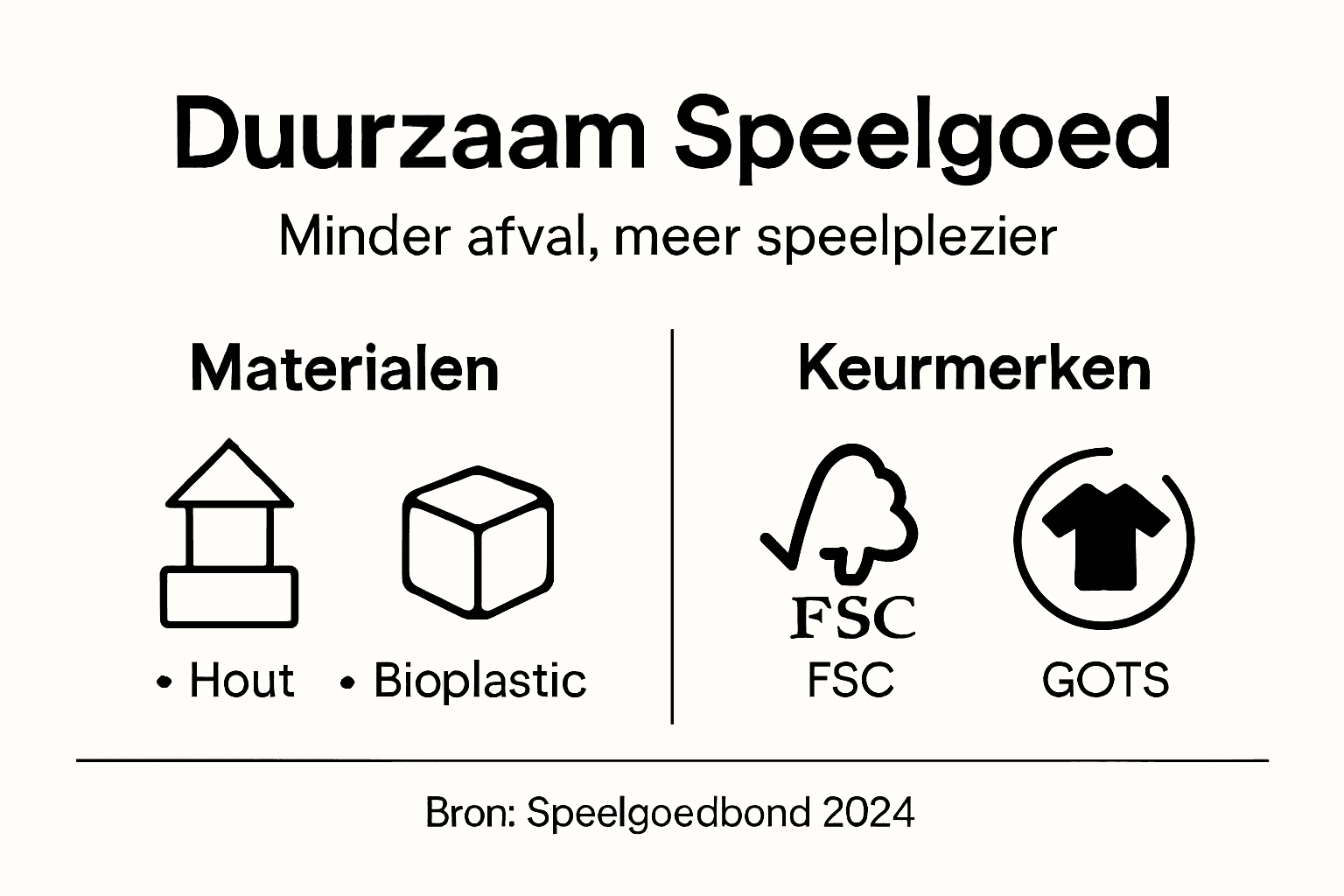
- Various sustainable materials and quality marks
- Production processes and circular initiatives
- Safety standards and regulations in Central Europe
- Risks, Misconceptions, and How Parents Choose
Key points
| Point | Details |
|---|---|
| Sustainability in toys | Sustainable toys minimize environmental impact and maximize educational value for children. |
| Selection of materials | Choose toys made from recycled wood, biodegradable plastics, and organic textiles to reduce their environmental impact. |
| Safety standards | Always check for official quality marks such as CE marking to ensure the safety of toys. |
| Conscious choices of parents | Parents should be critical when selecting toys and pay attention to the manufacturer, choice of materials and independent test results. |
What does sustainability mean in toys?
Sustainability in toys goes beyond simply choosing environmentally friendly materials. It's a holistic approach that encompasses the entire lifecycle of a toy, from production through use and final disposal. Sustainable toy systems aim to minimize negative environmental impacts and maximize educational and developmental value for children.
The core of sustainable toys includes several critical aspects:
- Material use : Preference for recycled, renewable or biodegradable raw materials
- Production process : Minimal CO2 emissions and energy consumption
- Durability : Robust design that lasts long and allows for reuse
- Educational value : Toys that teach children about environmental awareness and sustainability
The ultimate goal of sustainable toys isn't just to create a product, but to contribute to a broader vision of responsible consumerism . By making conscious choices, parents can have a significant impact on both the environment and their children's development.
Pro tip: Choose toys that are not only sustainably produced but also provide years of fun and learning opportunities.
Various sustainable materials and quality marks
Choosing sustainable materials for toys is crucial for the environment and children's health. Toxic chemicals in toys pose a serious threat, making the selection of safe and environmentally friendly materials increasingly important.
The most common sustainable materials for toys are:
- Recycled wood : From certified, sustainably managed forests
- Biodegradable plastics : Made from plant sources such as corn starch
- Recycled plastic : Carefully cleaned and checked for harmful substances
- Organic textiles : Cotton and wool certified by recognized environmental organizations
When choosing sustainable toys, some important quality marks are of great importance:
- FSC quality mark : Guarantees sustainable forest management
- Global Organic Textile Standard (GOTS) : Monitors organic textile production
- EU Ecolabel : Guarantees environmentally friendly production processes
- REACH certification : Protects against harmful chemicals
Always look for recognized quality marks that guarantee the safety and durability of toys.
These certifications help parents make informed choices and protect children from potentially harmful materials. By choosing certified toys, we contribute to a healthier future for our children and the planet.
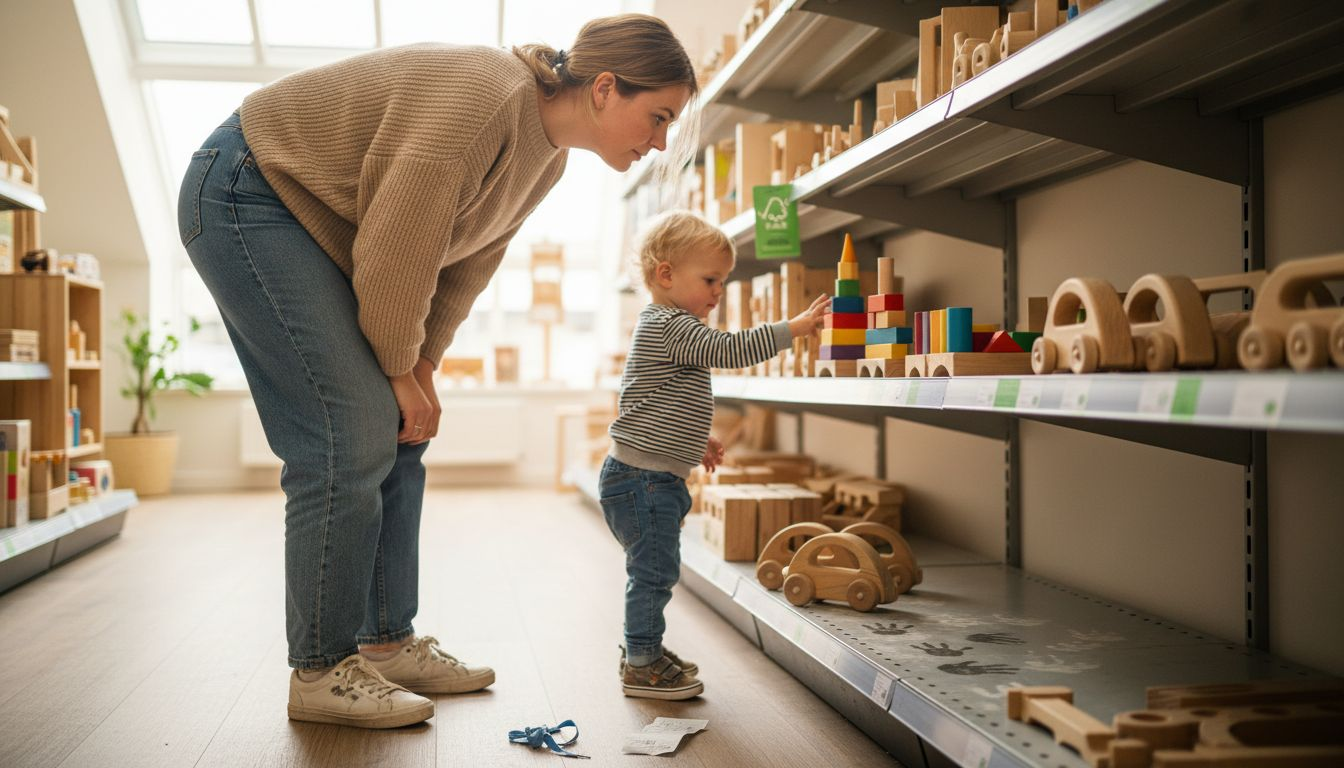
Below is an overview of sustainable materials and their impact on toys and the environment:
| Material type | Benefit for the child | Environmental impact |
|---|---|---|
| Recycled wood | Warm, safe playing feeling | Slows deforestation |
| Biodegradable plastic | Fewer chemicals in toys | Rapid decomposition in nature |
| Recycled plastic | Light and sturdy | Limited plastic waste |
| Organic textiles | Soft and skin-friendly | Reduces pesticide use |
Pro tip: Always check the material composition and quality marks before purchasing toys for your child.
Production processes and circular initiatives
The toy industry is increasingly transitioning to a circular model that prioritizes sustainability. Circular initiatives in the toy sector focus on minimizing waste and maximizing reuse, thereby reducing the ecological footprint.
Characteristic aspects of modern, sustainable production processes include:
- Material reduction : Minimizing raw material consumption
- Upcycling : Transforming discarded materials into new products
- Modular design : Toys that are easy to repair and modify
- Energy-efficient production : Using renewable energy sources
Companies are introducing increasingly innovative methods to achieve sustainability goals:
- Developing repair services for toys
- Implementing recycling programs
- Using biodegradable packaging materials
- Collaborating with local communities for reuse initiatives
The circular economy in toys is about more than just recycling – it's about creating valuable, long-lasting products.
This strategic approach not only helps the environment but also teaches children important lessons about responsibility and sustainability. By choosing conscious production methods, manufacturers contribute to a more conscious and environmentally friendly future.
The table below shows a comparison of regular versus circular production in the toy industry:
| Production model | Main feature | Long-term effect |
|---|---|---|
| Traditional | Linear raw material use | Fast waste flow |
| Circular | Reuse and upcycling | Less waste, more reuse |
Pro tip: Choose toys from brands that are transparent about their production processes and sustainability efforts.
Safety standards and regulations in Central Europe
Toy safety in Central Europe is strictly regulated by comprehensive European directives. EU toy safety regulations form the basis for protecting children from potential health risks and dangerous products.
Key aspects of these safety standards include:
- Chemical composition : Strict limits on harmful substances
- Mechanical safety : Requirements for fracture and wear resistance
- Electrical safety : Protection against electrical risks
- Hygiene : Standards for cleaning and maintainability
The official safety obligations for toy manufacturers are:
- Performing comprehensive safety assessments
- Obtaining CE marking
- Documenting production processes
- Transparent reporting on material choices
Safety regulation is not just an administrative obligation, but a fundamental protection for vulnerable children.
These regulations vary by region, but European standards are generally the most demanding. Manufacturers must continually demonstrate that their products meet the latest safety standards, which requires continuous innovation and quality control.
Pro tip: Always check that toys carry the official CE marking as proof of safety and conformity.
Risks, Misconceptions, and How Parents Choose
Parents face complex challenges daily when selecting safe and sustainable toys. Risks in toys can be hidden behind attractive packaging and seemingly harmless products.
Common misconceptions about toy safety include:
- Availability = Safety : Not every available product is automatically approved
- Appearance determines quality : Beautiful packaging says nothing about internal material safety
- Cheap = Good : Lower price may indicate poorer quality controls
- Online purchases are just as safe : Digital sales have less strict controls
When choosing toys, experts recommend the following strategies:
- Check official safety marks
- Please note material composition
- Research producer and production standards
- Consult independent test results
Conscious parents protect children by being critical, not by blindly trusting.
The most important protective mechanisms for parents are transparency, education, and constant vigilance. By staying well-informed, parents can make informed choices that ensure their children's safety.
Pro tip: Use digital product passports and official quality marks as a reliable guide when selecting toys.
Sustainable and Safe Play with Magnetic Toys
The challenge many parents face is finding toys that are not only sustainably produced but also safe and stimulating for their children. This article emphasizes the importance of using materials free of harmful substances and choosing toys that are durable and offer educational value. At Tilesminds, we understand this concern and offer durable magnetic toys that encourage children to play creatively and educationally without compromising safety.
Discover our extensive collection, such as the 125-Piece Tiles and the innovative Magnetic Orbit, made from BPA-free materials and designed for endless playtime fun. Don't wait any longer and give your child the opportunity to play mindfully and safely. Visit Tilesminds today and choose toys that respect the future of our children and our planet.
Frequently Asked Questions
What are the most important features of sustainable toys?
Sustainable toys are characterized by the use of environmentally friendly materials, a robust design that lasts a long time, and educational value that makes children aware of sustainability.
Why are quality marks so important when choosing toys?
Quality marks, such as the FSC quality mark and GOTS, guarantee that toys are safe and produced in an environmentally friendly way, which helps parents make informed choices.
How do sustainable toys influence children's development?
Sustainable toys not only provide fun, but also contribute to developing environmental awareness and a sense of responsibility in children.
What are circular initiatives in the toy industry?
Circular initiatives aim to minimize waste and maximize reuse through upcycling and modular design, which has a positive impact on the environment.