
Every parent in Central Europe knows how important it is for toys to be not only fun but also safe and educational. The right toys help children discover their creativity and develop fine motor skills. Accessible toys focus on inclusion and equal opportunities for all children, ensuring that play remains a source of development for every child. Discover how accessible magnetic toys meet strict safety requirements, stimulate creativity, and simultaneously strengthen fine motor skills.
Table of contents
- What is accessible toys and why is it important?
- Key features of accessible magnetic toys
- Different types of accessible toys explained
- Safety, sustainability and legal requirements in Central Europe
- Avoid common mistakes when choosing toys
Key points
| Point | Details |
|---|---|
| Accessible toys promote inclusion | It supports children with different abilities and provides equal play and learning opportunities. |
| Safety and sustainability are crucial | Toys must meet strict European safety standards and be regularly tested to avoid risks. |
| Choose toys based on developmental needs | When choosing toys, consider the age and specific needs of children. |
| Regular inspection and maintenance of toys | Check toys for damage and involve children in maintenance to increase safety awareness. |
What is accessible toys and why is it important?
Accessible toys are more than just playthings—they're a crucial bridge to inclusive development for all children. It's about creating play materials that are suitable for children with diverse physical and cognitive abilities, so that every child has the same opportunities to play, learn, and develop.
Accessible toys are about more than just physical adaptations. They're a philosophy that promotes participation and inclusion for children with diverse needs. Toys are designed to:
- Supports various motor skills
- Enabling communication for children with communication disabilities
- Adaptable to individual development needs
- Social interaction stimulates
- Promotes self-confidence and independence
The importance of accessible toys lies in the fundamental belief that every child has the right to play, explore, and grow. By designing toys that consider diverse needs, we create a more inclusive environment where children can develop their talents.
Here's a look at the key differences between accessible and traditional toys:
| Aspect | Accessible toys | Traditional toys |
|---|---|---|
| Design | Focused on inclusivity and adaptation | Standard, without any special adjustments |
| Users | All children, including those with disabilities | Children without additional needs |
| Sensory stimulation | Multiple senses are activated | Often only visual and/or auditory stimuli |
| Support | Facilitates social interaction and self-confidence | Less focused on social development |
| Flexibility | Adaptable to individual skills | Limited customization possible |
Pro tip: Choose toys that engage multiple senses and are adaptable to different skill levels to maximize playtime enjoyment for every child.
Key features of accessible magnetic toys
Accessible magnetic toys are advanced play materials specifically designed to provide children with diverse abilities and skills with an optimal play experience. They go beyond traditional toys by considering their perceptibility and usability for children with diverse needs.
The key features of this type of toy include:
- Safe and strong magnets
- Robust and durable design
- Easy to manipulate shapes
- Clear visual and tactile feedback
- Adaptability to different motor skills
Magnetic properties offer unique advantages. They enable complex constructions while simultaneously stimulating fine motor skills and spatial intelligence. Magnetic toys create a dynamic play environment where children can experiment, build, and explore their creativity without physical limitations.
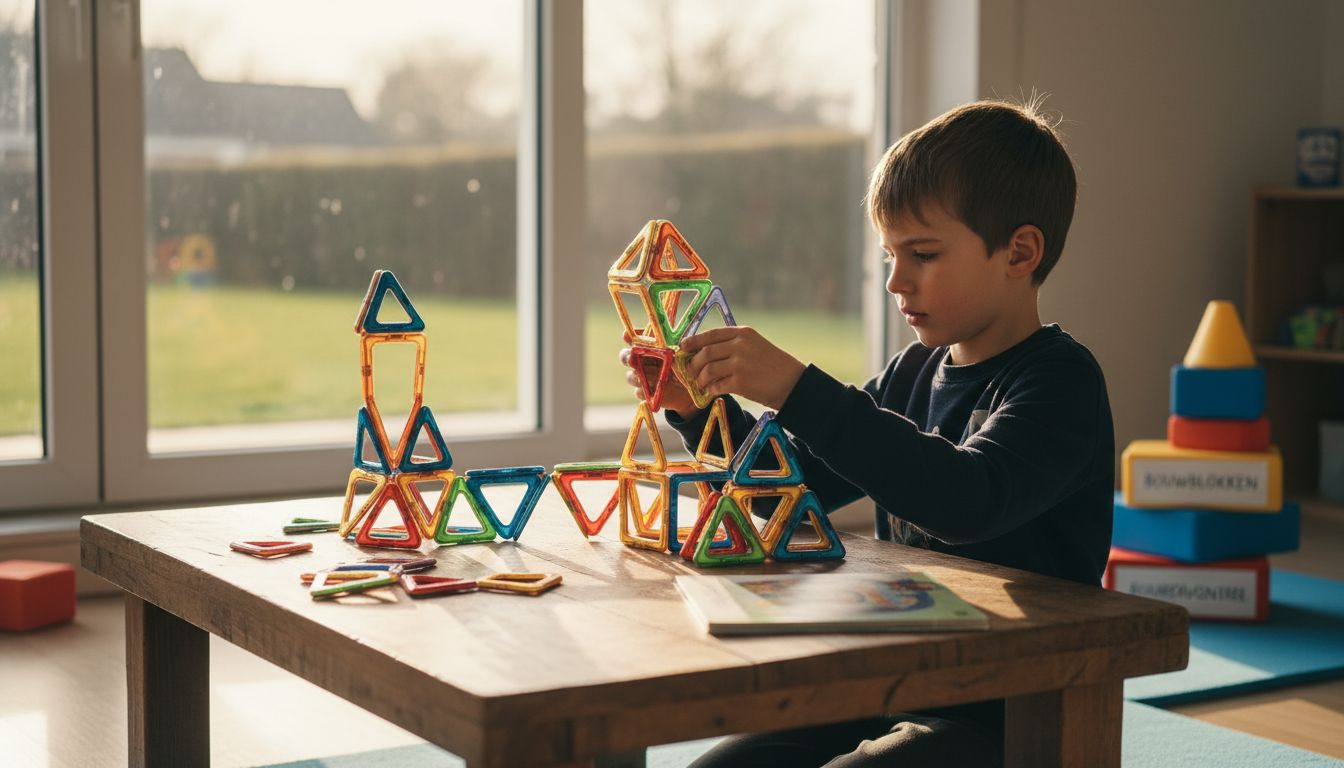
The design of these toys specifically considers inclusivity. Materials are chosen that are both visually and tactilely perceptible, and structures are designed to be easy to understand and manipulate for children with varying cognitive and motor skills.
Pro tip: Choose magnetic toys in different shapes and sizes to challenge kids to push their boundaries and gradually develop their skills.
Different types of accessible toys explained
Accessible toys are a broad spectrum of play materials designed to support children with various disabilities . They go beyond traditional toys by specifically considering individual needs and abilities.
The main categories of accessible toys include:
-
Sensory toys :
- Suitable for children with visual or hearing impairments
- Contains elements with strong tactile and sensory feedback
- Helps develop alternative channels of perception
-
Motor skills support toys :
- Designed for children with physical disabilities
- Easy to grip and manipulate
- Increase freedom of movement and self-reliance
-
Cognitively stimulating toys :
- Aimed at children with learning difficulties or developmental challenges
- Promotes problem-solving thinking
- Supports gradual cognitive development
The goal of these diverse toy categories isn't just compensation, but genuine inclusion. Each type is carefully designed to help children discover, explore, and strengthen their individual potential, regardless of their specific challenges.
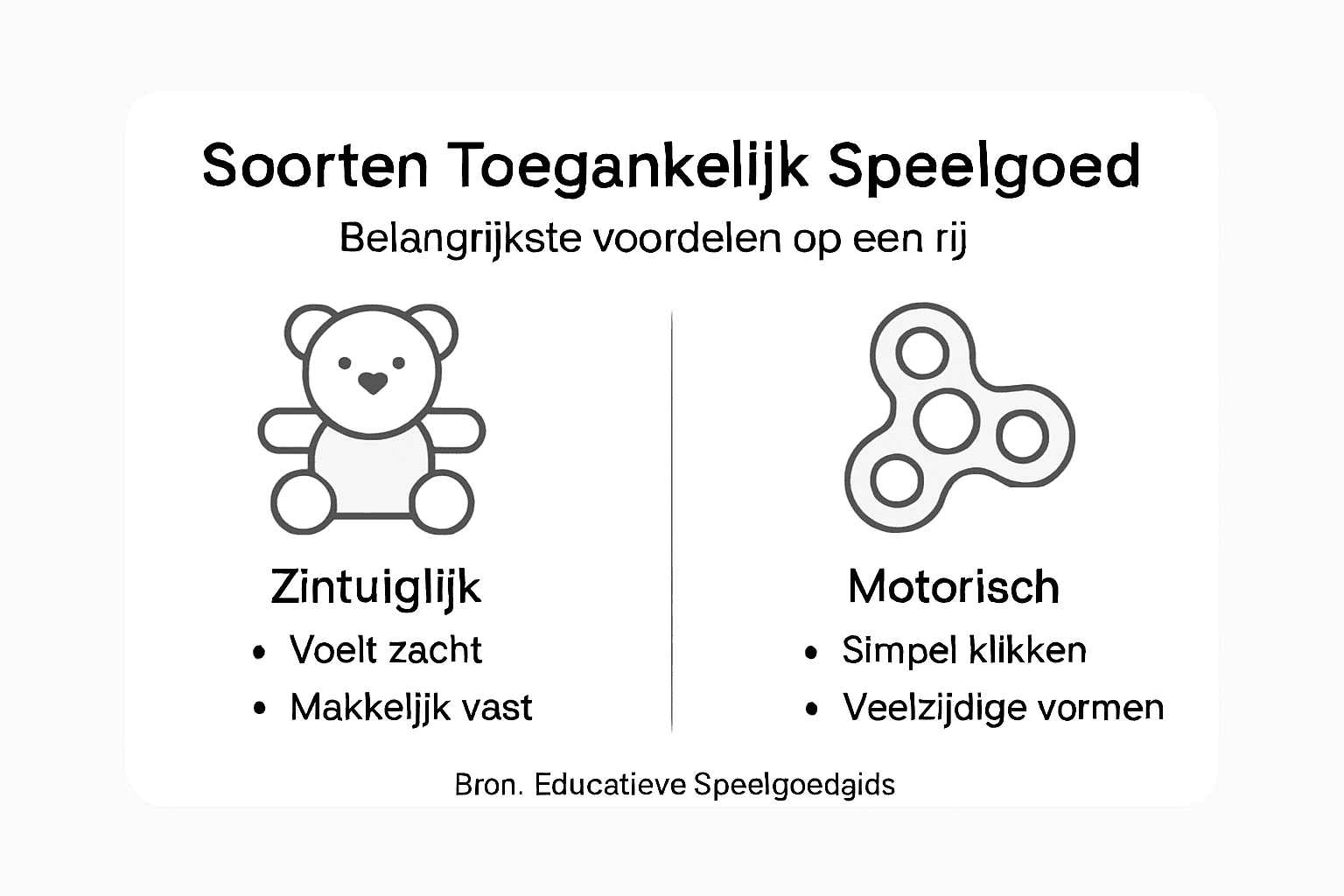
This chart shows who different types of accessible toys are suitable for:
| Toy type | Suitable for | Specific benefits |
|---|---|---|
| Sensory toys | Children with sensory challenges | Improves alternative perception |
| Motor support | Children with physical disabilities | Increase independence and freedom of movement |
| Cognitively stimulating | Children with learning disabilities | Enhanced problem-solving skills |
Pro tip: Don't look at toys as tools, but as tools for self-development and fun.
Safety, sustainability and legal requirements in Central Europe
In Central Europe, strict standards apply to toys, particularly regarding safety and legal protection . The European Union has developed comprehensive regulations to protect children and obligate manufacturers to meet high quality standards.
The main safety requirements include:
- Ban on harmful chemicals
- Mechanical safety controls
- Mandatory CE marking
- Accurate material testing
- Regular quality controls
Legal obligations for toy manufacturers are extensive. Products must not only be safe to use, but also durable and free of potentially hazardous components. National regulatory bodies in countries such as Germany, Austria, and the Netherlands closely monitor compliance with these strict standards.
The Toy Safety Regulation protects children by setting detailed requirements for material selection, construction, and safety features. Manufacturers must provide comprehensive documentation demonstrating that their products fully comply with European standards.
Pro tip: Always check the CE marking and associated safety certificates before purchasing toys.
Avoid common mistakes when choosing toys
When choosing toys, parents often unknowingly make mistakes that can affect their children's safety and development. Carefully checking warning labels and age guidelines is therefore crucial for responsible toy selection.
The most common mistakes are:
- Ignoring age indications
- Toys with small parts for young children
- No control over material safety
- Ignoring warning symbols
- Not taking into account individual development needs
A mistake often overlooked is immediately throwing away damaged toys. Instead, it's more sustainable and often cheaper to repair toys when possible. This prevents unnecessary waste and also teaches children the value of maintenance and repair.
Parents should also critically consider the durability and quality of toys. Cheap, easily broken products are not only a waste of money but can also create unsafe situations when parts become loose or break.
Pro tip: Check toys regularly for defects and involve children in maintenance to increase their safety awareness.
Encourage Creativity and Development with Accessible Magnetic Toys
The challenge of accessible toys is finding materials that truly meet children's diverse needs. Toys that are not only safe and durable but also promote fine motor skills, imagination, and social interaction. At Tilesminds, we understand this crucial need for inclusive and multifunctional play experiences.
Discover our wide collection of Magnetic toys—ordered before 5pm, delivered tomorrow— specially designed to facilitate creative and educational play for every child. Our magnetic tiles and blocks naturally stimulate cognitive and motor development through their user-friendliness and clear visuals. Easily combine them with various accessories to build new, inspiring creations every time.
Don't wait any longer and give your child the space to grow with safe and durable magnetic toys that support an inclusive play environment. Visit Tilesminds today and start building a versatile play collection that connects fun and development.
Frequently Asked Questions
What makes toys accessible?
Accessible toys are designed to meet the diverse physical and cognitive abilities of children, giving every child the same opportunity to play and develop.
Why are accessible toys important for children?
It promotes inclusion and participation, supports motor and communication skills, encourages social interaction and helps children develop self-confidence and independence.
What are the key features of accessible magnetic toys?
Accessible magnetic toys have safe and strong magnets, a sturdy design, are easy to manipulate, and provide visual and tactile feedback to encourage motor skill development.
Why is choosing the right toys essential for children's development?
The right toys support children's cognitive, social and motor development and help them explore their individual potential, giving them a positive play experience.