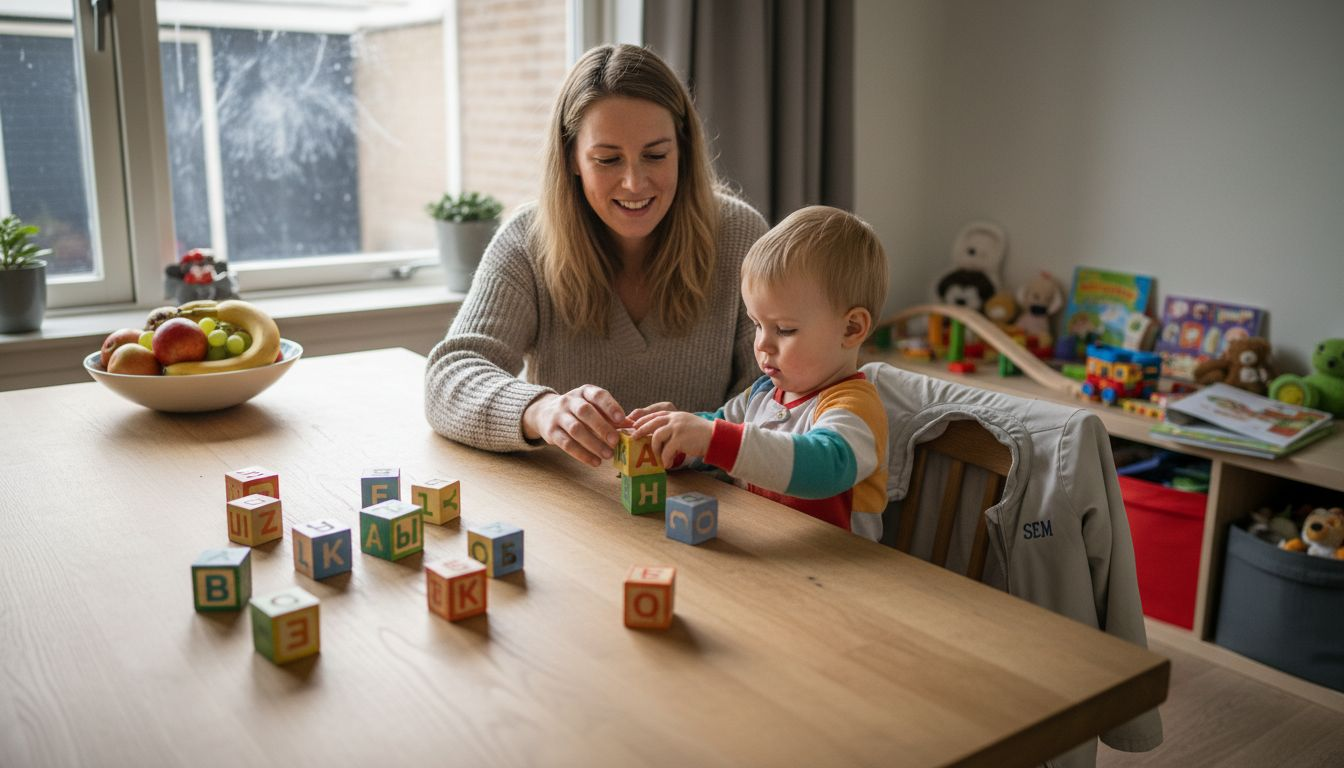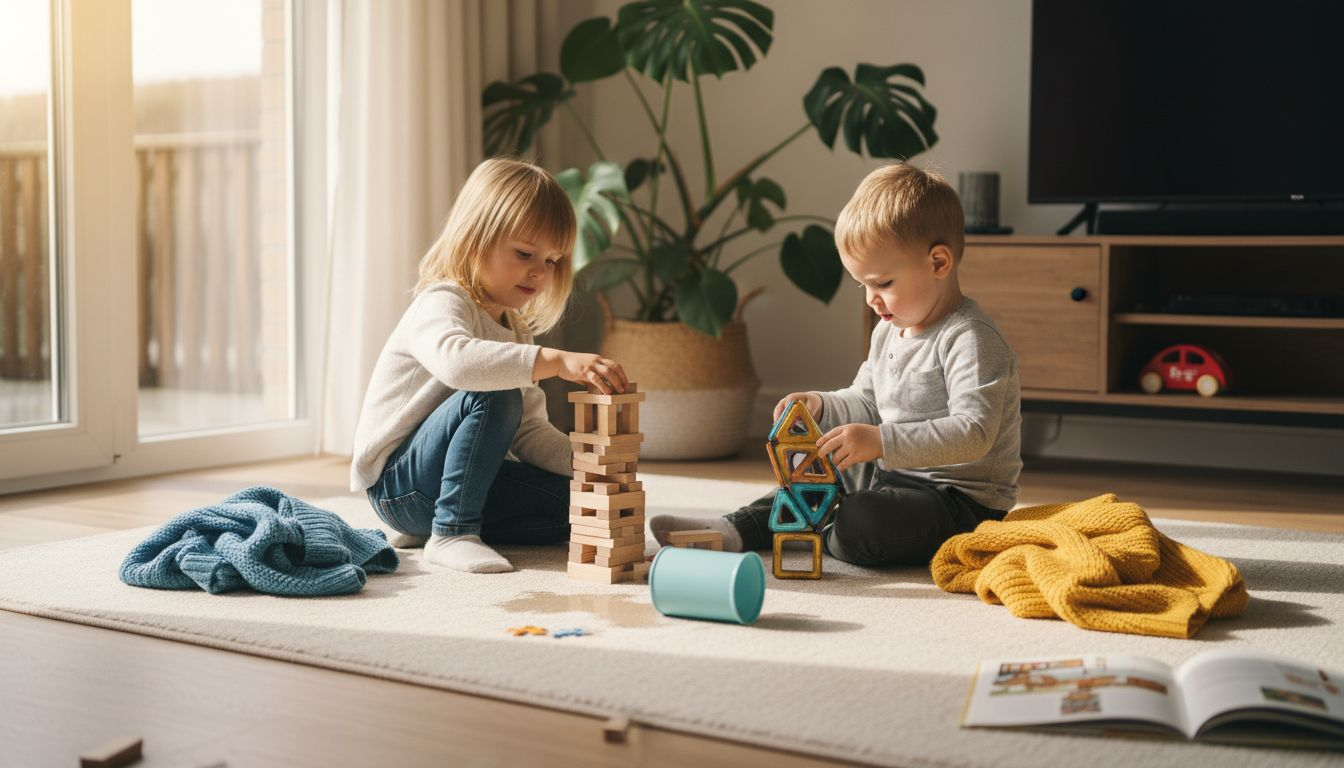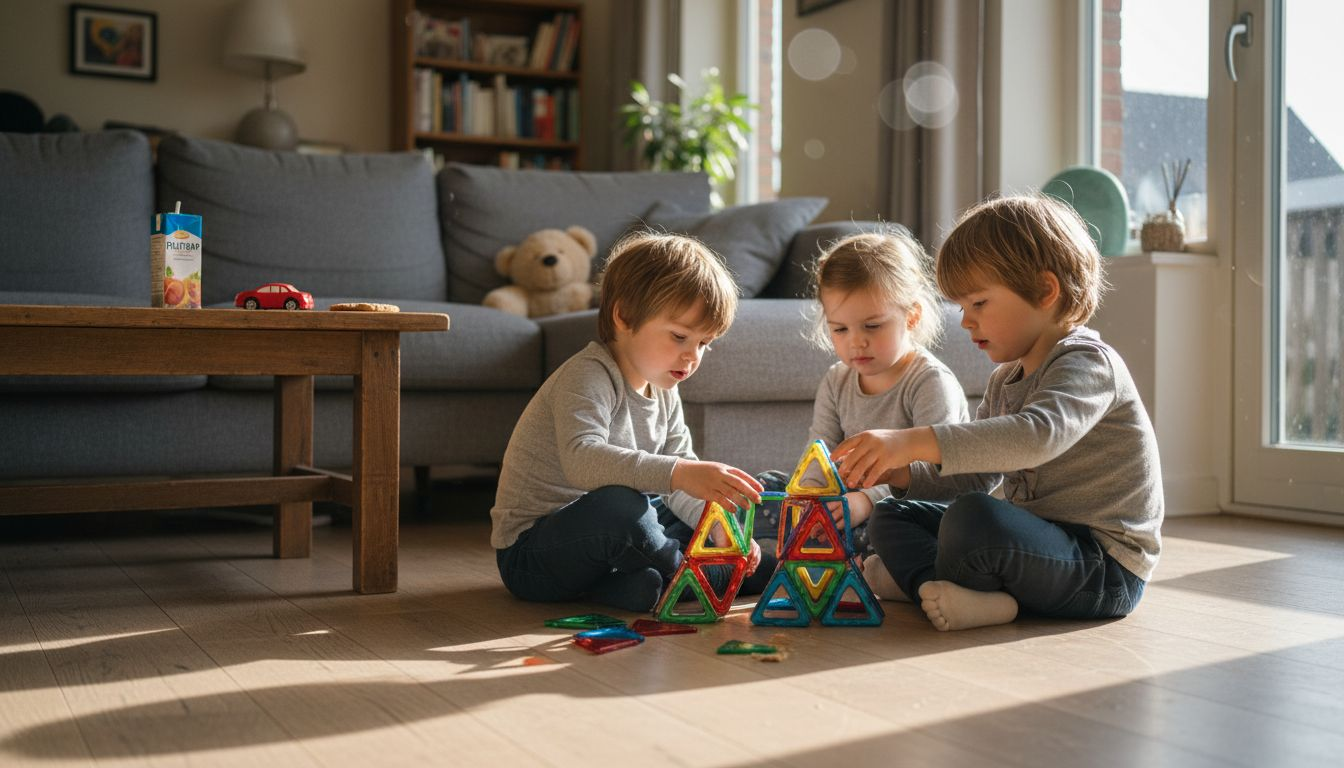
It can be challenging to get children excited about technological and spatial thinking, even though you want them to continue to enjoy learning and exploring. You're looking for educational toys that not only stimulate their creativity but also challenge them to think logically and solve problems.
With magnetic tiles and blocks, you give children the opportunity to playfully explore how magnets work, the power of construction, and the magic of spatial awareness. These play materials encourage independent exploration, stimulate fine motor skills, and form a bridge to real-world physics principles.
Be surprised by practical applications, clever experiments, and inspiration that will give your child or class practical insights into magnetic constructions . Discover a list full of ideas that make learning truly fun and that you can try out together right away.
Table of contents
- 1. What are basic magnetic tiles and blocks?
- 2. Building vehicles with magnetic parts
- 3. Creating spatial structures for problem-solving thinking
- 4. Design creative animals and figures
- 5. Educational play with magnetic accessories
- 6. Choose safely assembled magnet sets
- 7. Combining different magnet constructions
Short Summary
| Important point | Explanation |
|---|---|
| 1. Magnetic tiles promote creativity | Children learn to create unique designs by combining shapes and using their imagination. |
| 2. Develop problem-solving skills | Building complex structures encourages strategic thinking and adaptability. |
| 3. Safety when choosing magnet sets | Choose sets with rounded edges and BPA-free materials for child safety. |
| 4. Experimenting with vehicle construction | Children discover physical principles by building vehicles that can move and connect. |
| 5. Combining different sets promotes learning | By mixing sets, children discover unique magnetic interactions and expand their creativity. |
1. What are basic magnetic tiles and blocks?
Magnetic tiles and blocks are fantastic educational toys that encourage children to build, experiment, and develop their spatial awareness. These special construction materials are made of plastic or wood with built-in magnets that can connect different shapes such as squares, triangles, and rectangles.
The unique thing about these tiles is their ability to help children discover how magnetic poles work . The natural attraction between opposite poles allows children to create patterns, build 3D structures, and learn fundamental principles of physics through play. The magnets ensure that the blocks stick firmly together without any external support.
Playing with magnetic tiles helps children develop various cognitive skills. They learn spatial thinking by manipulating shapes, understanding symmetry, and building complex structures. Moreover, this type of toy stimulates fine motor skills and encourages creativity by challenging children to create unique designs.
Pro tip: Start with simple shapes and encourage children to gradually build more complex structures to develop their confidence and skills.
2. Building vehicles with magnetic parts
Magnetic constructions offer children a great way to build vehicles that are not only fun but also introduce scientific principles. Magnetic blocks allow young designers to create cars, trains, and planes that move and connect in ways that traditional toys don't.
The science behind these constructions is fascinating. Children can discover the principles of magnetic levitation, which allows objects to float and move without physical contact. This teaches them fundamental physics concepts in a playful and interactive way. The magnets in the construction set allow vehicles to rotate, slide, and connect to each other.
Building vehicles with magnetic parts helps children develop spatial awareness and problem-solving skills. They learn about symmetry by using the correct poles and discover how different shapes can be combined to create unique transportation vehicles. The process encourages experimentation and creative thinking.
Pro tip: Challenge kids to test their magnetic vehicles on different surfaces and experiment with different configurations to deepen their understanding of magnetic forces.
3. Creating spatial structures for problem-solving thinking
Magnetic structures are a fantastic way to help children develop their spatial awareness and strengthen problem-solving skills. By building three-dimensional structures, children learn how different shapes and elements can interact.
Building complex spatial structures challenges children to develop mental skills essential for future engineering and scientific challenges. They learn strategic thinking by experimenting with stability, balance, and construction principles. Every attempt to build a tower or create a geometric shape requires careful planning and adaptability.
The process of building with magnetic tiles stimulates cognitive development by encouraging children to explore different perspectives. They discover how small changes in construction techniques can have a major impact on the stability and design of their final product.
Pro tip: Introduce small challenges like building a structure at least three stories tall without falling over to encourage kids to think creatively about construction techniques.
4. Design creative animals and figures
Magnetic constructions offer children a wonderful opportunity to use their imaginations to design unique animals and figures. By combining magnetic blocks, they can bring an endless variety of creative creatures to life.
The process of designing animals and figures with magnetic tiles stimulates imagination and motor skills. Children learn magnetic principles through experimentation as they build playful creatures. They discover how different shapes and magnetic poles can work together to shape their dream creations.
Through regular experimentation, children develop an intuitive understanding of construction and symmetry. They learn that an elephant can be made just as easily from triangular as from rectangular shapes and that creativity knows no bounds. Building animals also stimulates spatial thinking and problem-solving skills.
Pro tip: Encourage children to build simple animals first and then design their own fantasy animals to gradually grow their creativity.
5. Educational play with magnetic accessories
Magnetic accessories are great educational tools that teach children about scientific principles in a playful and interactive way. These clever additions to magnetic construction sets make the learning process more fun and engaging.
By experimenting with various magnetic games, children discover how magnets work. Accessories such as magnetic letters, small vehicles, or figures not only stimulate creativity but also help them understand basic physics concepts. Children learn about attraction and repulsion by manipulating and combining these accessories.
Magnetic accessories can be used for numerous learning purposes. They help develop spatial awareness, stimulate fine motor skills, and encourage experimental learning. Children are challenged to discover how different parts can work together and what configurations are possible.
Pro tip: Introduce gradually more complex accessories to gradually challenge children and keep their interest in science and construction alive.
6. Choose safely assembled magnet sets
Selecting safe magnetic construction sets is crucial for children's well-being and enjoyment during educational play. A well-chosen magnetic set not only offers educational opportunities but also ensures the safety of young users.
When choosing magnetic sets, you should pay attention to safety aspects and material quality . Choose sets with rounded edges and no sharp points, and check that the magnets are securely installed so they won't come loose. The age recommendation is essential, as some sets may contain small parts that are dangerous for very young children.
A good magnet set also includes several important safety features. Check that the materials are BPA-free, that the magnets meet international safety standards, and that the set is age-appropriate. It's also important to choose sets with different shapes and sizes that offer both challenge and learning potential.
Pro tip: Check the condition of the magnetic set regularly and replace damaged parts immediately to ensure safety.
7. Combining different magnet constructions
Combining different magnetic constructions is a great way for children to learn about magnetic principles in a more in-depth and creative way. By mixing different sets and shapes, children can create more complex and challenging constructions.
Children can discover unique magnetic interactions by combining different sets of magnets with different shapes and properties. They learn how magnets can attract or repel depending on their poles and how different structures can be created by cleverly exploiting these physical properties.
Mixing magnetic constructions not only stimulates creativity but also develops problem-solving skills. Children learn to experiment by, for example, forming corners with triangular tiles or creating stability with rectangular shapes. They discover that each magnetic set has its own unique possibilities and that the real challenge lies in cleverly combining these sets.
Pro tip: Encourage children to explore the properties of each magnet set individually before experimenting with combining different sets.
Below is a clear table summarizing the key points and benefits of the article on magnetic tiles and structures.
| Subject | Description | Advantages |
|---|---|---|
| Basic magnetic tiles and blocks | Educational play pieces with built-in magnets for creative building and learning. | Promotes spatial thinking, fine motor skills and creativity. |
| Building vehicles with magnetic parts | Children create vehicles using magnetic blocks and concepts. | Understanding of physical principles, strengthening problem-solving skills. |
| Spatial structures and problem solving | Creating 3D structures through experimental learning with stability and symmetry. | Stimulating strategic thinking and insight into technical challenges. |
| Designing creative animals and figures | Use your imagination to create unique shapes and creatures with magnetic tiles. | Imagination, motor skills, and insight into structural mechanics. |
| Use of magnetic accessories | Additional elements such as letters and figures to enrich the learning experience. | Increased diversity of possibilities and understanding of magnetic forces. |
| Safety with magnetic constructions | Selection methods for safe and quality sets for children. | Promotion of safety during use and education. |
| Combination of different magnet sets | Mix elements from different sets for unique and challenging constructions. | Challenge to increase creativity and intuitive understanding of magnetism. |
Discover the magic of magnetic building with TilesMinds
The 7 types of magnetic constructions demonstrate the importance of educational and creative play for children's development. Children develop spatial awareness, problem-solving skills, and fine motor skills by experimenting with blocks, tiles, and accessories. At the same time, it's essential to choose safe and durable magnetic toys that encourage worry-free building.
At TilesMinds, you'll find a wide range of high-quality products to transform these educational challenges into fun. Discover our Magnetic Orbit for versatile tiles, or choose the sturdy Magnetic Blocks that stimulate creativity. Each item is carefully designed for safety and ease of use, allowing children to explore without limits.
Bring the educational power of magnetic constructions to life and encourage your children to build, design, and grow. Start safe and inspiring playtime with TilesMinds today and experience the difference in educational magnetic toys.
Frequently Asked Questions
What are magnetic constructions and how do they contribute to educational play?
Magnetic structures are playful building materials that help children develop spatial awareness and problem-solving skills. Use these tiles and blocks to challenge children to create unique structures or vehicles and encourage them to experiment during play.
What skills do children develop by playing with magnetic tiles?
Children develop cognitive skills such as spatial thinking, fine motor skills, and creativity. Encourage this development by encouraging them to experiment with different shapes and construction techniques.
How can I choose safe magnet sets for my children?
Choose magnet sets with rounded edges, sturdy magnets, and BPA-free materials. Also, check the age recommendations and ensure the set is challenging but safe for users.
What are some good ways to challenge children to build with magnetic structures?
Introduce specific building challenges, such as building a tower of a certain height or designing a unique vehicle. This can significantly enhance their creativity and problem-solving skills by encouraging them to think strategically about their constructions.
How can magnetic accessories enhance children's learning process?
Magnetic accessories offer additional opportunities to understand scientific principles through experimentation. Add these accessories to the building sets and let children discover how they can improve or expand their creations with these new elements.
How can I combine different magnet constructions for complex structures?
Encourage children to mix different sets and shapes and create new designs. Let them experiment with the properties of each set to discover unique magnetic interactions and constructions.