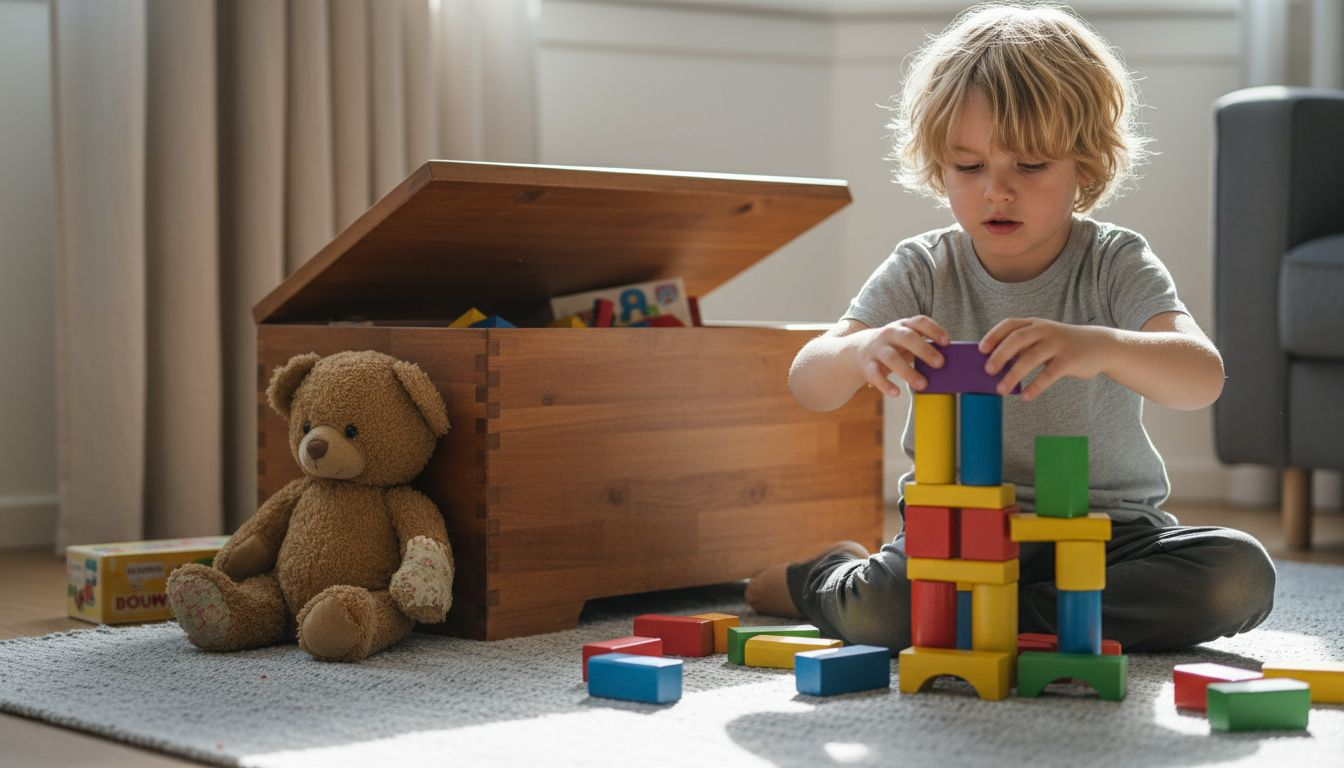
Parents in Central Europe know how quickly a new toy moment turns into a critical safety check. Magnetic toys spark the imagination and stimulate fine motor skills, but they also require additional attention. A good choice means not only fun, but also peace of mind about toxic substances and loose magnets. Safe toys comply with strict European guidelines and are specially designed so that little hands can explore, build, and learn without risk. This guide provides practical and reliable advice for safe magnetic play.
Table of contents
- What exactly does safe toys mean?
- Types of risks associated with unsafe toys
- European safety regulations and CE marking
- Chemicals and material selection
- Practical tips for purchasing and use
- Magnetic toys: additional considerations
Key insights
| Point | Details |
|---|---|
| Safe toys | Safe toys are designed with attention to materials, construction and the age of children, to prevent injuries and health risks. |
| Control and certification | Teach parents to always check whether toys are CE marked and ask for test reports to ensure safety. |
| Risks of unsafe toys | Unsafe toys can pose a choking hazard, chemical risk, and physical injury, especially to younger children. |
| Magnetic toys | Magnetic toys require extra care; check regularly for loose magnets and keep them out of reach of children under 3. |
What exactly does safe toys mean?
Safe toys are much more than just the absence of sharp points. It's a total concept where the toys are designed and made with your child in mind. Toys are defined as anything intended for children to play with, but the term "safe toys" requires much more attention. It means that the materials, construction, and every detail are adapted to the age and abilities of children, so they can play safely. This includes avoiding sharp edges, small parts that can be swallowed, and using non-harmful materials. For parents in Central Europe considering magnetic toys, this is particularly important because these types of toys are used intensively and are often discarded.
When we talk about safety, many parents first think of physical hazards. But safe toys protect your child on several fronts. Preventing choking hazards is crucial, especially for children aged 3 to 5 who still love to explore everything. Small parts that can come loose, magnets that can break apart, or material that can splinter are all things that must be avoided. In addition, the toy must be free of toxins such as BPA and other chemicals that can be harmful through ingestion or prolonged exposure. The construction should not be fragile or fall apart during normal use. A well-designed toy can withstand dozens of hours of intense play without deteriorating.
Magnetic toys have an additional safety requirement: the magnets themselves must be strong enough to hold securely, but also well-encapsulated to prevent them from coming loose. This isn't a minor detail, but an essential safety feature. If magnets come apart and your child swallows them, it can cause serious internal damage. This is why quality and reliability are paramount when choosing magnetic toys. Safe toys also mean that they must comply with recognized safety standards and regulations in your country. In Europe, there are strict guidelines that manufacturers must adhere to before toys can be marketed. A reliable manufacturer will always be able to demonstrate this through certificates and testing.
Ergonomics also plays a role. Toys should be appropriate for your child's hand size and motor skills. Blocks that are too big are frustrating. Blocks that are too small pose a choking hazard. Safe toys, therefore, are also toys that fit well in little hands and that your child can grip without frustration. Another aspect that is often overlooked is stability. When your child builds something, the structure shouldn't collapse unexpectedly. This not only causes frustration but can also cause physical injury if parts fall off.
Below you will find an overview of important differences between safe and unsafe toys:
| Feature | Safe toys | Unsafe toys |
|---|---|---|
| Materials | Tested, non-toxic, BPA-free | Possibly toxic, unknown substances |
| Construction | Sturdy, parts are fixed | Loose or fragile parts |
| Suitable for age | Always clearly indicated | Incorrect or missing age information |
| Certification | CE marking and test reports | No or fake CE marking |
| Magnetic safety | Magnets firmly encapsulated | Magnets can come loose |
Professional advice _Always check whether the toy has been certified by an independent testing laboratory and ask about the specific safety standards the product meets before purchasing.
Types of risks associated with unsafe toys
Unsafe toys pose more dangers than many parents realize. The risks are diverse and can seriously affect your child's health and safety. When toys are not properly designed or manufactured, various problems can arise that could harm your child. Mechanical and physical hazards such as sharp edges, loose parts that can be swallowed, and broken pieces are the most obvious risks. A toy with sharp points can cause cuts. Small parts that easily detach pose a choking hazard, especially for children under eight. This is precisely why high-quality magnetic toys are so important: the parts must be securely attached and not come apart during normal play.

Chemical hazards are another critical risk that parents shouldn't ignore. Some inexpensive toys are made from materials containing toxic substances, such as lead, BPA, or other chemical vapors that are harmful through ingestion or prolonged exposure. This can occur through paint finishes, the plastics themselves, or magnetic coatings. When children put toys in their mouths, as young children do, these toxins can be transferred directly into their bodies. Furthermore, there are risks associated with falls and impacts when toys are not properly designed. Unstable structures can tip over and injure your child. Toys that are not properly assembled can suddenly fall apart while your child is working on them, leading to frustration and even physical injury if parts fall off.
Choking hazards deserve special attention. This isn't always caused by large pieces, but often by small magnets or small loose parts that children swallow. This is particularly dangerous with magnetic toys because if multiple magnets are swallowed, they can pull as they pass through the body, potentially causing internal damage. This isn't a theoretical risk, but a real problem that leads to hospitalizations every year. Another risk that many parents overlook is chemical poisoning due to poor finishes or materials unsuitable for young children. Some manufacturers save on material costs by using cheaper plastics that don't meet European safety standards. Toys that haven't been properly cleaned or stored can also promote bacterial growth, which can cause infections.
Electronic toys pose additional risks, such as electric shock if the construction isn't properly insulated, or batteries that leak and cause chemical burns. This is less applicable to magnetic toys without electronics, but it underscores the importance of choosing toys from reputable manufacturers who thoroughly test their products. Children aged 3 to 8 are particularly vulnerable because they don't yet understand which objects could be dangerous. They like to investigate everything by putting it in their mouths or pulling on it. Therefore, the responsibility largely lies with you as a parent to choose toys that meet strict safety standards and to regularly check for damage.
Practical tip: Inspect magnetic toys monthly for loose parts, cracks in the material, or damaged magnets, and replace worn pieces immediately to prevent further damage and risks.
European safety regulations and CE marking
When you buy toys in Europe, you'll inevitably encounter the CE logo. This small symbol means more than many parents realize. The CE mark stands for "European Union Conformity" and indicates that the product has met strict European safety standards before being placed on the market. This isn't just a decorative element or marketing tool; it's a legal declaration from the manufacturer that the product is safe. European Directive 2009/48/EC establishes the essential safety requirements that toys must meet within the EU. This means that toys must meet mechanical, physical, chemical, electrical, and hygienic safety standards. These standards are mandatory. They are legally mandated, and manufacturers who fail to comply can face fines and have their products removed from the market. For you as a parent in Central Europe, this means you can expect toys with a valid CE mark to meet these strict requirements.
The CE marking usually appears on the packaging or directly on the toy itself. However, not every CE marking is valid. Some cheap products carry a fake CE logo that isn't officially registered. This is why it's important to buy toys from reputable sellers, not from unknown online platforms that are impossible to verify. A genuine CE marking is always supported by technical documentation, test certificates, and a declaration of conformity. This means the manufacturer can prove that the product has been tested by an independent laboratory. This is particularly important for magnetic toys, as the magnets must be properly encapsulated and cannot detach. The test certificates should be able to demonstrate this. A reputable manufacturer will be able to provide these documents upon request or publish them on their website.
Starting in 2026, even stricter regulations will come into effect with the European Toy Safety Regulation. This means that toys must offer even more transparency and safety, including stricter chemical safety standards and digital traceability via a product passport. This is good news for parents, as it means that child protection will only become stronger. Every toy placed on the European market after 2026 must comply with these new rules. This also applies to magnetic toys. The regulation ensures that manufacturers cannot cut corners on safety, as they will be subject to stricter inspections. Until now, some inexpensive toys with fragile magnets or toxic paints could enter the market. This is becoming increasingly difficult.
As a parent, you can check whether toys are truly safe in several ways. First, always look for the CE logo on the packaging. Then, check whether the manufacturer provides clear information about the materials and any chemical content. A reputable manufacturer won't hide this. Also, check reviews from other parents, especially on reputable platforms. If many parents share positive experiences about how long the toy lasts and how safe it feels, this is a good sign. Avoid toys from unknown brands without clear information or manufacturer contact details. With magnetic toys, you need to be extra careful because the risks are greater. Make sure the magnets are strong enough and won't come off, and that the material is smooth and free of sharp edges. The CE marking guarantees this, provided it is valid.
Here is a summary of the most important European toy standards and their meaning:
| Standard / Regulation | Guarantees | Application for parents |
|---|---|---|
| CE marking | Compliance with EU safety standards | Check packaging or product |
| Directive 2009/48/EC | Mechanically, chemically and physically safe | If in doubt, ask for certificates |
| Toy Safety Regulation 2026 | Additional requirements and traceability | More transparency after 2026 |
Advice: Always check whether the CE marking is present on the toy or its packaging, and ask the seller for test certificates or declarations of conformity before purchasing any toy.
Chemicals and material selection
The materials from which toys are made largely determine how safe they actually are. This goes beyond just shape or texture. As a parent, you choose not only a toy but also all the chemicals that are incorporated into it. When your child puts toys in their mouth, sucks on them, or plays with them for extended periods with their hands, which then go into their mouths, these substances come into direct contact with their body. This is why the choice of materials is so critical. European regulations prohibit the use of harmful chemicals, including carcinogens, mutagens, and reprotoxic substances, hormone-disrupting chemicals, and allergens. This means that reputable manufacturers do not use manufactured chemical additives that could be carcinogenic or disrupt your child's hormone balance. Strict limits are set for the concentrations of certain substances such as bisphenols and PFAS (perennial chemicals that do not break down). This level of protection exists because children are more sensitive to toxic substances than adults. Their bodies are still developing and are less able to break down harmful substances.
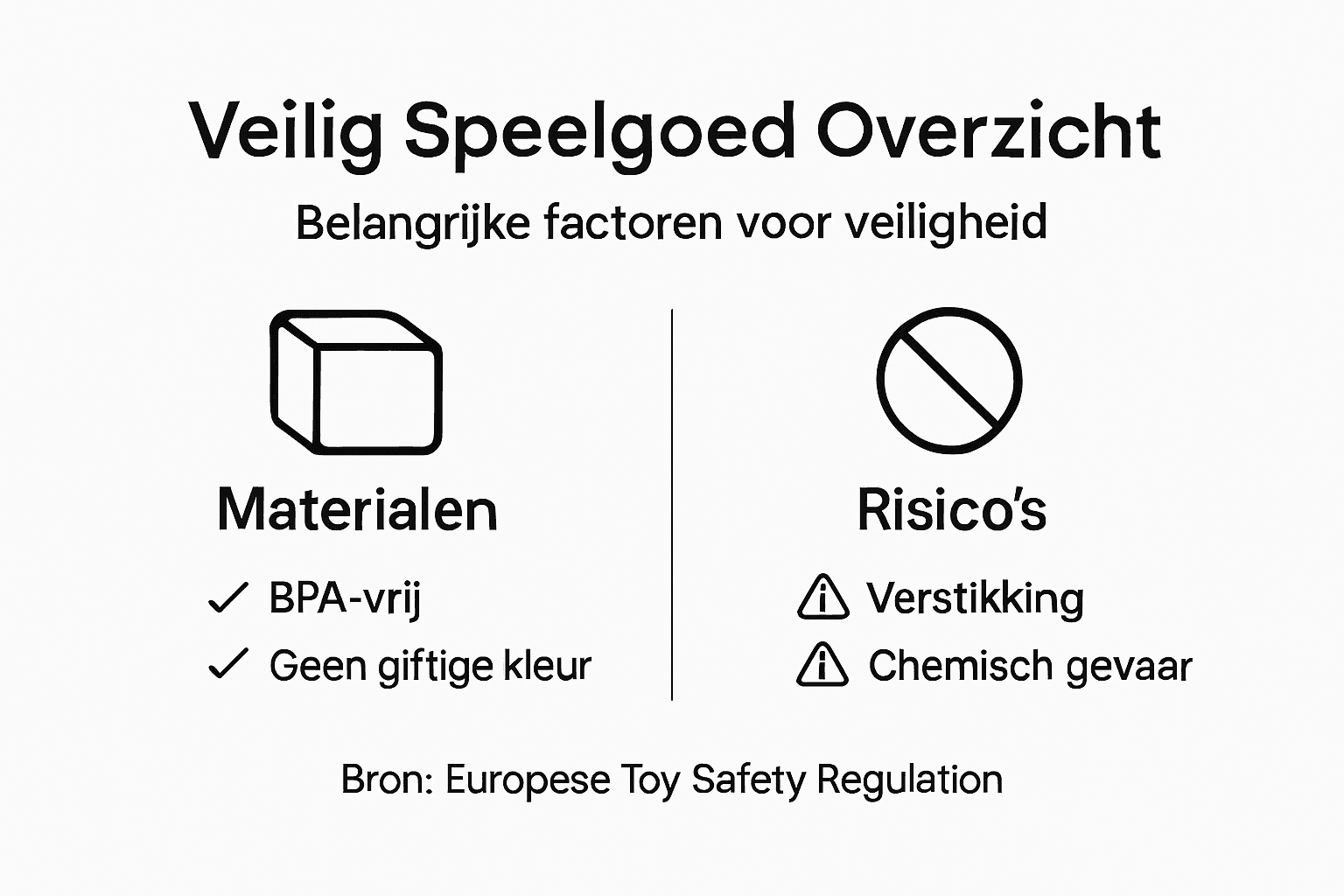
Magnetic toys present specific material challenges. The plastic in which the magnets are encapsulated must not only be strong enough to hold them in place but also free of toxic additives. Some inexpensive manufacturers use plastics containing BPA (bisphenol A), a hormone disruptor. This can be especially problematic for young children whose nervous and reproductive systems are still developing. The paint finishes on magnetic toys must also be carefully chosen. Many children lick or bite their toys. A paint containing toxic metals can cause serious poisoning. Quality manufacturers use water-based paints or other non-toxic finishes that eliminate this risk. You should also be aware of flame retardants and other plastic additives. These substances help make toys less likely to ignite, but some can be undesirable. Harmful substances such as plastic additives and heavy metals can affect children's growth and development, especially because children are particularly sensitive to this exposure.
What does this mean in practice for you as a parent? First, you should know that the presence of a CE mark guarantees that the toy meets European chemical standards. But that's not all. Reputable manufacturers often go further and only use materials that have been explicitly tested for safety. Look for toys that are described as "BPA-free," "toxic-free," or "non-toxic." These labels mean something. They indicate that the manufacturer has gone the extra mile. The material itself is also important. High-quality plastics (such as polyethylene or polypropylene) are better than cheap blends with unknown additives. For magnetic toys, check that the material is smooth and free of cracks or tears that could cause poisoning from the internals. Also, check the smell. A strong chemical smell can indicate toxic emissions and means the materials are still emitting toxic fumes.
The packaging also provides clues. A reputable manufacturer will clearly indicate the materials used and whether any toxic substances are present. They won't be vague with terms like "plastic" without specifying the materials. Check the product website or ask directly for information about the materials used. Reliable manufacturers are happy to answer because they pride themselves on safety. Avoid toys from manufacturers that can't clearly indicate what's inside. Review platforms can also be valuable. If many parents report that the toy feels safe and doesn't have a suspicious odor, that's a good sign. However, if several parents complain about chemical odors or skin irritation after contact, be wary.
Practical advice: Always check that toys are labelled “BPA-free” and “toxic-free” and ask the manufacturer for a full material composition list before purchasing.
Practical tips for purchasing and use
When buying toys, there are concrete steps you can take to ensure you get truly safe toys. Always start with a checklist before purchasing anything. First, check that the toy has a valid CE mark and is suitable for your child's age. The age indication on the packaging exists for a reason. Toys for 3-year-olds may contain small parts that pose a choking hazard to a 1-year-old baby. Magnetic toys are usually suitable for ages 3 and up, as children at that age are less likely to put everything in their mouths. Also, always check for removable parts. If magnets or small blocks come off easily, that's a red flag. A well-designed magnetic toy feels firm when pulled. If anything feels loose, move on to the next product.
Where you buy your toys also matters. Buy from reputable online stores with recognized quality marks that provide clear information and contact details. Avoid unknown sellers without reviews or transparency. Check if the seller offers secure payment methods and what their returns policy is. If you buy online, you have the legal right to return the product within 14 days if you're not satisfied. This gives you a safety margin. Check reviews from other parents, especially for specific safety questions. Pay attention to warnings about loose parts, chemical odors, or rapid wear. If ten parents say positive things and two warn about the same red flag, take it seriously.
Once you've purchased the toy, the real work begins. Inspect everything thoroughly before giving it to your child. Unpack it, check for damage, and test all connections. For magnetic toys, test whether the magnets are strong enough and don't come loose when pulled. Check the edges for sharp points and the paint finishes for cracks or damage. If your toy smells of paint, let it air out in a well-ventilated area. Store the toy in a dry, clean place where it won't get damaged. Damp environments can damage plastic and promote bacteria. Regular maintenance is essential. Once a month, check the toy for wear, loose parts, or damaged magnets. If you see any damage, remove it immediately or repair it.
You should also supervise toys during play. This may sound obvious, but many accidents occur when parents assume toys are safe enough to use unsupervised. Children aged 3 to 8 need constant supervision, especially if they don't fully understand that certain things don't belong in their mouths. Make sure your child uses toys on a clean, flat surface where nothing can tip over. Also, make sure the toys are kept away from younger siblings. Always follow the manufacturer's instructions for proper use. This may sound obvious, but many parents ignore it. The manufacturer knows which uses are safe and which aren't.
Buying checklist for safe toys
- Check CE marking and authenticity
- Please check age suitability on packaging
- Inspect for loose or removable parts
- Test magnets for strength and safety
- Check edges for sharp points
- Look for BPA-free and toxin-free labels
- Read customer reviews on trusted platforms
- Buy from reputable sellers with good return policies
- Test paint finishes for damage
- Check for strange chemical odor
Precautionary Tip: Inspect magnetic toys thoroughly before first use, and make this a monthly habit to detect damage early and prevent accidents.
Magnetic toys: additional considerations
Magnetic toys offer tremendous benefits for your child's development, but they also require extra caution due to the unique risks they pose. Unlike traditional block toys, magnetic toys operate with magnetic fields that can pose specific hazards. Magnetic toys carry specific risks, such as choking hazards and injuries from swallowing small magnets that can become lodged in the intestines. This is not a theoretical risk. When multiple magnets are swallowed, they can attract each other through tissue, potentially causing serious internal damage and requiring surgery. This happens faster than many parents realize. A small magnet resembling a bead or pearl can be swallowed in seconds. This is why it's absolutely critical to choose toys that are sturdily and safely manufactured, with magnets that don't come off easily. Always test this before giving the toy to your child. Pull it, bend it, and try to loosen the magnets. If they come off easily, the toy isn't safe enough.
Age plays a major role in magnetic toys. Always check the age recommendations on the packaging. Most manufacturers indicate that magnetic toys are only suitable for ages 3 and up, while some brands recommend them for ages 4 or 5 and up. This isn't arbitrary. At this age, children begin to better understand what does and doesn't belong in the mouth. Under 3, magnetic toys are risky because young children still explore and put everything in their mouths. Keep magnetic toys absolutely away from babies and toddlers, even if you think they can't reach them. Children are resourceful and quick. It's also crucial to warn your child about the dangers. This may sound strange to young children, but it's not too early. Make it clear that magnets don't belong in the mouth and that swallowing them can be serious. Don't make it scary, but be clear. Five-year-olds can already understand this.
Another important consideration is the maintenance of magnetic toys. Magnets can weaken with use, shock, or falling. A weakened magnet can come loose. This is why regular inspection is so important. Test monthly to ensure the magnets are still firmly in place. Gently try to separate the blocks or tiles. They should require some force. If they come loose easily, it's time to phase out the toy. You should also check for damaged plastic around the magnets. Small cracks can indicate that the magnet may rattle and eventually come loose. Store magnetic toys in a dry place. Moisture can cause corrosion and reduce magnetic strength. Also, keep them away from extreme heat, as this can damage both the magnets and the plastic. Be wary of counterfeits. Cheap imitations of popular brands often have weak magnets or poor manufacturing. Always buy from reputable sellers.
The advantage of magnetic toys is that they allow children to create and express themselves in a fantastic way. Building with magnetic tiles stimulates your child's imagination and creativity in ways that screen time can't. But this benefit can only be fully realized if the toys are truly safe. With careful selection, inspection, and supervision, magnetic toys can provide years of fun and learning without risk. Make sure your child plays under supervision, especially during the first few months. Don't leave toys in bedrooms where your child might play unattended at night. Keep them away from other small objects that could be confusing. And remember: if you have any doubts about safety, trust your instincts and replace the toy.
Magnetic toy safety checklist
- Check that magnets are firmly attached and do not come loose
- Verify age eligibility (minimum 3 years)
- Test the strength of the magnets monthly
- Inspect for damaged plastic or cracks
- Check for strange noises that indicate loose magnets
- Store toys in a dry, cool place
- Keep away from little siblings under 3 years old
- Warn your child about choking risks
- Provide constant supervision during play
- Buy only from authorized sellers
Safety Tip: Place a small sign or reminder near magnetic toys warning “do not swallow” and check monthly that all magnets are still firmly in place.
Discover Safety and Creativity with Magnetic Toys from Tiles Minds
The fear of unsafe toys is understandable and justified, especially when it comes to magnetic toys that contain small parts and powerful magnets. The article emphasizes the importance of toys that meet strict European safety standards and are made of BPA-free materials with firmly encapsulated magnets. Want to offer your child a play area where creativity and safety go hand in hand? Then choose our carefully selected collection of magnetic toys that meet these requirements. With our Magnetic toys - Ordered before 5 pm, delivered tomorrow - sets, you can stimulate your child's imagination as well as their fine motor skills without having to worry about choking hazards or toxic substances.
Choose toys you can completely trust today. Visit Tiles Minds and discover how our Magnetic Orbit collection is guaranteed safe and durable. Don't forget to check out the practical accessories available at Accessories to make your child's playset even more versatile and safe. Don't wait any longer and give your child the best of both worlds: safety and endless fun .
Frequently Asked Questions
What is safe toys?
Safe toys are toys designed and manufactured with children's safety in mind. They avoid sharp edges, contain no small parts that could pose a choking hazard, and use non-toxic materials.
Why is the CE marking important for toys?
The CE mark indicates that the toy meets strict European safety standards. It is a legal declaration from the manufacturer that the product is safe and has been tested by an independent laboratory.
How can I check if magnetic toys are safe?
With magnetic toys, you should pay particular attention to the strength of the magnets. Test whether they are firmly attached and don't come loose easily. You should also check for sharp edges and broken plastic.
What chemicals should I avoid in toys?
Avoid toys that contain harmful chemicals like BPA, lead, and other toxins. Reputable manufacturers will label their products as "BPA-free" and "toxic-free."
Recommendation
- Why magnetic tiles are the perfect alternative to screen time
- Why magnetic tiles are the perfect alternative to screen time
- Why magnetic tiles are the perfect alternative to screen time
- Figures 4 pieces
- Role of Eco-Friendly Toys – Impact on Early Childhood – The Little Hive
- Playing with Children under 3: Creative Activities for the Smallest – Edory AI – Edukative Children's History