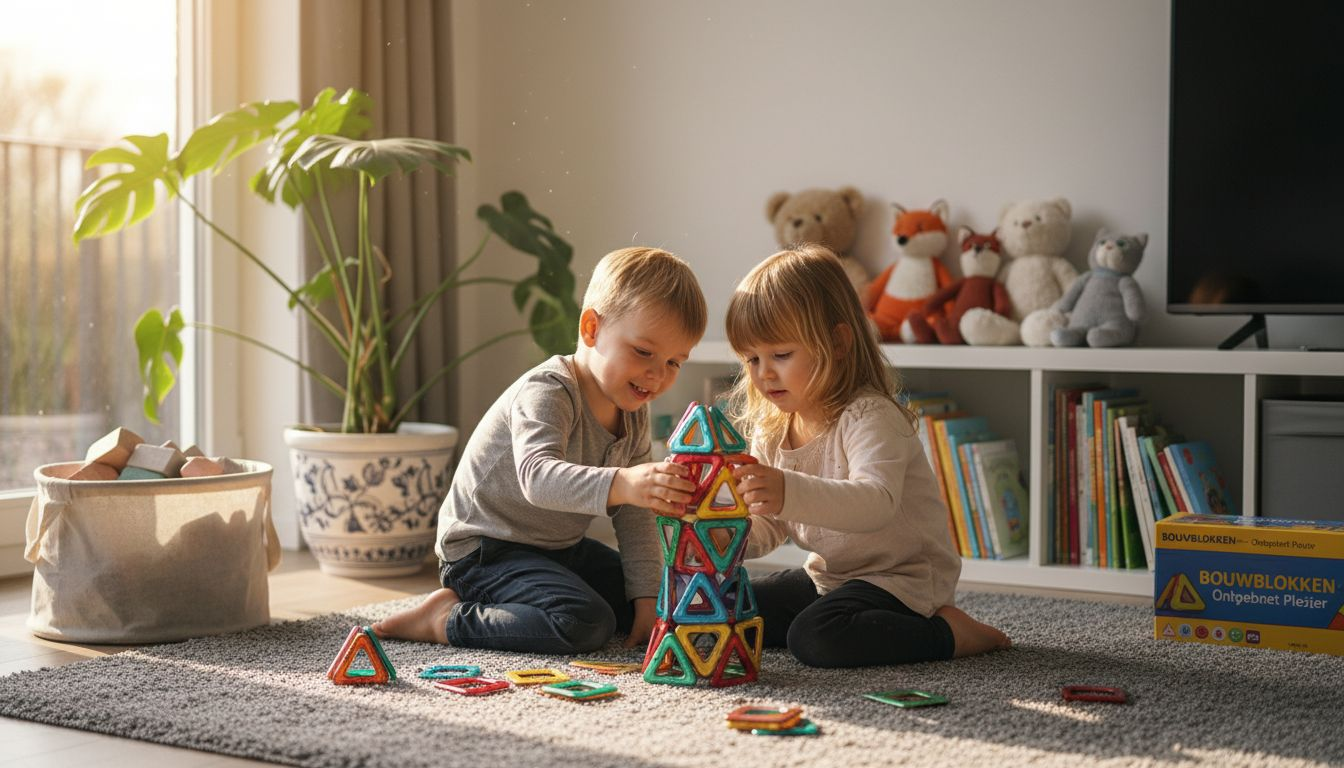
Every parent wants to find toys that are not only safe but also pique their child's curiosity. Magnetic toys work with an invisible force field that attracts and repels materials, allowing children to learn about physics through play. This type of toy stimulates creativity and motor skills through challenging constructions and interactive components. The benefits and safety aspects of magnetic toys are clearly explained below, so you can confidently make a choice for your family.
Table of contents
- What are magnets in toys and how do they work?
- Different types of magnetic toys explained
- Materials and strength of magnets in children's sets
- Safety requirements and European regulations for toys
- Tips to avoid risks and play safely
Key Points
| Point | Details |
|---|---|
| Magnetic principles | Magnets work on the basis of attraction and repulsion forces between opposite and like poles. |
| Toy safety | Choose magnetic toys that meet safety standards and are appropriate for the child's age. |
| Educational value | Magnetic toys stimulate creativity, motor skills and scientific thinking in children. |
| Regular check | Check regularly for wear and tear and ensure children play under supervision. |
What are magnets in toys and how do they work?
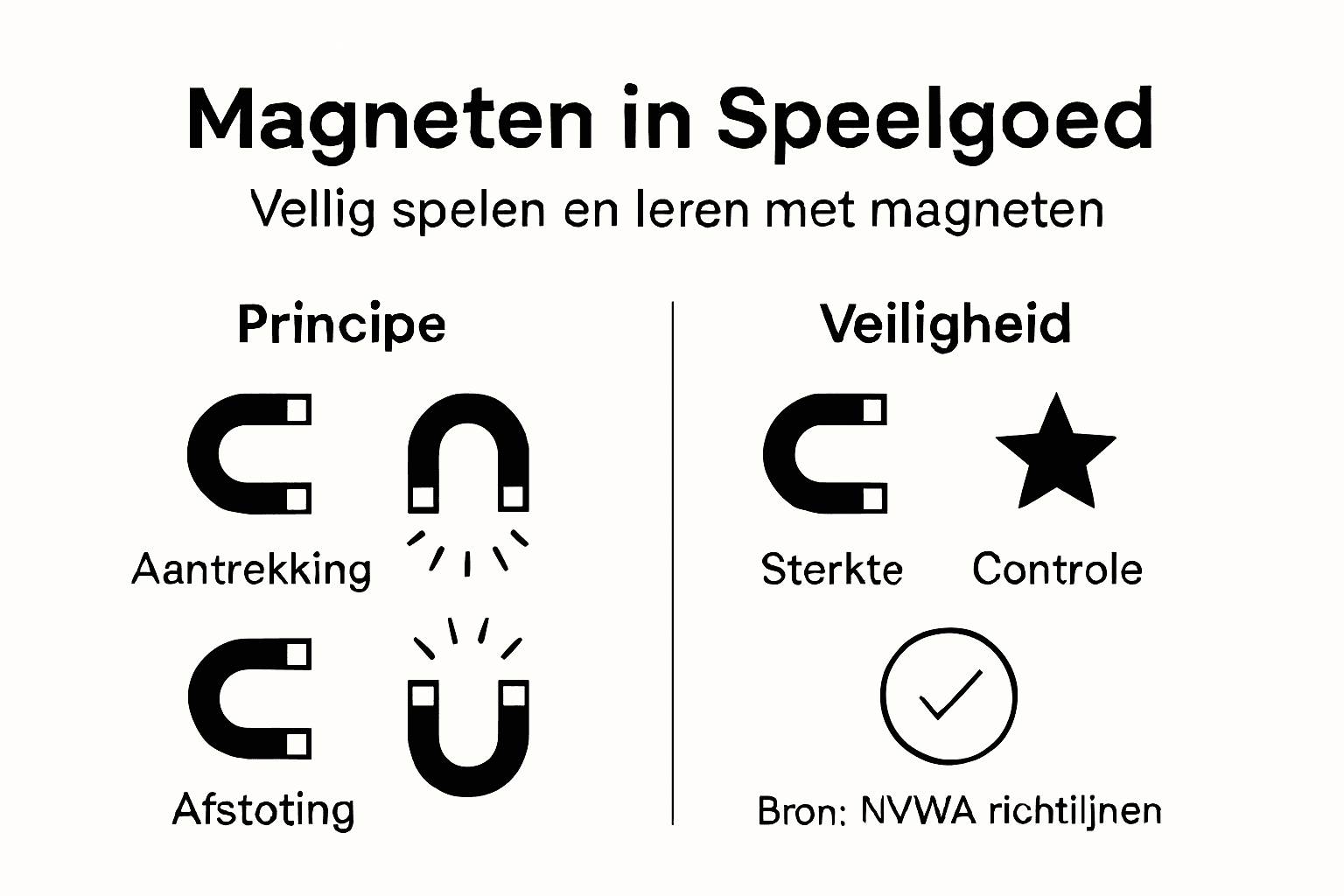
Magnets are fascinating physical objects that can generate an invisible attraction between different materials. They are used in toys to introduce children to the basic principles of magnetism in a playful and educational way. Magnetic principles allow certain objects to attract or repel each other, depending on their poles.
The mechanism of action of magnets is based on two fundamental properties:
- North and South Pole : Every magnet has two poles that have different properties
- Attraction : Opposite poles attract each other, like poles repel each other
- Magnetic field : An invisible zone of force around the magnet that can influence other materials
Toys often use small, safe magnets that stick together easily. Magnetic toy mechanisms allow children to experiment with the forces of attraction and repulsion through interactive play.
The attraction of magnets is determined by the strength of their magnetic field. The stronger the field, the more the magnets can attract each other. Toys typically use soft magnets that are safe for children and pose no danger during normal use.
Pro tip: Always let children experiment with magnetic toys under supervision to ensure safety and stimulate their curiosity.
Different types of magnetic toys explained
Magnetic toys are a great way to introduce children to the principles of magnetism in a playful and educational way. Magnetic toy systems come in various shapes and sizes, designed to stimulate children's creativity and cognitive skills.
The main categories of magnetic toys are:
- Magnetic building tiles : Most popular type with magnets on the sides
- Magnetic rods and balls : Encourage experimentation with balance and structure
- Magnetic vehicles and figures : Contain moving parts for creative play
- Scientific Magnetic Sets : Focused on educational learning about magnetism
Magnetic learning aids are available in various difficulty levels and designs, making them suitable for different age groups. For example, young children can start with simple magnetic building blocks, while older children can explore more complex sets that allow for more detailed constructions.
When choosing magnetic toys, it's important to consider the child's age, the safety of the magnets, and their educational potential. Each type of magnetic toy offers unique opportunities for developing spatial awareness, fine motor skills, and creative thinking.
Below you will find an overview of the main types of magnetic toys and their unique learning objectives:
| Toy type | Focus area | Example of benefit |
|---|---|---|
| Magnetic building tiles | Spatial insight | Stimulates creative building |
| Bars and balls | Motor coordination | Balances structures |
| Vehicles and figures | Fantasy and role-playing | Promotes inventive play |
| Scientific sets | Scientific thinking | Introduces basic physics |
Pro tip: Choose magnetic toys that are appropriate for your child's age and developmental stage to achieve maximum educational and play value.
Materials and strength of magnets in children's sets
Magnets in children's toys are carefully selected to achieve an optimal balance between safety and functionality. Magnetic material composition plays a crucial role in designing toys that are safe yet engaging for children.
The main materials for magnets in children's toys are:
- Ferromagnetic metals : Such as iron, nickel and cobalt
- Rare Earth Metals : Such as neodymium for extra strength
- Light alloy magnets : Specially designed for child-friendly use
- Coated magnets : With protective outer layer for extra safety
Magnetic safety standards determine the strength of magnets in toys. Magnets are designed to be strong enough to connect toy parts, but not so powerful that they pose a risk. Strength is determined by factors such as material composition, size, and thickness of the magnet.
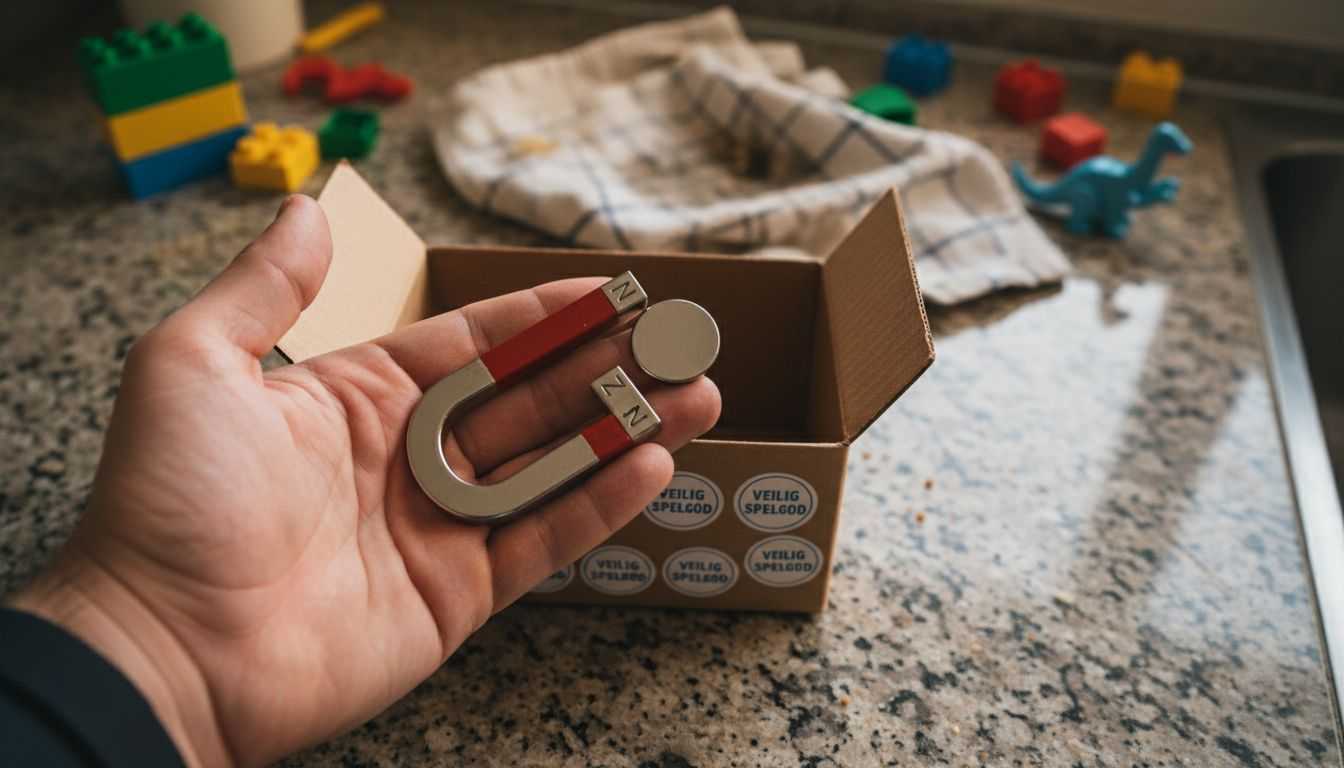
When designing magnetic toys, we consider different age groups. Young children are given magnets with a weaker pull, while older children can use more complex sets with slightly stronger magnets. The choice of materials and magnetic strength are always tailored to the safety and developmental stage of a child.
Here you will find a handy comparison of the most commonly used magnetic materials in children's toys:
| Material | Courage | Safety feature |
|---|---|---|
| Iron/Nickel/Cobalt | Average | Corrosion-resistant coating |
| Neodymium | High | Extra strong outer layer |
| Light alloy | Low | Designed for young children |
| Coated magnets | Variable | Prevents contact with metal |
Pro tip: Check magnets regularly for wear and damage to ensure the safety of the toy.
Safety requirements and European regulations for toys
European toy regulations are designed to provide children with maximum protection while playing. European safety regulations establish strict standards that manufacturers must adhere to to ensure toy safety.
The main safety requirements for toys include:
- Chemical safety : Prohibition of harmful substances and materials
- Mechanical safety : Reduction of small parts that may cause choking hazard
- Physical safety : Requirements for construction and material strength
- Age-specific guidelines : Adjusted standards for different age groups
Dutch toy inspections are carried out by the Netherlands Food and Consumer Product Safety Authority (NVWA), which monitors compliance with these European directives. Toys for children under 3 years of age have particularly strict safety requirements, particularly regarding the size of parts and the possibility of swallowing.
The CE marking is a crucial part of this regulation. Manufacturers must demonstrate that their products meet all safety standards before they can be placed on the European market. This process includes extensive testing for material safety, construction quality, and potential risks.
Pro tip: Always check the age recommendation and CE marking before purchasing any toys for your child.
Tips to avoid risks and play safely
Child safety with magnetic toys requires constant vigilance and proactive measures. Parents and caregivers play a crucial role in ensuring a safe play environment for children using magnetic toys.
The most important safety guidelines for magnetic toys are:
- Age verification : Always check the age recommendation on the packaging.
- Constant supervision : Keep an eye on children while they are playing
- Regular inspection : Check toys for wear and loose parts.
- Tidying up : Teach children to tidy away toys after use
Safe play behavior is promoted by teaching children how to use toys. This means they must understand how to handle magnets carefully, not put parts in their mouths, and always follow adult instructions.
It's essential to choose magnetic toy sets specifically designed for your child's age group. Young children, for example, need toys with larger, securely attached magnets that can't come loose or be swallowed.
Pro tip: Create clear rules for using magnetic toys together with your child to combine safety and fun.
Safe and educational use of magnetic toys
Make the educational world of magnets even more captivating with the right toys that perfectly combine safety and creativity. This article clearly explains the basic principles of magnets in toys and emphasizes the importance of safe materials and age-appropriate designs. For parents and caregivers who consciously choose sustainable magnetic toys that stimulate children's fine motor skills and spatial awareness, we offer a wide range.
For example, discover the versatile Magnetic Orbit sets for creative building activities, or choose simple yet educational Magnetic Blocks that allow young children to safely experiment with magnetic forces. Our products are made with BPA-free materials and strong, safe magnets so your child can play and learn without worry.
Don't wait any longer to bring the fun and learning opportunities of magnetic toys into your home. Visit https://tilesminds.com and give your children the chance to safely explore and build. Start today by choosing quality toys that perfectly match your child's developmental stage and curiosity.
Frequently Asked Questions
What are the basic principles of magnets in toys?
Magnets in toys operate based on the forces of attraction and repulsion between the north and south poles of the magnets. They are often used to introduce children to the principles of magnetism in a playful way.
How can I ensure the safety of magnetic toys?
To ensure the safety of magnetic toys, it is important to check the age recommendations on the packaging, supervise children while they play, regularly inspect the toys for wear and tear, and put the toys away after use.
What types of magnetic toys are available?
There are different types of magnetic toys, including magnetic building tiles, rods and balls, vehicles and figures, and scientific magnetic sets. Each type has its own focus area and educational benefits.
What materials are used for magnets in children's toys?
Magnets in children's toys are made of various materials, including ferromagnetic metals such as iron and nickel, rare-earth metals such as neodymium, light alloys for child-friendly use, and coated magnets for added safety.